

Institutions
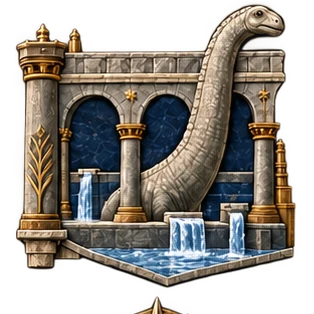
Karûm-Brakh: the scale of six duchies
Credit, major works and border posts connect the company to several imperial chains.
A link in six duchies
Karûm-Brakh spans the six duchies through credit, major works and border posts. The same institution therefore connects several local chains. A problem at one of its links can affect different duchies: the company’s scale lies in these connections as much as in the size of a construction site. It is the largest company in the known world.
The builder and the road
Repairing a major road brings Karûm-Brakh into contact with the High Chancellery, local duke and Bank. Paving, bridges and watering places are different assets joined by the passage of great animals. Disputes over compliance and maintenance therefore concern how structures actually work: a road must accommodate its intended loads and remain usable.
Stone and Border Posts
The Stone and Border Posts branch gives the company’s works an administrative structure. It includes middle management and validation procedures. At this scale, office competence matters as much as a builder’s: work in several duchies can depend on the same administrative chain, far from the place where a load is waiting to pass.
A house without a duchy
Karûm-Brakh has no duchy. It is an industrial house that builds the roads and bridges of the known world; the Empire tolerates it because it is indispensable, and surtaxes it at thirty per cent, like the other tolerated houses. At the Grand College, industrial families can be summoned for their material role without receiving the full voice of a ducal house.
Its leadership brings together Brakkaïm, a family council and regional directors. Its relations with the High Chancellery of the Living Ways are a chronic conflict over compliance: their dispute sets the compliant bridge against the bridge that holds. House Eralis counts Karûm-Brakh among the major clients for its stone.
In figures
According to the imperial tax register, Karûm-Brakh turns over 6.2 million Dracos a year at an 18% margin. After the 30% tax on tolerated houses, it keeps about 0.78 million in profit.
A family ecosystem
Seen from inside, Karûm-Brakh is not a single firm but a family ecosystem: dozens of legally separate workshops, a single brain, the Council of Elders, and a single symbol, the Seal of the Long Neck. It is nicknamed “the Family that moves stone”.
Its power starts from one observation: a sauropod is at once a motive force, a carrier, a crane and a living myth. It holds three domains — load-bearing roads and works, the fodder economy of colossal farms, and living traction on building sites. Its herds are mostly working lines, docile, slow and hardy; a few prestige animals serve for ceremonies. When a sterile building-site sauropod serves outside the Empire, it is for temporary service, under a Karûm-Brakh contract and imperial guard.
The Fodder Debt and the Contract-Marriages
The house lends fodder to the provinces in exchange for rights of way and labour: this is the Fodder Debt. One famine, and the Empire depends on it. Its marriages are mergers of workshops — bridges, granaries, harnesses — known as the Contract-Marriages.
Its enemies wage an invisible war against it: sabotaged pastures, epidemics in the enclosures, falsified rations. To strike Karûm-Brakh’s logistics is to strike the state. In a world where dinosaurs carry everything, controlling the physical flow — roads, food, traction — is worth more than gold.
A building site of the Family
A great Karûm-Brakh building site can be recognised from afar. Around the structure a complete camp is set up: pens for the hired sauropods, which serve as cranes and tractors, fodder pits, cutting workshops, a field forge, kitchens and dormitories. In the middle stands the site hut, painted with the Seal of the Long Neck; there the registers of workdays, materials and accidents are kept.
The Family’s structures follow gauges it has imposed itself: prefabricated grooved slabs, pontoon modules, roof trusses of known spans. For everything that rises high, ramps, feeding towers and upper storeys, it must go through House Asterion Haute-Rampe, its appointed subcontractor. The crews come from many Lines, and part of the pay is made in rations, which draws to its sites the line-less day labourers of a whole duchy.
Renting out logistics
The Family does not hire out only building-site animals. In war it makes available heavy columns with sauropod trains, loaded with fodder, water and equipment, which a duchy or the Crown can hire to supply an army. These columns in effect sell a capacity the Empire does not always possess itself: that of making a campaign last far from the silos.
This is one source of what its opponents call its war profit. Every conflict increases the demand for bridges, roads, columns and credit, and the Family meets it on its own terms. The army’s stewards find it indispensable and costly at once; the dukes fear it, because an army supplied by Karûm-Brakh depends on a contract for its retreat as much as for its advance.
What is said of the Family
On its building sites, Karûm-Brakh has the reputation of a hard but steady employer: the pay comes, the rations too, and accidents are entered in the register rather than hushed up. Foremen often come from the same families over several generations, and a worker is said to “have a long neck” when he has spent his life under the Family’s seal.
The other powers speak of it with more mistrust. The Chancellery reproaches it for building for use rather than for the norm; the dukes depend on its bridges and its credit while fearing that it knows their roads better than they do; the Bank watches its debts like those of a small state. Abroad, its name serves as a guarantee: a bridge signed by the Family passes for a bridge that will hold.
Part of this article covers events of season 1. Turn spoilers on in the menu to read it.