

Economy
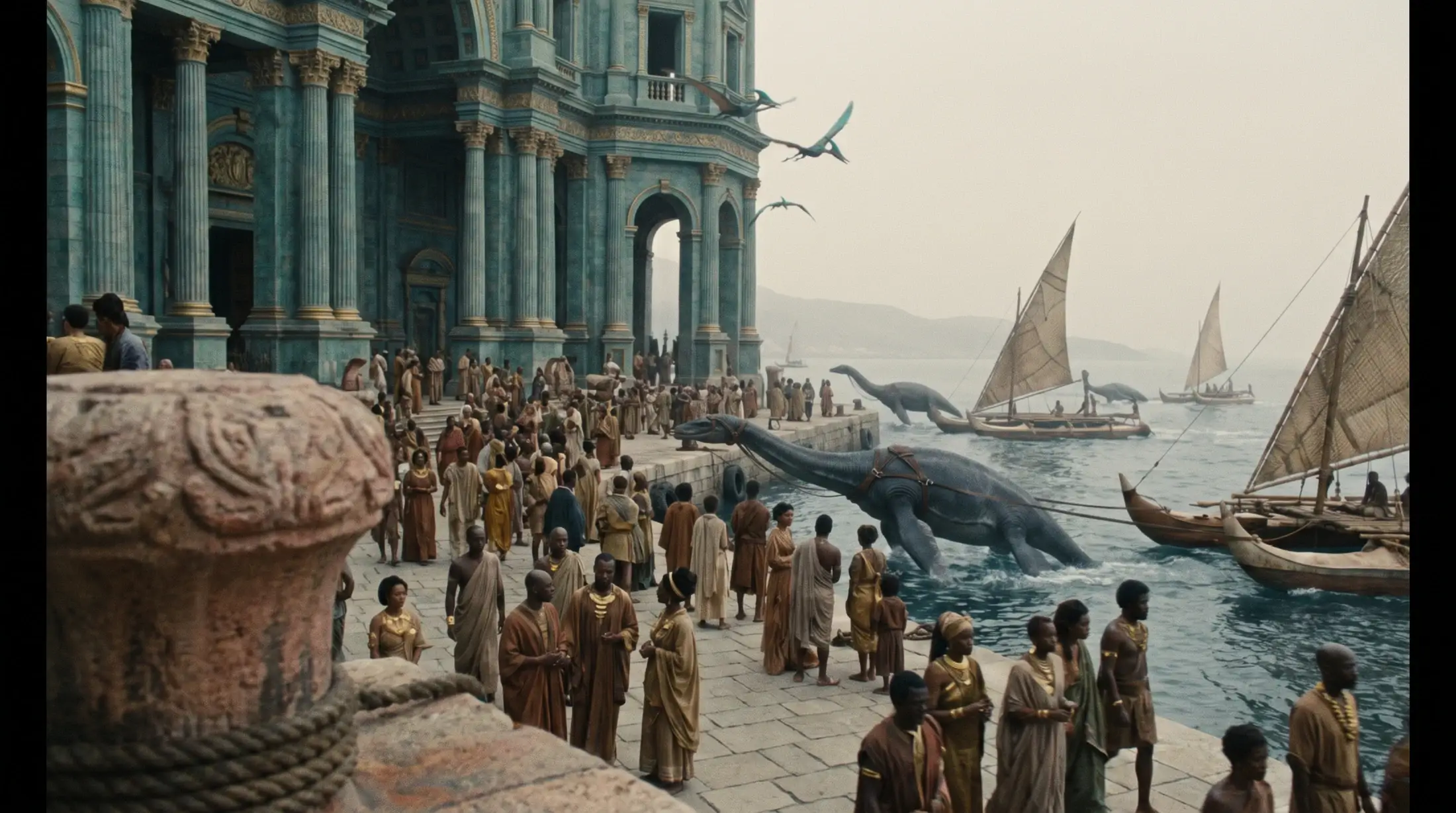
The Prête-Vents cartel
The cartel of Volonia’s banking houses lends over long distances, finances expeditions and public works, and makes seizure its weapon: granaries, herds, broods, harbour rights.
Lending far away
Volonia’s banking houses form a cartel known as the Prête-Vents. They lend at interest over long distances and finance expeditions and public works. Their real power is debt, sovereign as much as private.
Their aim is to make the Gold Scale, the coin of the imperial currency, indispensable even outside the Empire.
The weapon of seizure
The cartel’s weapon is seizure: granaries, herds, broods, harbour rights. Broods stand on the list just as granaries do; living things yet to be born serve as security.
In Volonia, finance comes after the sea: the domestication of plesiosaurs, the quays, the great hulls and access to the Great Ocean made the republic rich, then insurance, credit and securities set that wealth moving. The Prête-Vents belong to that second stage.
The words of Volonian credit
The cartel has left its name in the language: a prête-vent is credit without collateral. Volonia’s money vocabulary is precise. A bank is called a House of Endorsement; a letter means a letter of credit, sealed by a House of Endorsement; a quittance is a debt extinguished.
The houses of the cartel
The cartel brings together the banks of the Bankers’ quarter of Port Volon, around the Great Counting House. Each has its trade. One changes the Draco against the currencies of the ports and the tokens of foreign trading posts; another issues bills of exchange and sealed papers; another buys up chains of debt, bundles them and resells them; yet another settles the accounts of small merchants, who pay too little to interest the great houses. Together they agree on rates and on one simple rule: no two of them fight over the same debtor.
The cartel has neither palace nor head. Its members meet in a room of the quarter, at the rhythm of the clearing tides, to set the season’s rates and share out the great borrowers. Their agreement is known to all, and the Great Board displays it when it funds a measure: Volonians do not reproach the banks for agreeing, only for hiding it.
From wind-loan to seizure
The cartel’s paradox lies in its name. The prête-vent, credit without collateral, is its entry product: it is granted quickly, on the borrower’s reputation alone, at a high rate. When the borrower can no longer pay, the debt changes nature. It is converted into hard credit, called sìl-dur: a cheaper credit, but one for which the seizure of granaries, hulls or clutches is signed in advance, and which can be resold to other lenders.
The bottomry loan follows another logic. Lending on a voyage is called “lengthening the keel”: the money is lost if the ship sinks, and repaid double if it comes back. When seizure becomes necessary, contract companies carry it out under a seal of the Court, and the seized clutches join the nest-vaults of Port Volon, those banks where eggs of great animals are kept as collateral, as dowry or as reserve.
Debt as a weapon
Sovereign debt is the cartel’s most discreet field. It lends to princes, to duchies, to foreign cities, and has itself repaid in rights rather than coins: quay, warehouse or customs rights in a foreign port, granted for twenty years. In wartime it willingly lends to both sides, which the republic tolerates as long as its own routes are not at stake: several houses can back different enemies while Volonia remains neutral.
Its ambition to make the Golden Scale indispensable outside the Empire seems strange in Volonian bankers. It makes sense, however: Urnok’s coin is the most widespread in the known world, and it is Volonia’s endorsement houses that hold its exchange. The further the Scale circulates, the more exchange passes through Port Volon, and the more the cartel earns on every coin that crosses the sea.
What a debtor goes through
For a small shipowner, the cartel is first a door one pushes on a day of need. He obtains a prête-vent within a few hours, on his signature alone, and pays heavy salt. If he repays on time, his reputation grows and his next loan will be cheaper. If he cannot, he receives a visit from a clerk who very politely offers to turn his debt into hard credit; from that day on, his hull belongs a little to the bank. On the quays it is said that a wind-loan is repaid at quay or paid for in the hold.