

Economy
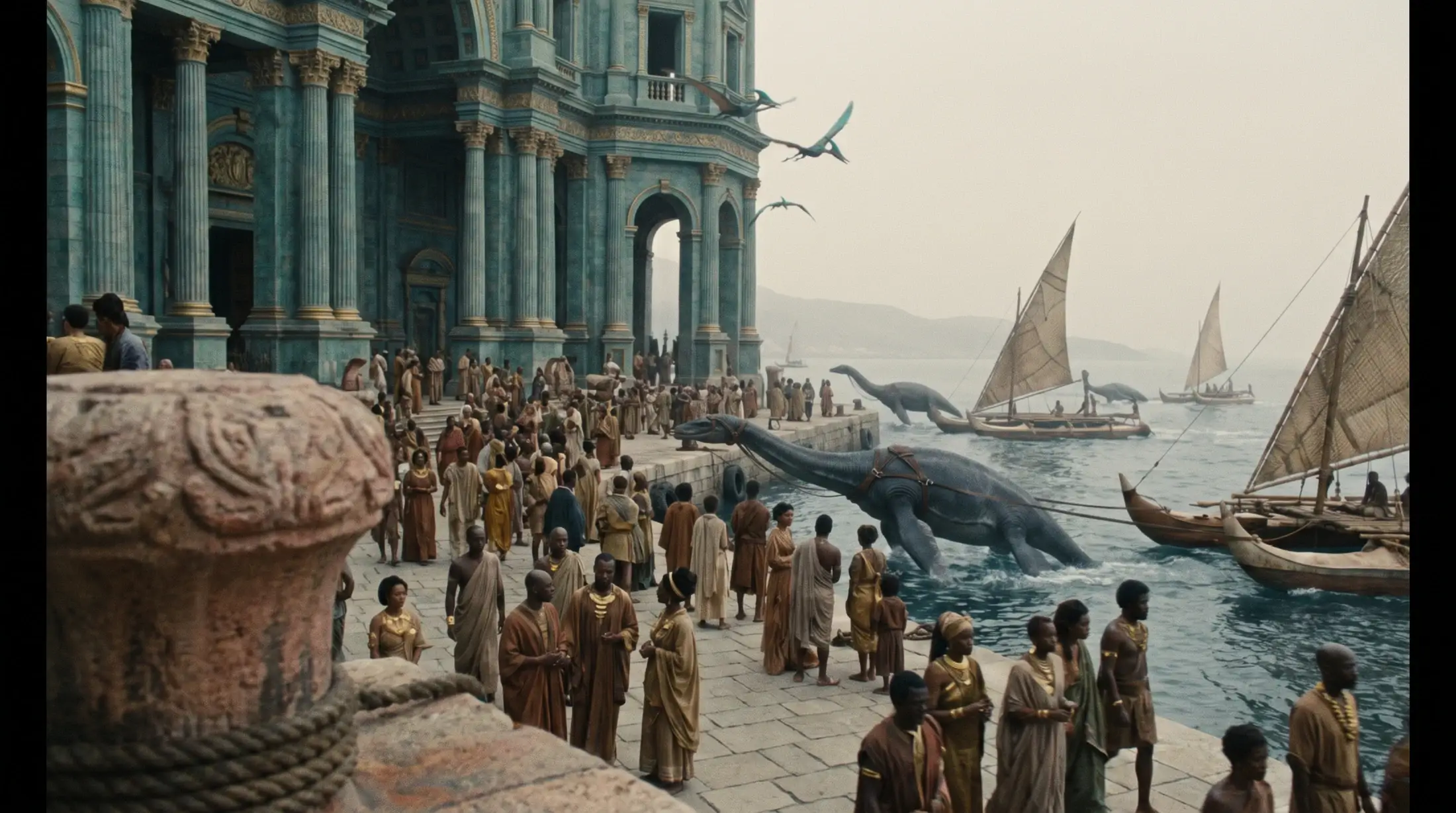
The Two Keels Shipyards
A Volonian shipyard that has made a speciality of the hardest art at sea: carrying living creatures.
The living in the hold
The Two Keels Shipyards build hulls, caulk them, rig them with cordage and make transport cages for rare animals. Their speciality is held to be an extreme art: carrying living creatures at sea.
Harbour vocabulary has a word for these ships: a cage is a dinosaur cage-ship. On board, the maritime cage-master answers for the transport of dangerous animals.
Alongside Velasar
Volonia’s great naval industry is Velasar’s: hulls, floating cages, marine harnesses, quays and the training of sea animals. The Two Keels count among the segment-holders: they dominate one critical link without holding the whole chain. In Volonia, living imports fall under the sanitary control of the Quarantine of Vaesh, with its sanitary cages and closed zones.
Where the name comes from
The Two Keels Shipyards owe their name, it is said, to a technique rather than to a family. The first ships built to carry live animals rolled too much: in an ordinary hull, rolling exhausts the animals, injures them against the sides and ends by killing them. The carpenters who founded the yard gave their transport hulls two parallel keels, which make them steadier and slower to roll. The method made their reputation, and the name stuck, even though the yard now builds many other hulls.
The yard does not belong to a single house. Its shares are divided between quayside shareholders, carpenters, smiths and cage masters whose families have worked there for generations, and a few houses that have placed their money in it. Decisions are taken in an assembly of shares, and a worker can end his life owning a piece of the yard where he started as an apprentice. The Two Keels work at Velasar, next to the trust’s yards, and sell their cages to the whole League.
Building a sea cage
A sea cage is a construction in its own right. Cages for land animals have a sand-covered floor, holding bars, straps padded with plesiosaur leather, hatches for food and casks of fresh water; they are ventilated by openings that are closed in heavy weather. Cages for sea animals are hold tanks, copper-lined vats where seawater is renewed through valves pierced in the hull. Floating cages, finally, are towed behind the ship for animals too large for a hold.
Each cage carries a number and the yard’s mark. It is inspected before every voyage, and cages carrying live imports pass under the eye of Vaesh, which can demand a salt wash, new straps or the destruction of a contaminated cage. After each crossing, the yard takes it back, cleans it, replaces what has suffered and notes in its booklet what it carried. A well-kept cage lasts twenty years; some are known to have made more than a hundred crossings.
The price of the living at sea
Carrying a live animal is expensive, and insurance gives the reason. The mobile-living policy covers in a single contract the cargo, the animals and their death on the way; its premium depends on the species, the length of the voyage, the season and the cage. A Two Keels cage lowers the premium, because insurers know its record. That is the yard’s true wealth: a reputation that can be read in the insurers’ tables.
Customers are many: Sand Port merchants shipping Arkhan animals, theatres and hippodromes buying rare beasts, houses importing certified clutches, scholars of the Institute bringing back specimens. In war, the cages serve the fleet: it is in Two Keels cages that the hadrosaurs and the great guard Lamiers Volonia lands with its companies are shipped, and without them, its few land animals would never leave their islands.
The cage masters
The cages do not travel alone. The yard trains cage masters, often the children of its own workers, who sail with the cages they know and answer on board for dangerous animals. Their apprenticeship lasts years: one must learn to read an animal’s fear in its breathing and in the way it presses against the bars, guess when an animal is about to refuse water, and know how to calm a cage in heavy weather by covering it with a wet cloth. A renowned cage master is hired along with the cage itself, and some captains refuse a live cargo unless they are given one of the Two Keels masters.