
Families and
trades of Urnok.
A name. A trade. A door to knock on when something gives way.
Open the family registerHouse
A duchy or an imperial function
High Line
A chain, from material to product
Line
An intermediate product
Short Line
A workshop, one lifetime, not inheritable
A Line is an address of responsibility.
Family register.
Houses and Lines of Urnok.
26 entries
Choose a name to read its history and function. Vael-OrûnCalaronCrown and imperial institutionsHouse
House Vael-Orûn has carried the imperial Crown for three generations. A distant branch descended from Sarnor, it succeeded several warrior dynasties and has established a hegemonic peace since the time of Orûs’s grandfather. Orûs III exercises sovereignty; Sahina is his designated heir and holds the high stewardship; Maivar belongs to the cadet branch. Their seat is Urnok, the capital located in the historic duchy of Calaron. The family’s power combines living patrimony, law, roads and the means of the state. The military titans assigned to the duchies and the orders remain the legal property of the Crown, as do their remains. The functions of the centre are divided among several Houses: Calaris for protocol, arenas and seals, Tewolde-Baran for civil records, Qoré-Mirhan for the chancery. Power also depends on the granaries of Sarnor, the works of Bralnor, the supplies of Orlantis and the crews who maintain the roads.
Read the article: Vael-OrûnL’entrée du pouvoir
Calaron · délégation de cour.
- Material or function
- Records, seals, egg paper
 OrlenoxSarnorDucal House of SarnorHouse
House Orlenox holds Sarnor, the agricultural duchy of granaries, grain and fodder. Teren Orlenox is a child duke; the territory is governed through a regency. The House notably owns the Gué-Long cathedral granary, but the reserves are divided among several dozen granary families. Karnil keeps the granaries of the Upper Ford, Ulmen the seed and draught lineages, Corsen the basins and irrigation, Tanoris rationing and convoys, Marlen the mills. The Orlenox properties form one part of the agricultural whole, alongside stocks and rights belonging to other Lines. The farms feed the population and supply the transport animals; the breeding reserves sustain future harvests. A delivery of fodder requires granary keepers, carriers and halt managers to be able to work together. The name Orlenox belongs to an ancient layer of Sarnor.
Read the article: OrlenoxLa réserve fait autorité
Sarnor · administration des silos.
- Material or function
- Grain, seed, reserves
 EralisBralnorStone and major worksHouse
House Eralis holds Bralnor, the duchy of quarries, blocks and heavy stone. Hadrav Eralis holds the ducal office in a territory whose works combine extraction, cutting, lifting and transport. Quarry workers prepare the material; specialists in counterweights, winches and heavy haulage organise its movement towards the works. Quarry brachiosaurs take part in this economy with their drivers, their equipment and the crews who check the load-bearing capacity of the roads. Bralnor supplies the stone for bridges, ramparts and monumental buildings, but depends on the ropes, wooden parts, harnesses and fodder produced in the other duchies. Velmor’s leather and Orlantis’s tannins go into the equipment that makes it possible to move a block; Sarnor’s grain sustains the crews and the animals. The power of the Eralis combines a local material with supplies that cross the Empire.
Read the article: EralisMamenchisaurus
Bralnor. Un usage du bestiaire.
- Material or function
- Stone and cutting dust
 VoranisOrlantisForests, resins and portsHouse
The Voranis are the ducal House of Orlantis, a forest territory of noble timber, resins, ropes and ports. The duke is a man. Seven High Lines organise the main supply chains: Berlan for felling and timber floating, Lomvar for stegosaurids, Mirvane for carpentry, Tolmen for turning and fine joinery, Aversin for resins, Culorn for exploration and high-forest hunting, Marlen for downstream floating and shipments. The imperial stegosaurids are exclusively Orlantine; their breeding and harnessing fall to the Lomvar, a family distinct from the ducal House. Corvel, Nalen, Ombrin and Tanoris supply the intermediate products of the workshops and of trade between duchies. The cargoes reach Volonia, which sustains a diplomacy of the Voranis’ own. The territory preserves proto-Volonian names and districts where arrivals, basins, drying sheds, workshops and ports follow one another from upstream to downstream.
Read the article: VoranisL’odeur de la résine
Orlantis · approvisionnement d’un arsenal.
- Material or function
- Timber, resins and cargoes
 Senn-Zarnith / Vael-SennVelmorArchduchy, harnesses and armamentHouse
The archducal House Senn-Zarnith and the Vael-Senn branch belong to the tradition of Velmor. This former kingdom is the only archduchy of the Empire and retains a quasi-royal rank, visible in its Senn-, Vael- and -zarnith names. Maelyra Senn-Zarnith holds the archducal office. The eastern territory combines black stone, harnesses, leather, archery, ballistae and war animal lineages. Its black iguanodons and hadrosaurs live alongside the siege sauropods; the imperial stegosaurids belong to Orlantis. The Living Armouries bring together Velmorian materials, state orders and parts from Korath. The tannins, fibres, ropes and food reserves of the other duchies contribute to this military production. Marévant is a minor House established on the coast of the same territory. Velmor brings together an ancient archducal authority, trade families and coastal establishments with distinct functions.
Read the article: Senn-Zarnith / Vael-SennLes Hadros noirs de Velmor
Velmor · patrouille des passages.
- Material or function
- Leather, harnesses and draught
 DrakerisQor ZaïMarch duchy of imperial Qor ZaïHouse
Drakeris is the current ducal branch of the House of Qor Zaï, the oldest Urnokian lineage, which presents itself as descended from the first Urnokians. The House’s historic name can endure when its ruling branch changes. Sarek Drakeris holds imperial Qor Zaï, the south-eastern march duchy open towards Arkhan and the Black Mountains. Bone customs, counter-trails, relays and border brokers structure the territory’s trades. The anti-raptor forts and military harnesses support its function as a march; rare imports of raptors there are subject to special controls. The House operates in a space of contacts, trade routes and armed movements. Imperial Qor Zaï remains distinct from Arkhan Qor Zaï, the bone metropolis and centre of the Seven Trails. The shared name requires couriers, registers and partners to specify the destination and jurisdiction concerned.
Read the article: DrakerisBajadasaurus
Drakeris / Qor Zaï. Un usage du bestiaire.
- Material or function
- Bone and intelligence
 CalarisCalaronProtocol, arenas and sealsHouse
House Calaris holds protocol, arenas and seals at the heart of the duchy of Calaron. Its role accompanies the audiences, ceremonies and acts through which imperial power presents itself and makes itself recognised. Seals give material form to authority; protocol organises the place of representatives and the course of meetings. Calaris shares the central functions with the Vael-Orûn Crown, the civil records of Tewolde-Baran and the chancery of Qoré-Mirhan. Receiving a delegation, recognising an act and preserving civil information involve distinct trades and offices. The arenas belong to this institutional responsibility in the capital, Urnok.
Read the article: CalarisLes alliances dans les plis
Calaron · haute société et diplomatie.
- Material or function
- Seals and ceremonial acts
 Tewolde-BaranCalaronCivil records and administrative continuityHouse
House Tewolde-Baran maintains the civil records and administrative continuity of the imperial centre. Procedure, the preservation of information and counsel make up its domain. A person’s name, their registration and the succession of acts must be retrievable when officials change or when a catastrophe upends the institutions. The House works in the capital, Urnok, located in the duchy of Calaron, alongside the scribes and the other record-keeping functions. Its activity is distinct from the protocol of Calaris and the diplomatic letters of Qoré-Mirhan. It preserves the civil information that allows the administration to continue its work beyond a reign or a crisis.
Read the article: Tewolde-BaranUrnok — l’air des archives
Ventilation, ombrage et dépoussiérage entretiennent les archives.
- Material or function
- Civil registers and administrative acts
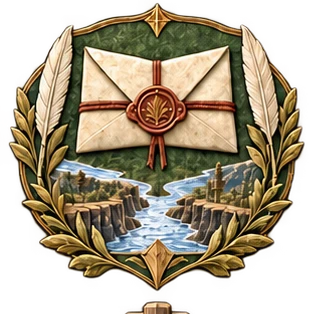 Qoré-MirhanCalaronChancery, letters and bordersHouse
House Qoré-Mirhan holds the imperial chancery. Its domain brings together diplomacy, letters and borders: decisions taken at the centre must reach the parties for whom they are intended, with their jurisdiction and scope. The capital, Urnok, concentrates these exchanges between the Crown, the duchies and the neighbouring powers. A letter addressed to the march of imperial Qor Zaï concerns a different territory from the Arkhan metropolis of the same name; place names and authorities must be kept distinct. Qoré-Mirhan shares the work of the centre with the civil records of Tewolde-Baran and the protocol of Calaris. Its function covers relations and acts of chancery.
Read the article: Qoré-MirhanLe silence avant la décision
Calaron · conseil impérial.
- Material or function
- Letters and acts of chancery
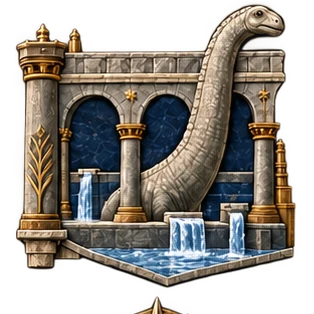 Karûm-BrakhAll six duchiesCredit, major works and frontier posts across the six duchiesHouse
Karûm-Brakh runs through the six duchies by way of credit, major works and frontier posts. Its presence links a family council and regional directorates to the Empire’s building sites and financing. Load-bearing roads, bridges, aqueducts and supply installations connect the activities of the different territories: Bralnor’s stone, Orlantis’s timber, Velmor’s harnesses and Sarnor’s reserves must reach the same works at the right moment. Credit commits resources before the work is finished; the building sites then depend on their supplies, their crews and the passage of the animals. A decision taken in one directorate can interrupt a chain that serves several duchies. Karûm-Brakh exercises this cross-cutting function within the Empire, without constituting a seventh duchy.
Read the article: Karûm-BrakhLa corde des grands ouvrages
Parc du génie · manœuvre de treuil.
- Material or function
- Credit, works and construction networks
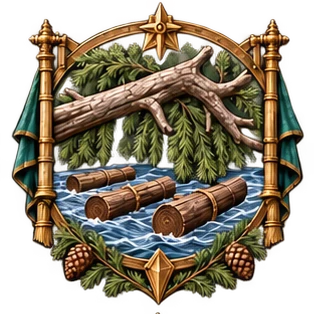 BerlanOrlantisFelling & timber floatingHigh Line
The Berlan line handles felling and timber floating. Choosing this year’s trees also shapes the forest that the next generation will inherit.
Read the article: BerlanExplore the city and its trades- Material or function
- Logs, mature timber, storage yards.
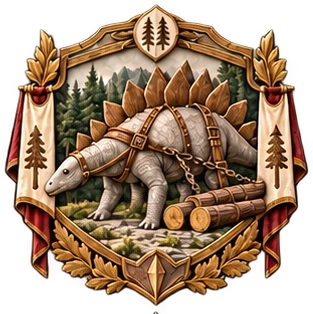 LomvarOrlantisStegosaurids & loggingHigh Line
Breeding, training, harnessing and logging: the Lomvar line handles the stegosaurid chain. The duchy’s emblematic animal belongs to a trade distinct from the ducal House.
Read the article: LomvarLes voies des résines
Orlantis · circulation forestière.
- Material or function
- Harnesses, enclosures, forest access routes.
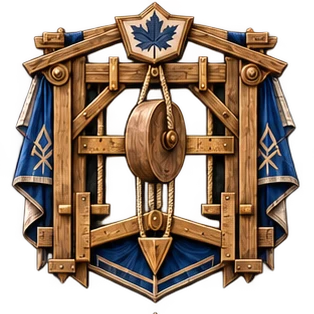 TolmenOrlantisJoinery & turningHigh Line
Hubs, axles, pulleys and calibrated parts: the Tolmen line works the details that make movement possible. Its chain joins fine joinery with turning.
Read the article: TolmenExplore the city and its trades- Material or function
- Hubs, axles, pulleys, calibrated components.
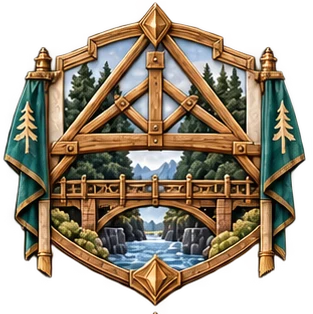 MirvaneOrlantisCarpentry & constructionHigh Line
Roof trusses, bridges, halls and scaffolds: the Mirvane line gives timber an architectural scale. Their workshops are tall because of what they assemble.
Read the article: MirvaneExplore the city and its trades- Material or function
- Trusses, bridges, halls, scaffolding.
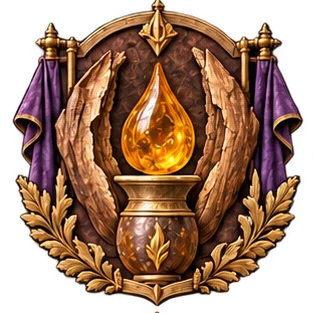 AversinOrlantisResins & varnishesHigh Line
From tapping to cooking, the Aversin line handles resins: pitch, varnish and balms. Its material gives Orlantis its amber-resin signature.
Read the article: AversinExplore the city and its trades- Material or function
- Pitch, varnish, balms, resin jars.
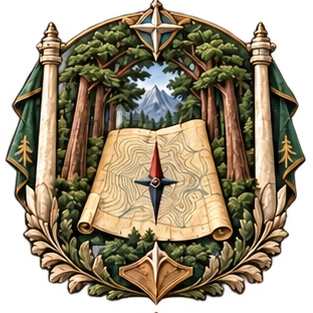 CulornOrlantisHigh forest & cartographyHigh Line
Hunting, exploration, forest mapping and predator control: the Culorn line represents an imperial presence. Calaron established it after the absorption of Orlantis.
Read the article: CulornExplore the city and its trades- Material or function
- Forest maps, organised hunts, exploration.
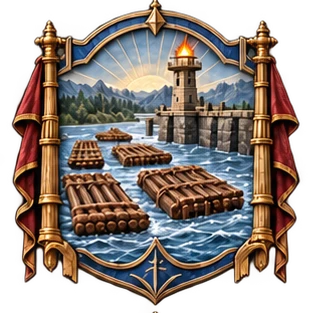 MarlenOrlantisDownstream floating & portsHigh Line
The Marlen line handles downstream floating and ports. Its shipments to Volonia carry the work of the forests into another commercial language.
Read the article: MarlenExplore the city and its trades- Material or function
- Floated timber, cargoes, port shipments.
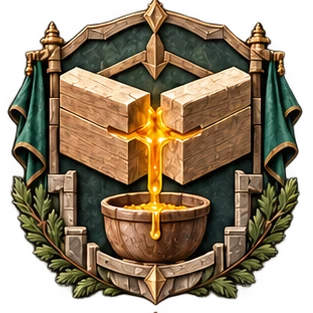 CorvelOrlantisGlues & adhesivesLine
Resin, tendon and ash support joints, veneers and fletched arrows.
Read the article: CorvelOrlantis — le liant des assemblages
Le liant rend possibles les assemblages de bois.
- Material or function
- Glues & adhesives
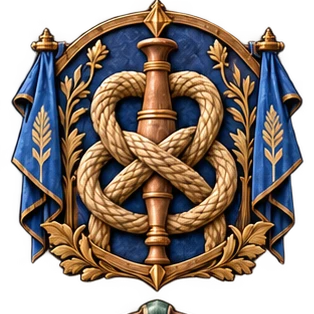 NalenOrlantisCordage & fibresLine
Hauling and rigging depend on them, all the way to Velmor’s anti-air nets.
Read the article: NalenExplore the city and its trades- Material or function
- Cordage & fibres
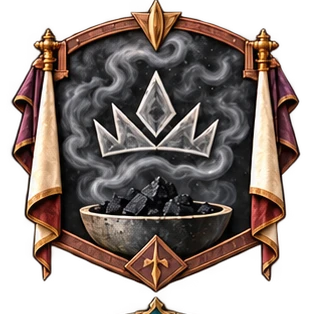 OmbrinOrlantisLampblack & pigmentsLine
A forest material becomes the ink in imperial registers.
Read the article: OmbrinOrlantis — le noir de l’encre
Le noir de fumée devient une matière d’encre.
- Material or function
- Lampblack & pigments
 TanorisOrlantisBark tanninsLine
Bark feeds tanneries, then leather and harnesses. This registration is separate from the Tanoris of Sarnor.
Read the article: TanorisOrlantis — broyer les tanins
L’écorce broyée entre dans la chaîne des tanins.
- Material or function
- Bark tannins
 KarnilSarnorUpper Ford granariesHigh Line
The Karnil hold the cathedral granaries of the Upper Ford. Their registration is the oldest in Sarnor and predates Unification: the family has kept its place in an agricultural history longer than the imperial administration. These reserves belong to the distribution of stocks among several dozen Lines, alongside the granaries of House Orlenox. Keeping a granary is a responsibility distinct from producing seed, conveying water, milling or organising convoys. The Karnil work within a chain in which Ulmen, Corsen, Tanoris and Marlen hold other functions. The stored grain must still be processed or carried to the people and animals for whom it is intended.
Read the article: Karnil- Material or function
- Grain storage
 UlmenSarnorSeed and draught lineagesHigh Line
The Ulmen hold the seed and draught lineages of Sarnor. Their agricultural reserve is intended for future harvests; it has a different function from the grain available for immediate consumption. The breeding of draught animals also commits the continuity of transport and work. The Ulmen registration distinguishes these reserves from those of the granary families and from the transport rights held by Tanoris. Corsen’s basins and canals sustain the crops; Marlen’s mills turn other lots into food. Consuming a seed reserve would reduce what can be planted: the destination and custody of the lots must therefore remain identifiable. The role of the Ulmen extends production from one season to the next within the duchy’s agricultural supply chains.
Read the article: UlmenSarnor — la chambre des semences
La semence est protégée dans des récipients et une pièce dédiée.
- Material or function
- Seed
 CorsenSarnorBasins and irrigationHigh Line
The Corsen High Line holds the basins, sluices and irrigation canals of Sarnor. It answers for the works that carry water to the farmland, with a responsibility distinct from owning the grain, keeping the seed and organising the convoys. Hydraulic work uses gravity, dykes, basins and conduits; sluices and readings make it possible to follow the flow of water. An interruption affects the crops and the activities downstream before it has repercussions on the reserves. The territory of Sarnor combines the production of the fields with the continuous upkeep of these works. Corsen takes part in this chain alongside granary keepers, millers, seed families and carriers.
Read the article: Corsen- Material or function
- Water and hydraulic works
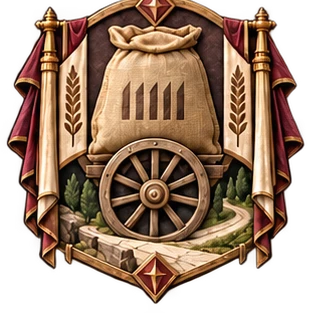 TanorisSarnorRationing and convoysHigh Line
The Tanoris of Sarnor hold rationing and convoys. Their function is the right to move grain, distinct from ownership of the reserves transported. They link the granaries to the places where people and animals must receive their food, through a network of roads, relays, water and fodder. A delivery depends on the availability of the lot as much as on that of the crews, the draught teams and the passages. Storage bodies and transport trades answer for different links. Another Tanoris Line exists in Orlantis, where it prepares the bark tannins used by the tanneries. These two families hold different registrations; their shared name does not establish kinship. The duchy and the product make it possible to tell their charges apart.
Read the article: TanorisLe dernier convoi du soir
Sarnor · orientation du troupeau.
- Material or function
- Transport rights
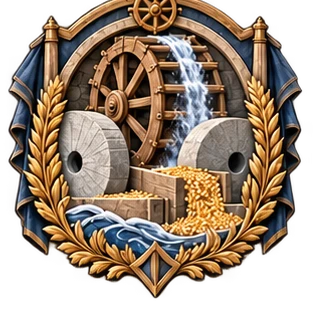 MarlenSarnorMilling and flood millsHigh Line
The Marlen of Sarnor hold milling and the flood mills. Their activity turns the cereals kept in the reserves into products intended for food. It sits between storage and distribution: keeping a lot, milling it and moving it are different responsibilities. The availability of the mills depends on water and on deliveries, while the convoys must carry the products to the places of consumption. Marlen works in contact with the other agricultural supply chains, notably Corsen’s works, the granaries and the Tanoris’ transport rights. The name Marlen also exists in Orlantis for downstream floating and the ports. The two registrations designate distinct trades in two duchies; the name alone does not allow a common genealogy to be attributed to them.
Read the article: MarlenSarnor — le moulin, reprise photographique
La meunerie relie le grain à la force de l’eau.
- Material or function
- Milling
Trade chains between duchies.
Orlantis bark feeds tannin, tannin feeds tanneries, and leather feeds Velmor’s harnesses. Bralnor’s great animals pull stone; Sarnor’s grain pays for the work. Records are written in Ombrin ink.
Follow the material through Orlantis- OrlantisBarkTanoris
- VelmorHarnessTanneries & leather
- BralnorStoneHeavy traction
- SarnorGrainPayment for the work