

Economy
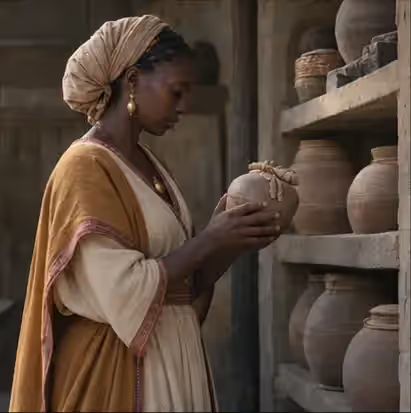
Ulmen: keeping the next harvest
Seeds and draught lineages form a reserve intended for future work.
What is not consumed
Sarnor’s High Line Ulmen holds seeds and draught lineages. Seeds are kept for later harvests, while animal lineages sustain the continuity of traction work. The register distinguishes these reproductive reserves from produce intended to feed people and animals immediately.
A separate responsibility
Ulmen is neither Corsen, which handles irrigation, nor Marlen, which handles mills, nor Tanoris, which manages convoys. Seed belongs to a particular link and does not become available merely because another trade requests it. The organisation makes the difference between having a material nearby and answering for it visible.
Present hunger and future work
A batch’s intended use commits future production. Consuming a seed reserve reduces what can be planted; diverting a reproductive reserve changes the chain’s capacity to continue. Those responsible must therefore preserve each batch’s identity and distinguish food available for the table from stock that must remain protected.
Sorting, drying, sealing
A certified seed from Sarnor passes through several hands before it is sealed. Ulmen growers choose the finest ears and healthiest plants while they are still standing, harvest them separately, then sort the grain by sieve and by hand. The grain is dried under cover and put to the test: a handful is sown in a box and what comes up is counted. It is then divided into lots, sealed in sacks or jars. Each lot receives its register of plant lineage: field of origin, year, germination test, name of the person who sealed it.
Seed certified in this way is sold throughout the Empire and beyond, at a higher price than table grain. A farmer who buys an Ulmen lot is not only buying grain: he is buying a guarantee, and the right to complain if the germination does not match what the register promises.
The draught lineages
Ulmen also keeps the duchy’s animal seed: the draught lineages, mostly hadrosaurs, whose Line studs supply the farms’ teams. Breeding animals are chosen for strength, calm and health, matings are recorded, clutches counted before a witness. Eggs of the draught lineages are seed eggs and protected as such: none goes to the table, and every loss must be declared.
A reserve beyond seizure
Seed enjoys special protection. Seed reserves cannot be seized for debt, and their stores carry an extra seal that is broken only in the presence of an official of the Line. In a dearth, seed is the last reserve to be touched; the law places it at the top of the order of priorities, before draught animals, garrisons and towns.
This rule has an ancient root. During the famine that gave birth to the Empire, people ate the eggs, the seed of living things; to eat the seed is to eat the future. Defrauding seed — selling a sterile lot as certified, or table grain as seed — is a sacrilege the law puts a figure on: the penalty is calculated on the harvests lost.
Those who sow for later
Ulmen people have a reputation for patience. Their work is measured in years: a plant or animal lineage is built over several generations, and they readily speak of grandparents who chose the ears being sown today. The seed houses stand at the foot of the silos in the duchy’s towns, and few enter them without a reason.
At every imperial coronation the ducal house of Sarnor presents the emperor with a measure of seed, which he hands back and which is sown the following year on the duchy’s estates. The Ulmen prepare this lot with particular care, and the register that goes with it is copied into the coronation archives. In the countryside, well-behaved children are called “Ulmen seed”: the kind one keeps for later.