Urnok can be read in its passages: a load-bearing road, a convoy, a workshop door. Imperial power rests on chains of work across its duchies. Timber, grain, stone and leather depend on one another.
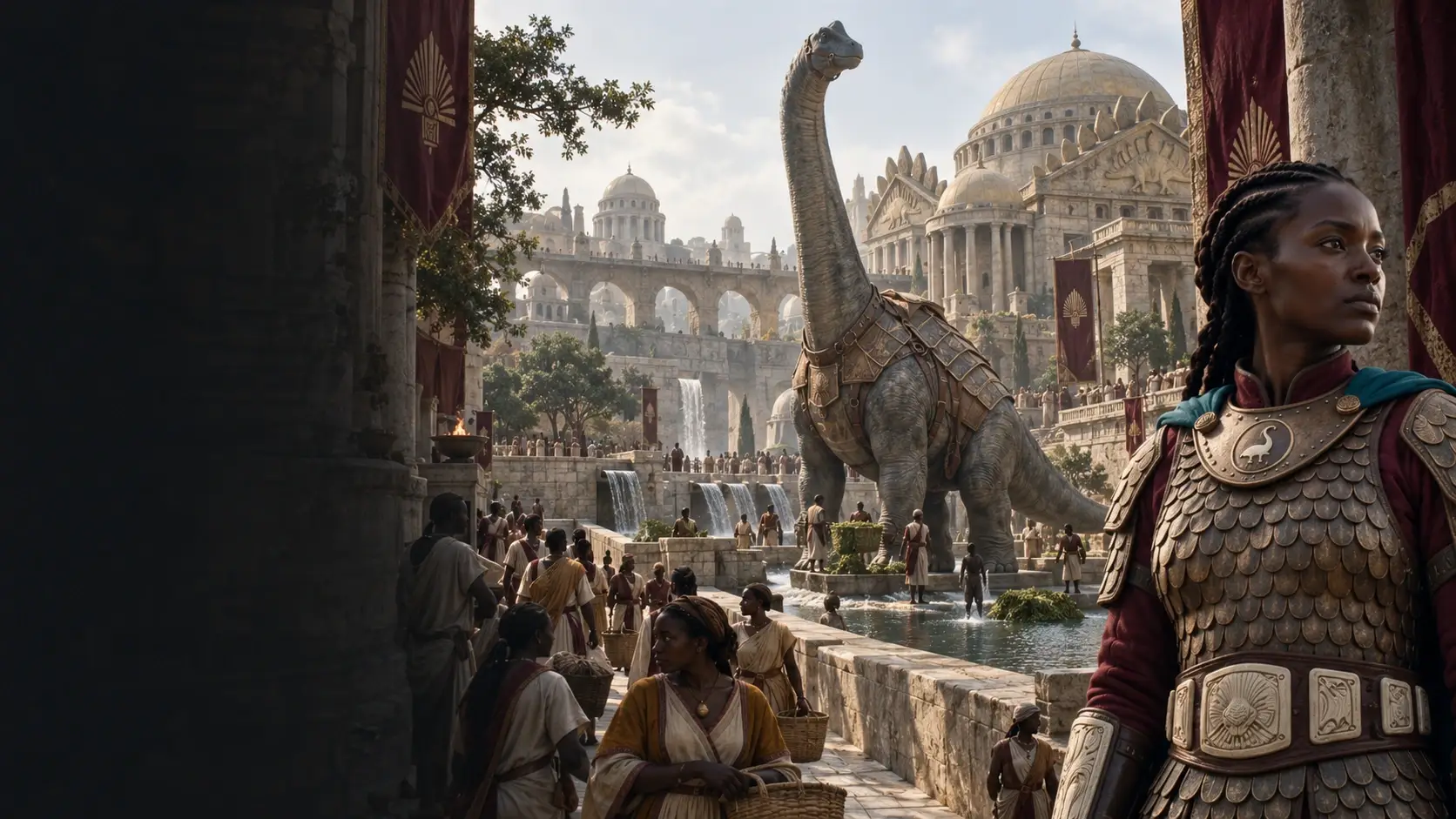
Thirty million inhabitants, six duchies and seven hundred titans. The Vael-Orûn family governs from Urnok; Houses and trade Lines hold the farms, forests, quarries, workshops and roads that feed the Empire’s wars: the marches facing Arkhan’s raids and the armed rivalries between duchies.
The sea puts an entire city to work: navigation, shipbuilding, fishing, trade and insurance. The work of the port continues in its contracts. In Volonia, wealth needs quays, basins and the people who maintain them.
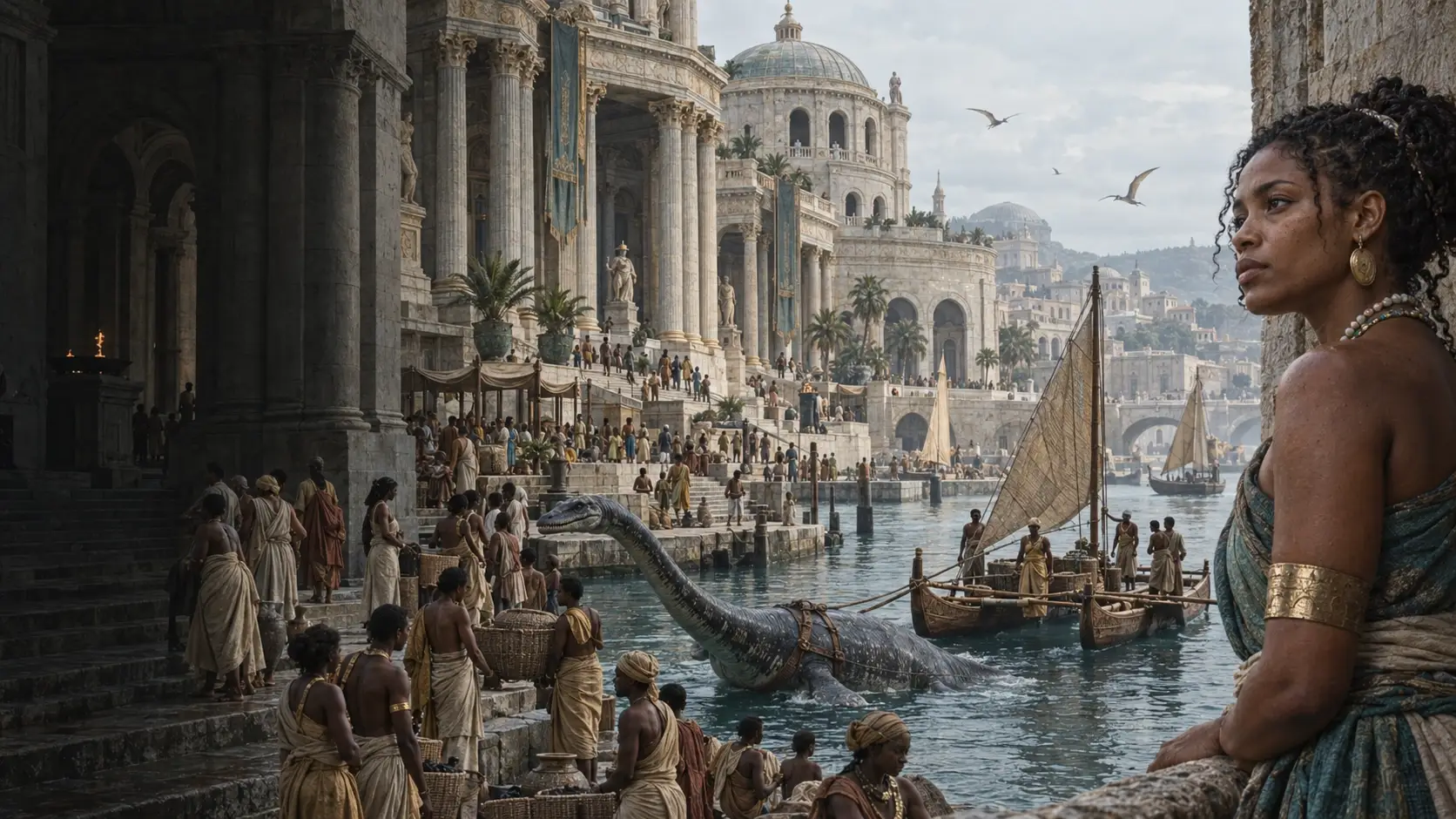
Ten million people live from the ports, shipyards and Great Ocean. Plesiosaurs tow ships; fishing, trade, insurance and monetary voting shape the republic. Its armed fleets and military companies charge for every protection.
Ishtir’s people share collective education and have no family names. Adult life is organised around rank, order, certified skills and chosen households. Bronze citizens have eight weeks of Respiration each year, Silver four and Gold one: travel, bathing, festivities, games and rest have a recognised place in this religious civilisation. The gardens feed the country and provide pleasant places to live.
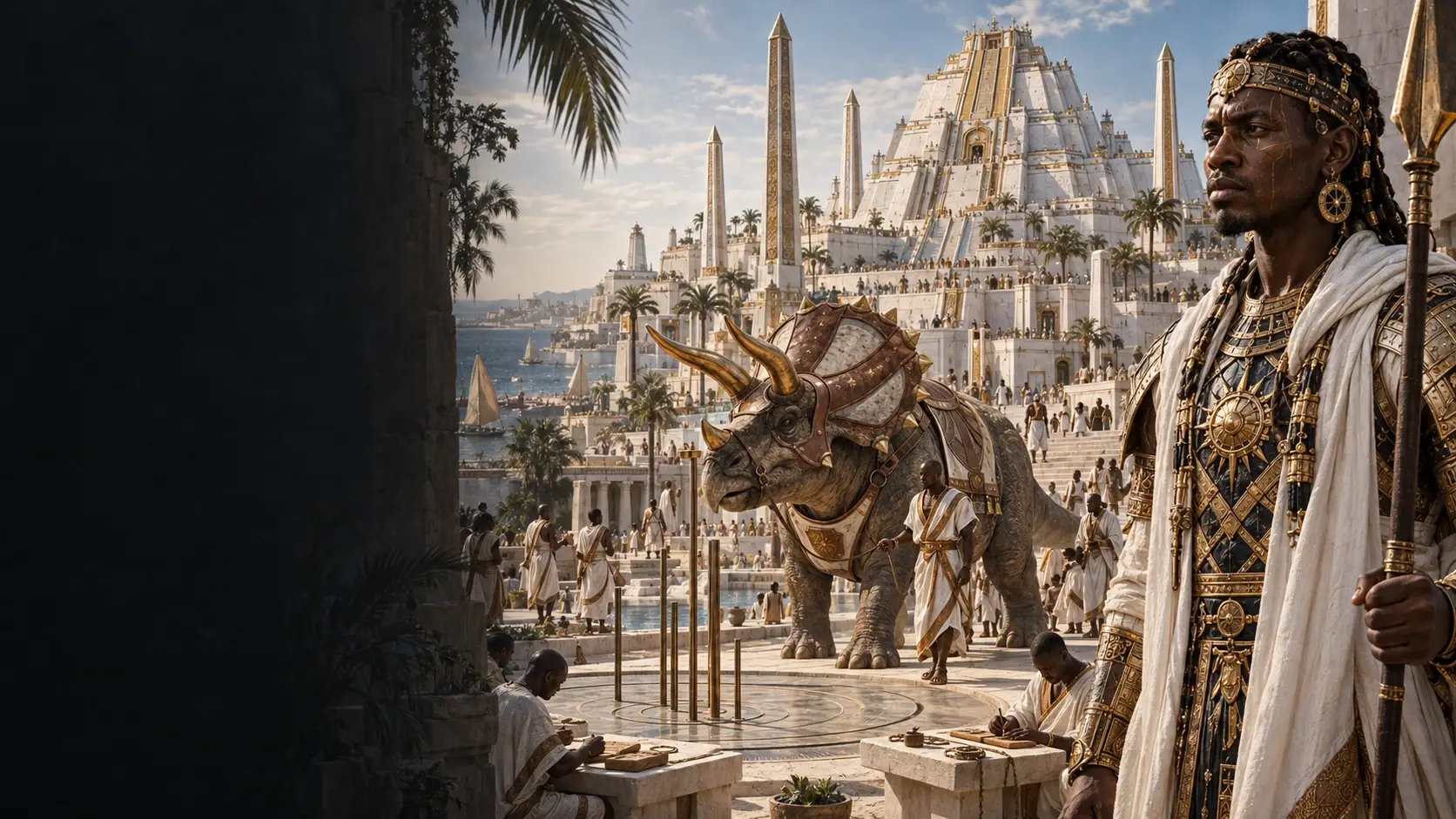
Ishtir combines irrigated gardens, white cities, ceratops husbandry and the religion of the Zenith. Children grow up in cohorts; the First Weighing assigns an adult rank at eighteen. Necessities are guaranteed without domestic currency, while professions, rights and certifications organise responsibilities.
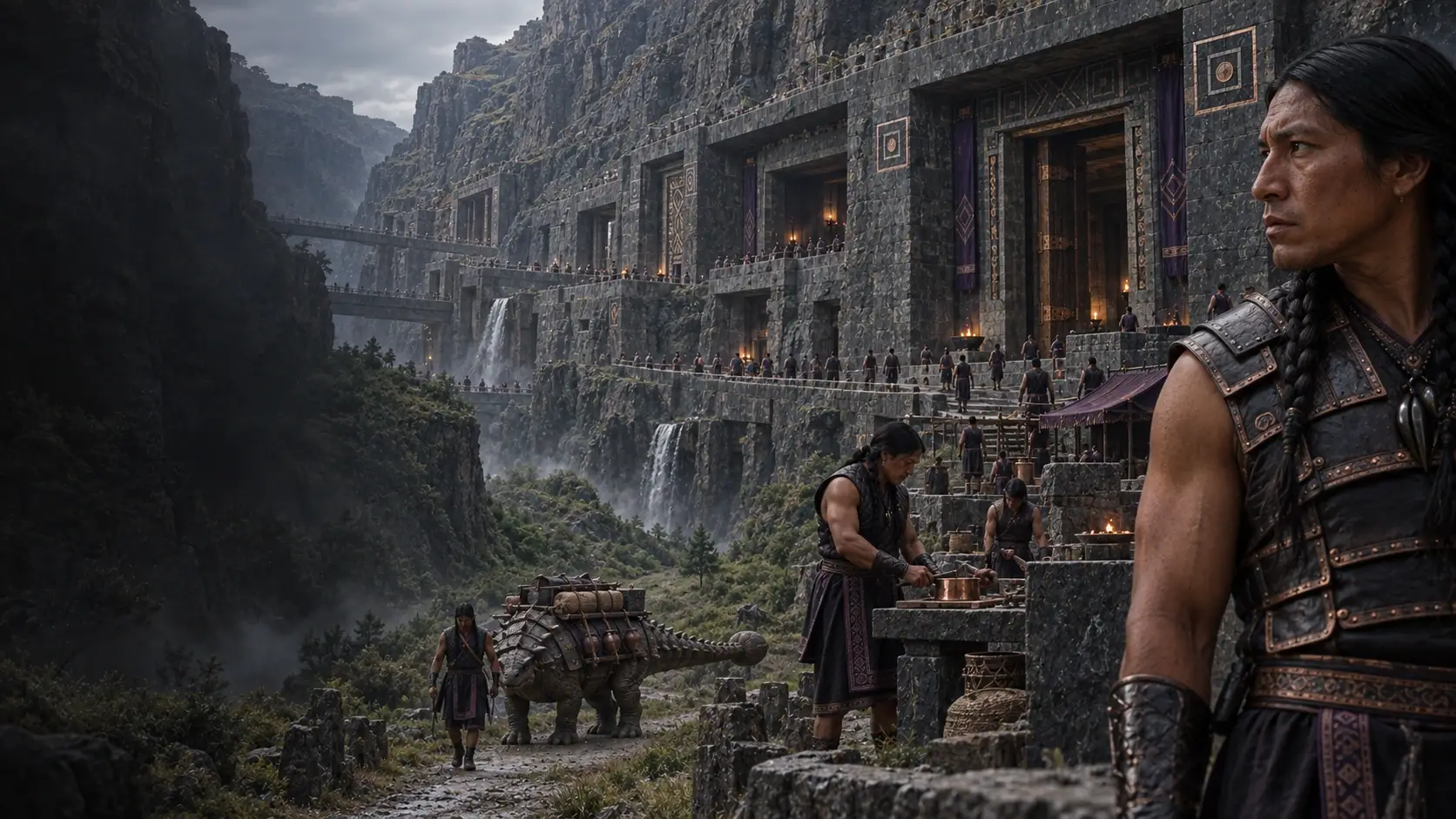
Korath builds within the thickness of the mountain. Its cities organise air, loads, heat and passages in layers. Workshops cultivate precision; Patents give invention a public place.
Seven million people in the carved cities of the Black Mountains. Military rule, nationalised Forges, patents and workshops; ankylosaurs and nodosaurs in the accessible valleys.
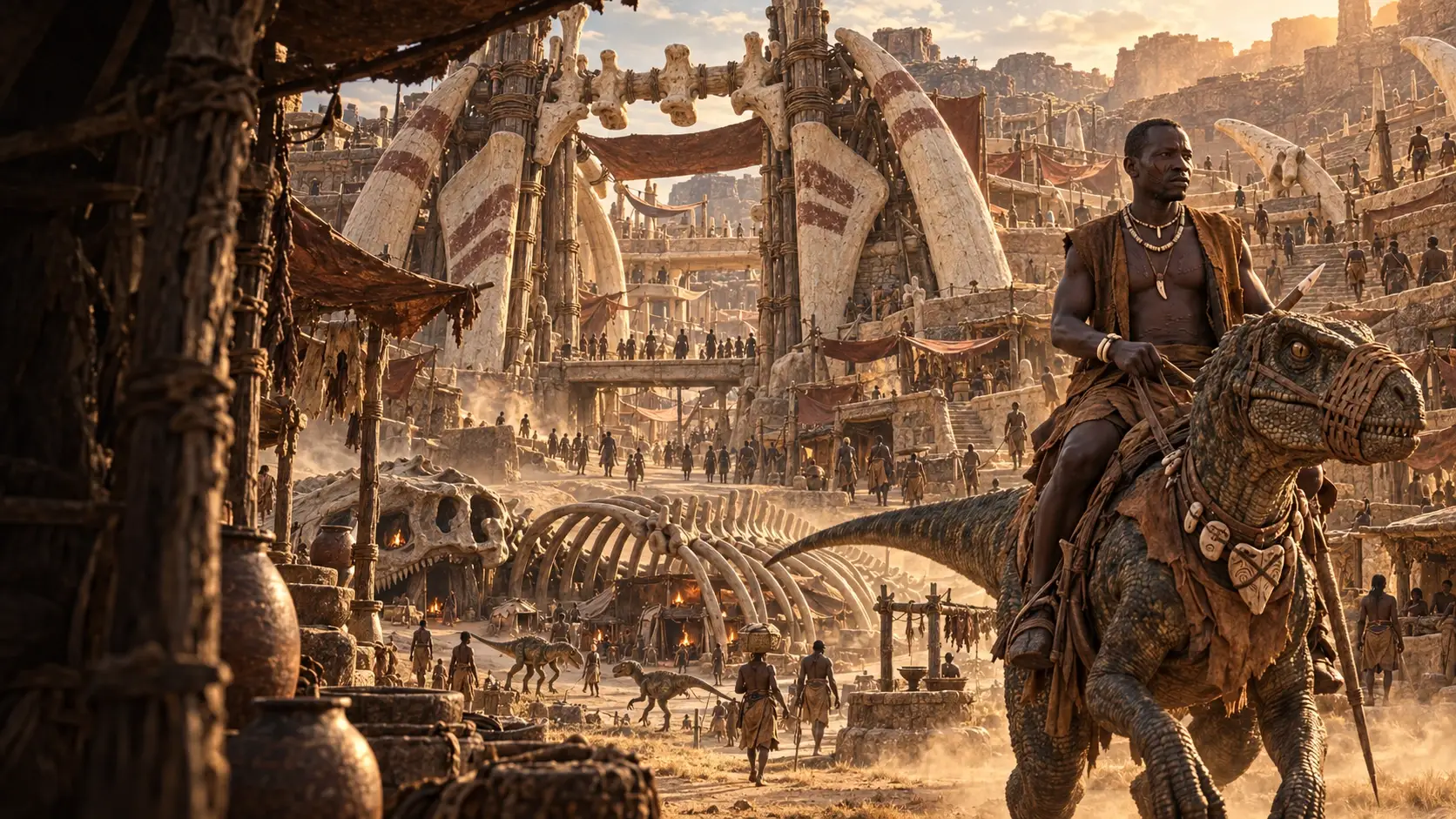
Arkhan gives animal bone a second life in workshops and architecture. Its cities have walls, basins, markets and memories. Durable frames meet membranes, shutters and parts that can be dismantled.
Thirteen million people, seven khanates and two hundred colossi. Raptor tracks carry the raids and the Horde; animal bone, leather and tendon arm the riders.
N’GoroWaters, roots and Shedding VillagesOpen atlas
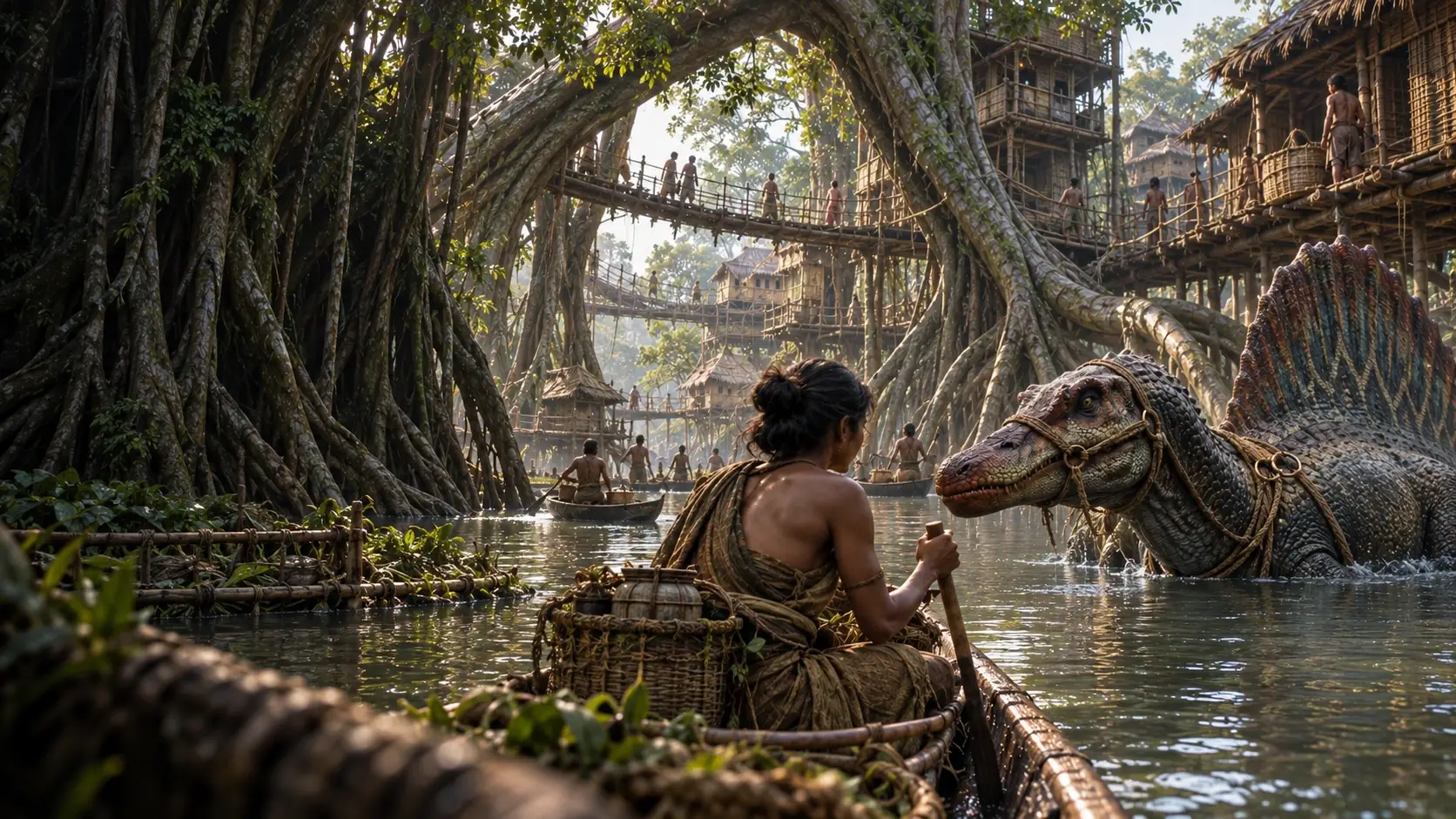
N’Goro can be understood through water, mangroves, roots and its Shedding Villages. Homes respond to rain, spores, floods and the movements of living things. Routes must be read anew.
Homes use fibre, membranes and dismountable joints. Quarantine and care shelters protect the inhabitants; the Shedding Villages combine detachable modules and floating stores.
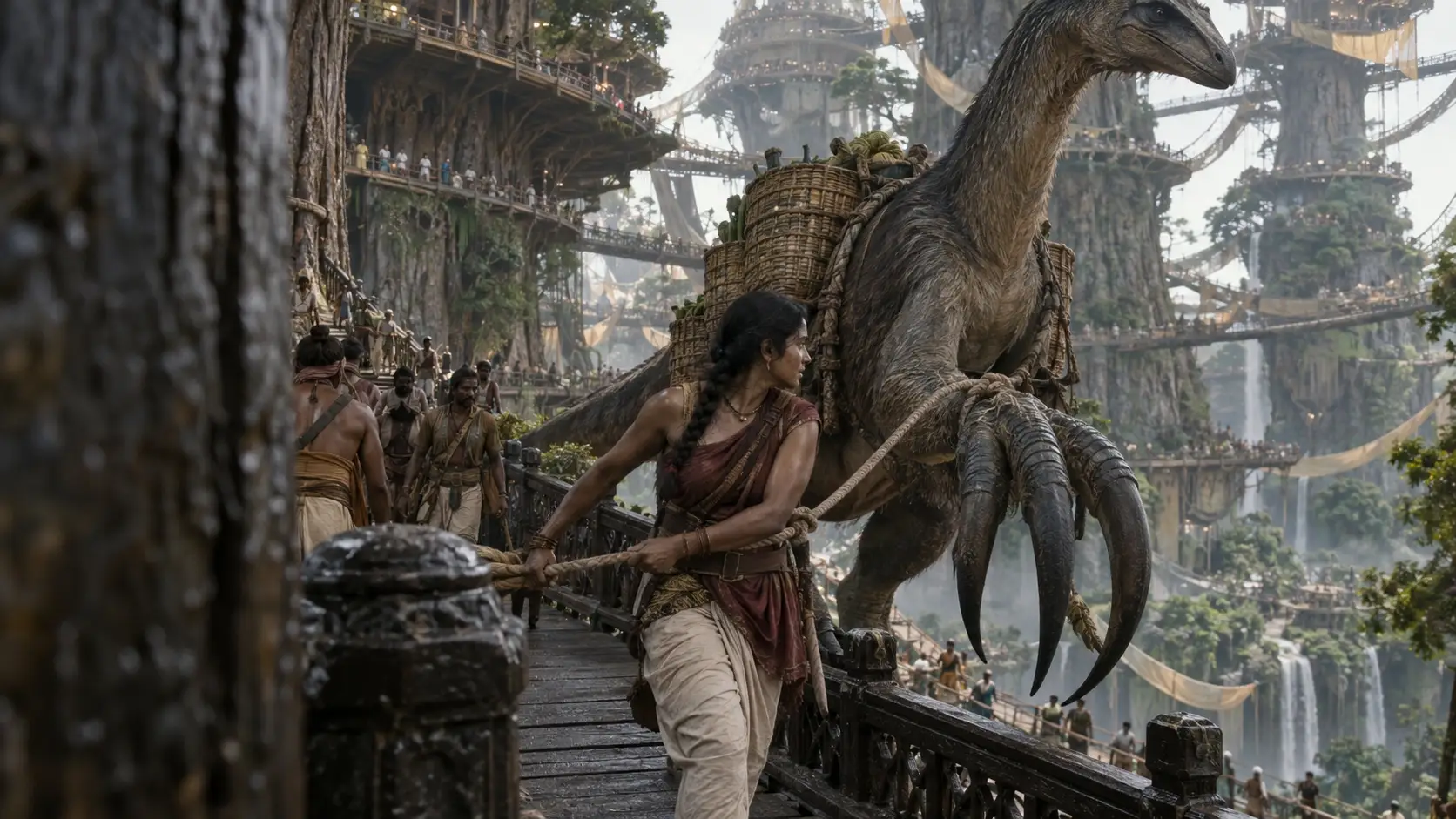
Des palais entre les cimes. Des rues qui changent de destination. Des fermes qui s’enroulent autour des arbres. Dans les Hautes Jungles, toute une société vit au-dessus d’un sol qu’elle tient pour impur.
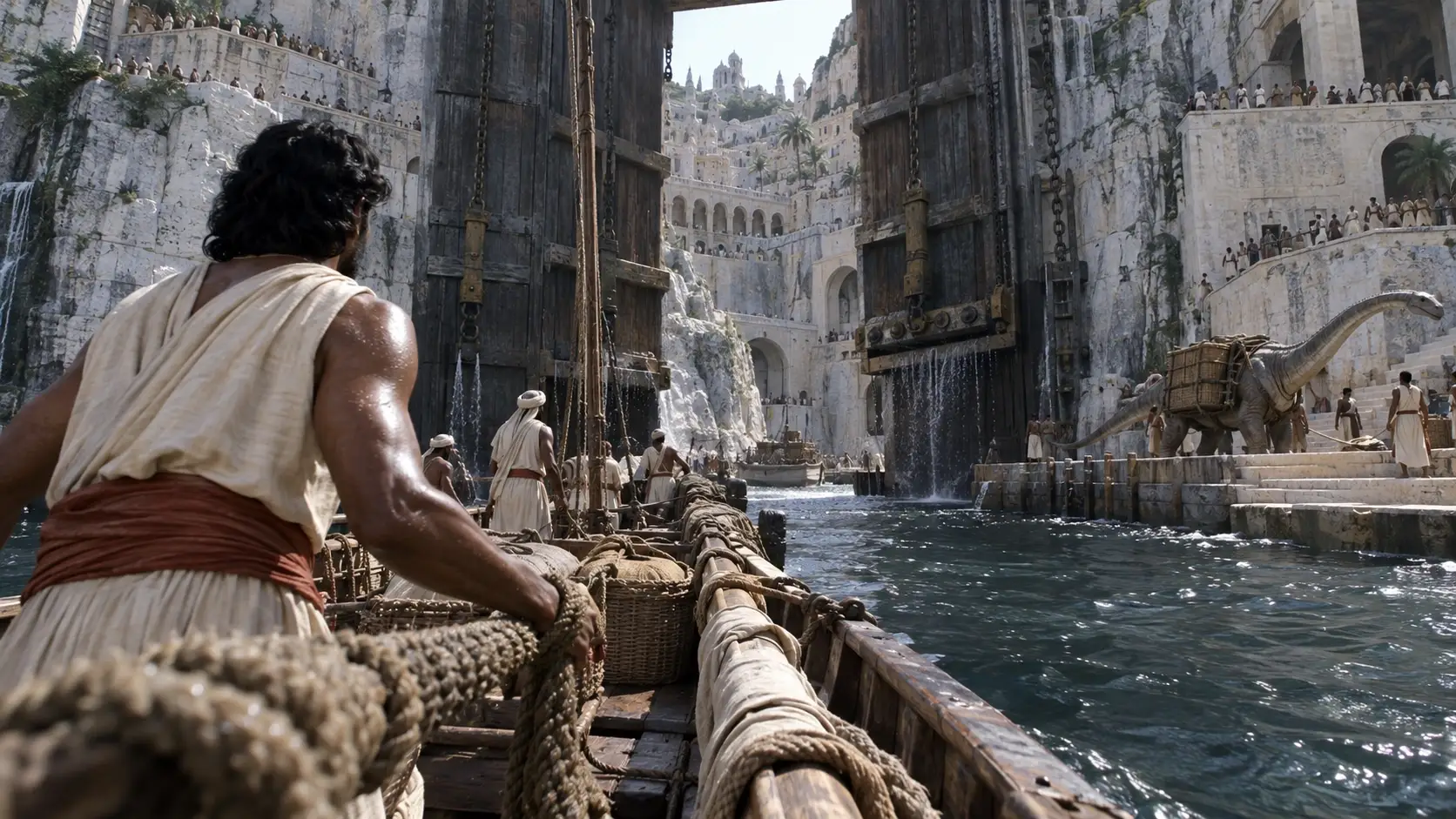
Un navire entre dans une falaise et débouche au fond d’une cité. Des palais blancs occupent les parois ; les écluses changent le niveau de la mer. La Ligue habite une île dont l’intérieur est un monde maritime.