Article
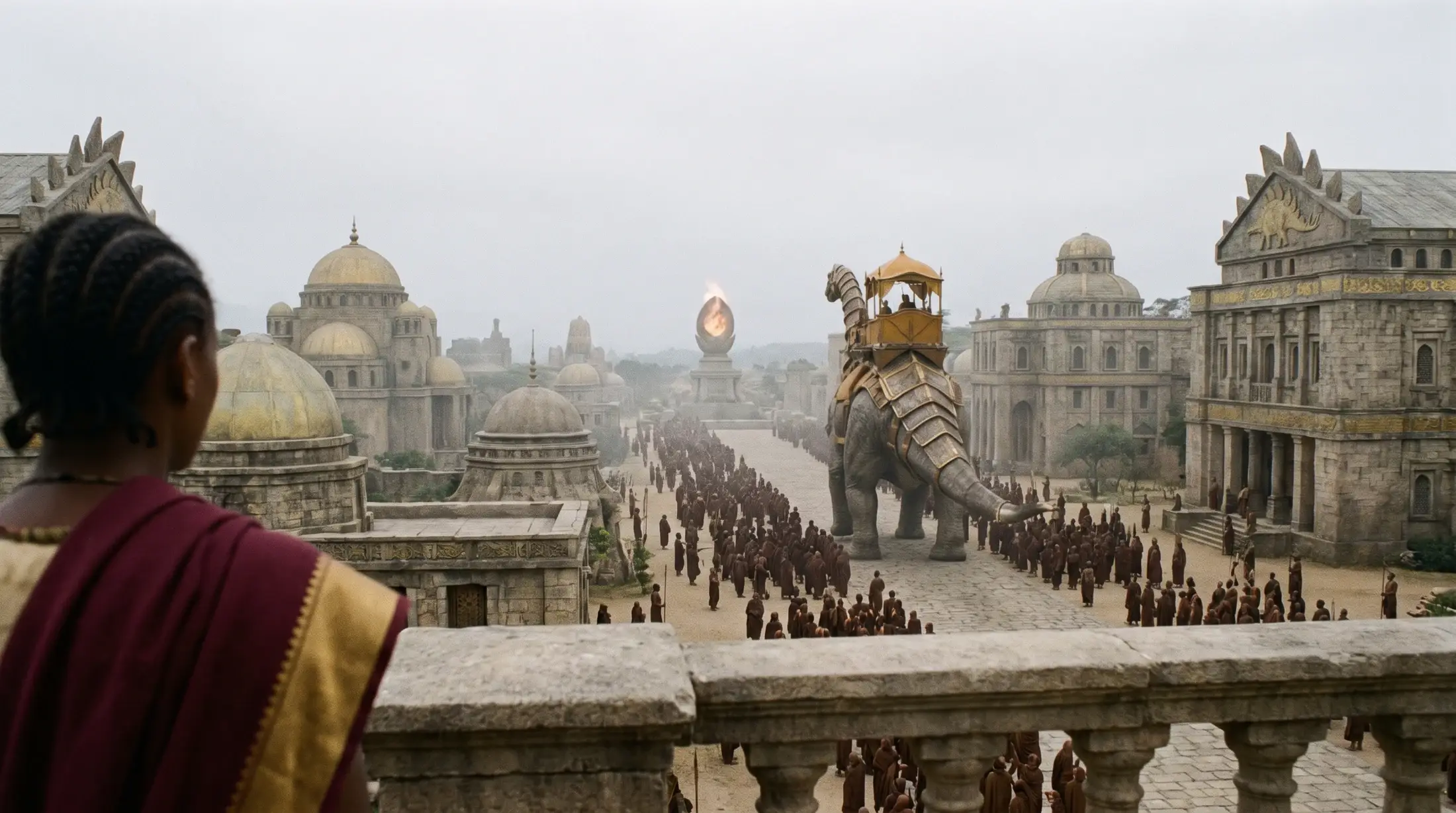
Capitale et six duchés — Urnok
Urnok, Calaron, Sarnor, Bralnor, Orlantis, Velmor et Qor Zaï impérial : lieux, ressources et voies de circulation.
 The world of Pangaea
Titan-height streets, bone vaults, solar terraces and lagoon districts: discover how each civilisation builds its world.
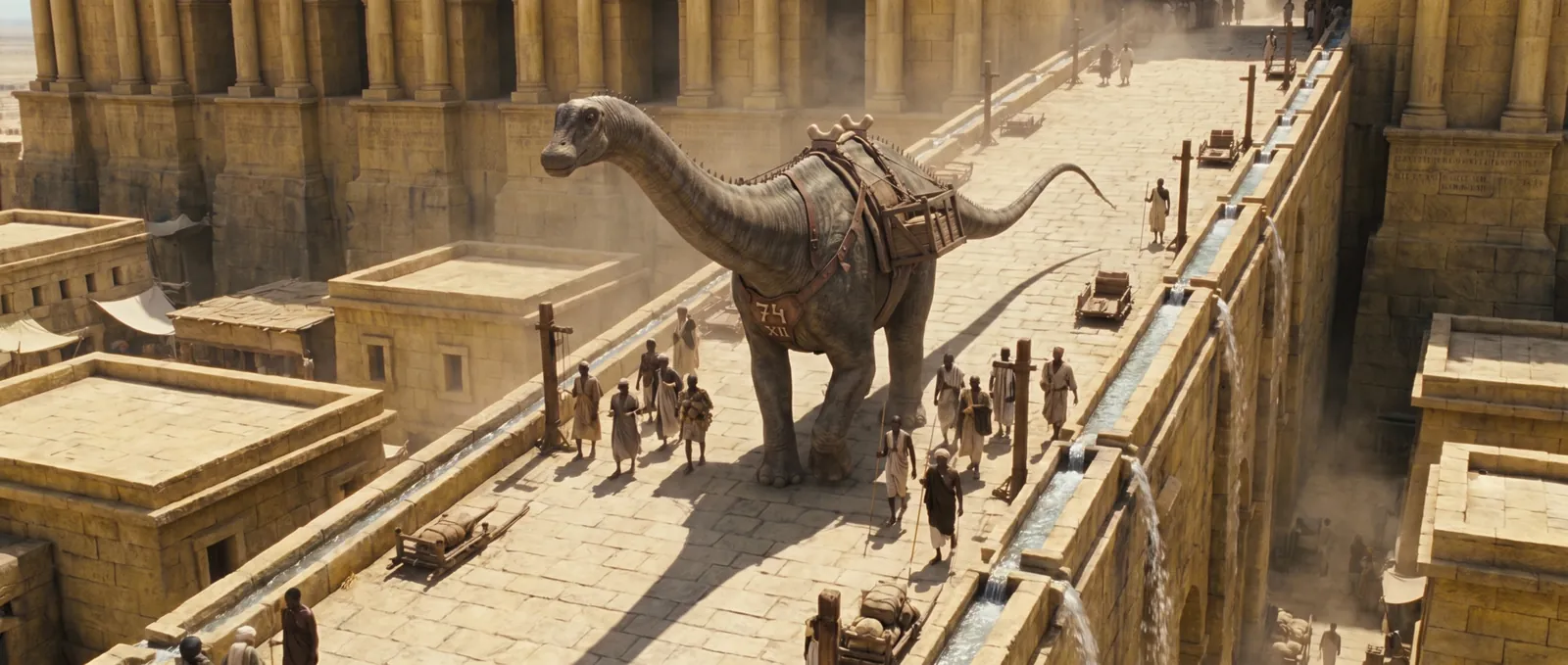
Browse place dossiers ↓Two-level streets, feeding terraces and forage cathedrals: the capital’s districts are organised around titans, river transport and fodder.
The stepped sanctuary, cooling canals and launch towers shape the solar city between cliffs, gardens and sea.
A network capital: inhabited islands, lagoons, trading halls and dockside neighbourhoods. Ocean routes run through everyday life.
Rib vaults, tensioned membranes and stone infrastructure form the metropolis of the Seven Tracks on the canyon terraces.
The city is carved into the mountain. Terraces, gates and galleries reveal only part of its extent.
The great Marsh City extends through low waters, roots and long branches. The Circle of Balances has its seat here.
Within the stone amphitheatre, curved passages connect reservoirs, trading courts and bone arches beneath violet membranes.
Fortified thresholds, supply courts and bone structures: the military city retains its infrastructure as peoples and workshops follow the Great Moult.
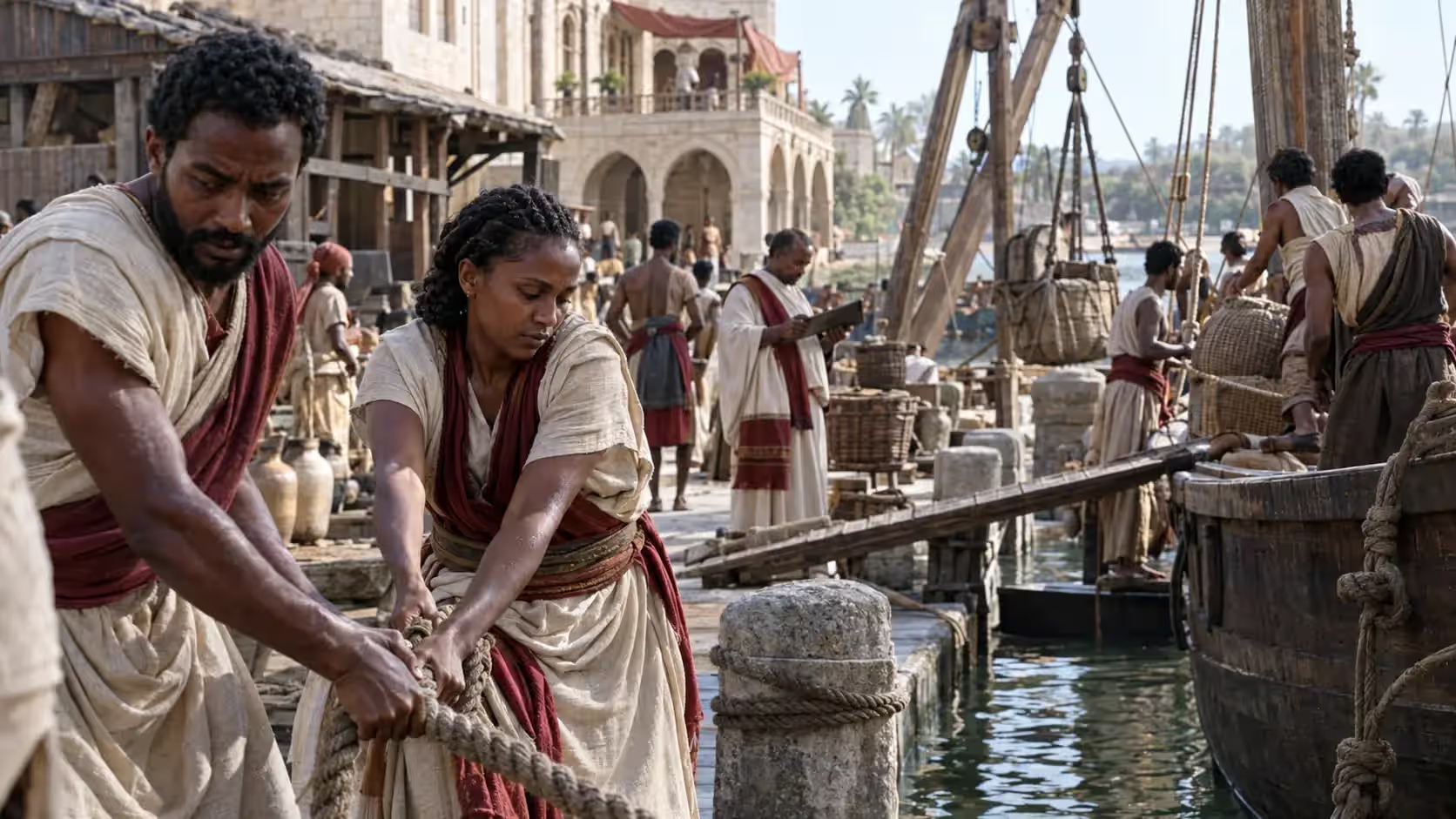
Slipways, hulls, arsenals and artisan neighbourhoods form a great shipbuilding city.
Silk, spices and creative work circulate through workshops, pontoons, markets and fashion palaces.
Diving towers, lagoons and nacre markets connect the city to its marine wealth.
On the insurers’ peninsula, observation towers and departure basins serve the Chambers of Risk.
Visual reconstructions based on the lore. The world map remains the geographic reference.
Cities, ports, passes, settlements and routes. Discover who lives there, what moves through them and how they connect the world.
Read cities, ports, homes and territories together. Follow inhabited places, then the routes, activities and animals connecting them.
Urnok, Calaron, Sarnor, Bralnor, Orlantis, Velmor et Qor Zaï impérial : lieux, ressources et voies de circulation.
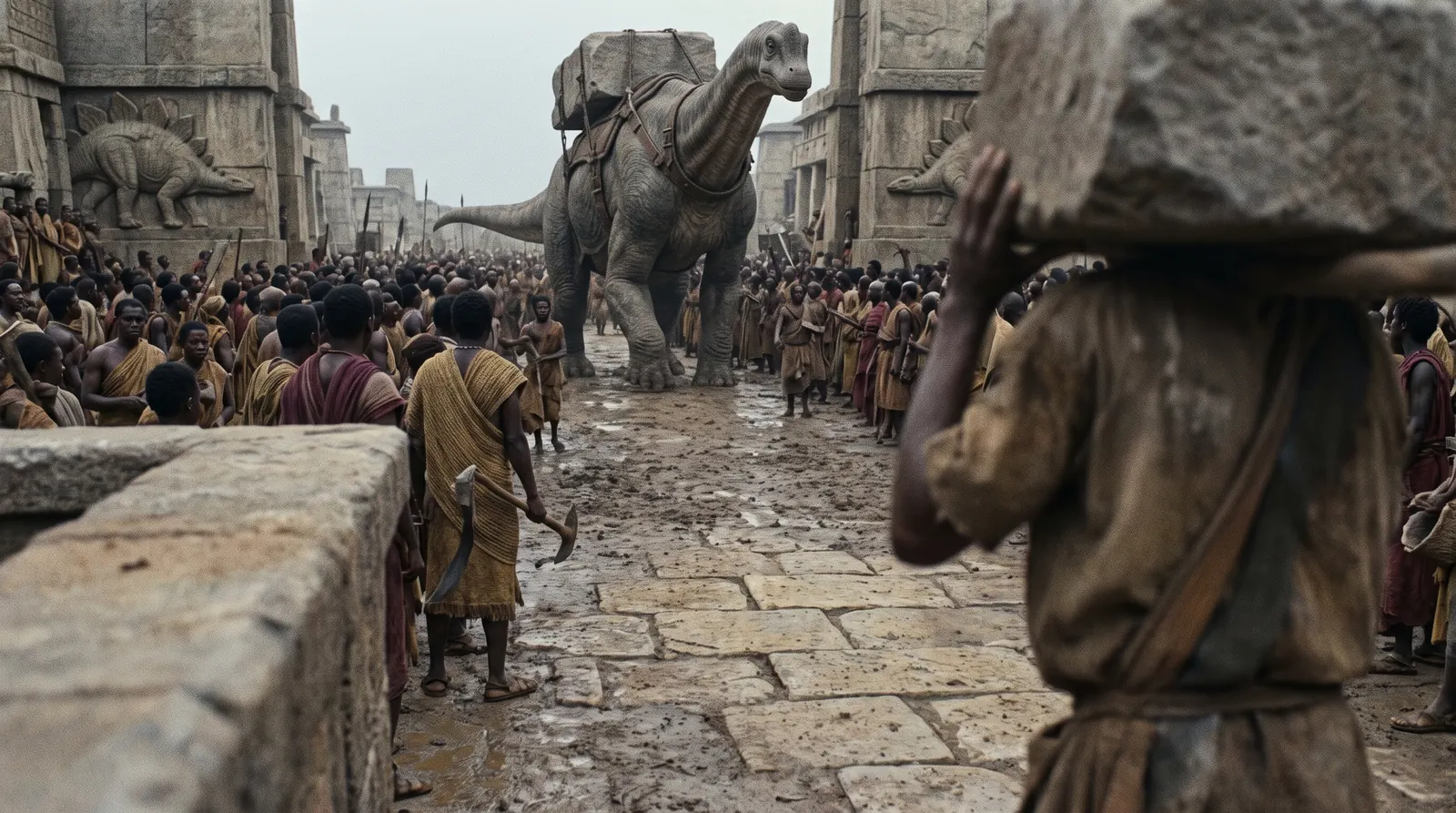
Quarries, lifting and heavy hauling make Bralnor a territory where useful stone is always prepared and accompanied.
The historic duchy of the imperial centre Urnok. Records, seals and trades of the Empire.
Chapters stay attached to their parent dossier. Search also explores their content.
127 results · Cities and territories
Urnok, Calaron, Sarnor, Bralnor, Orlantis, Velmor et Qor Zaï impérial : lieux, ressources et voies de circulation.
Quarries, lifting and heavy hauling make Bralnor a territory where useful stone is always prepared and accompanied.
The historic duchy of the imperial centre Urnok. Records, seals and trades of the Empire.
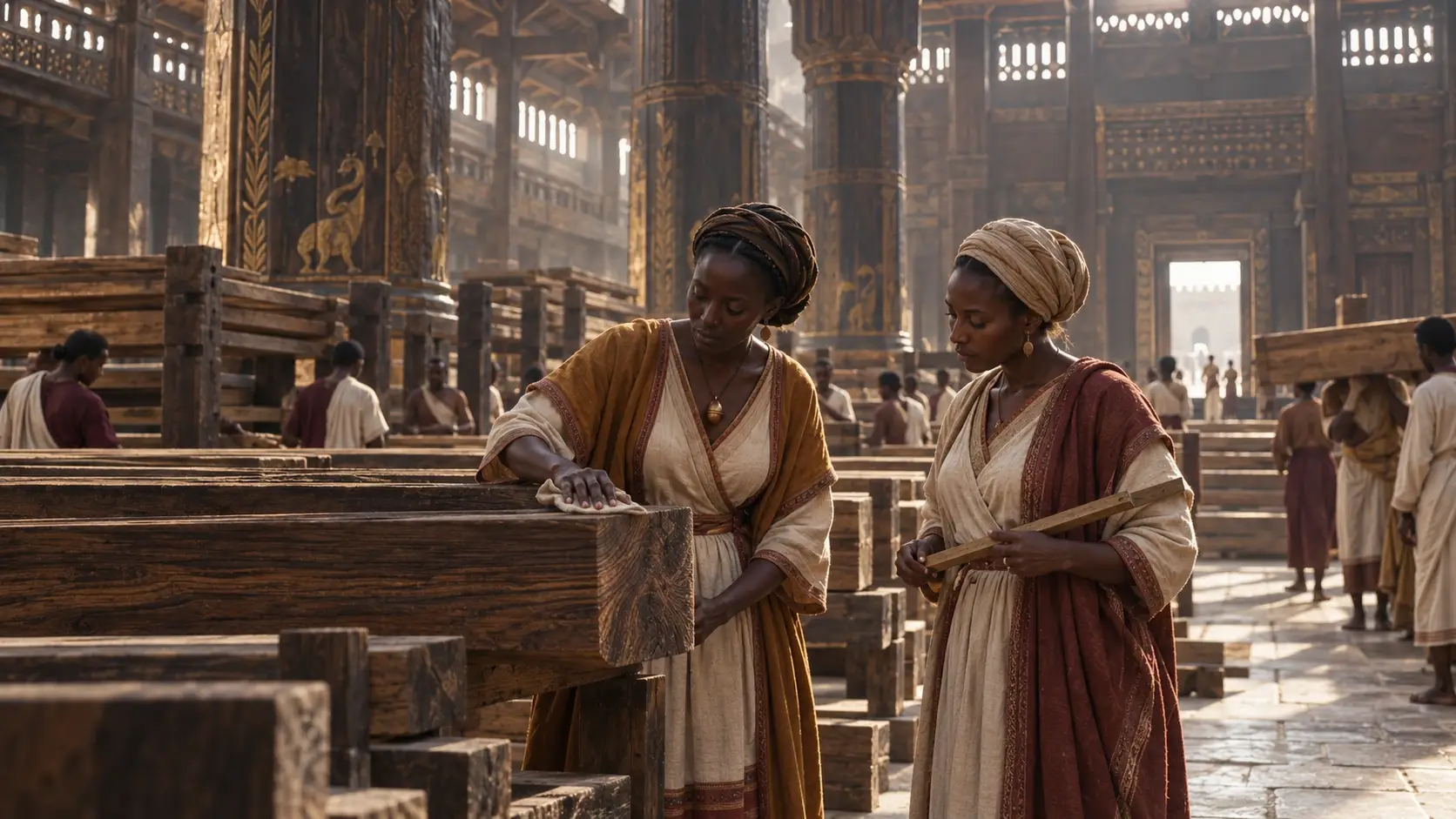
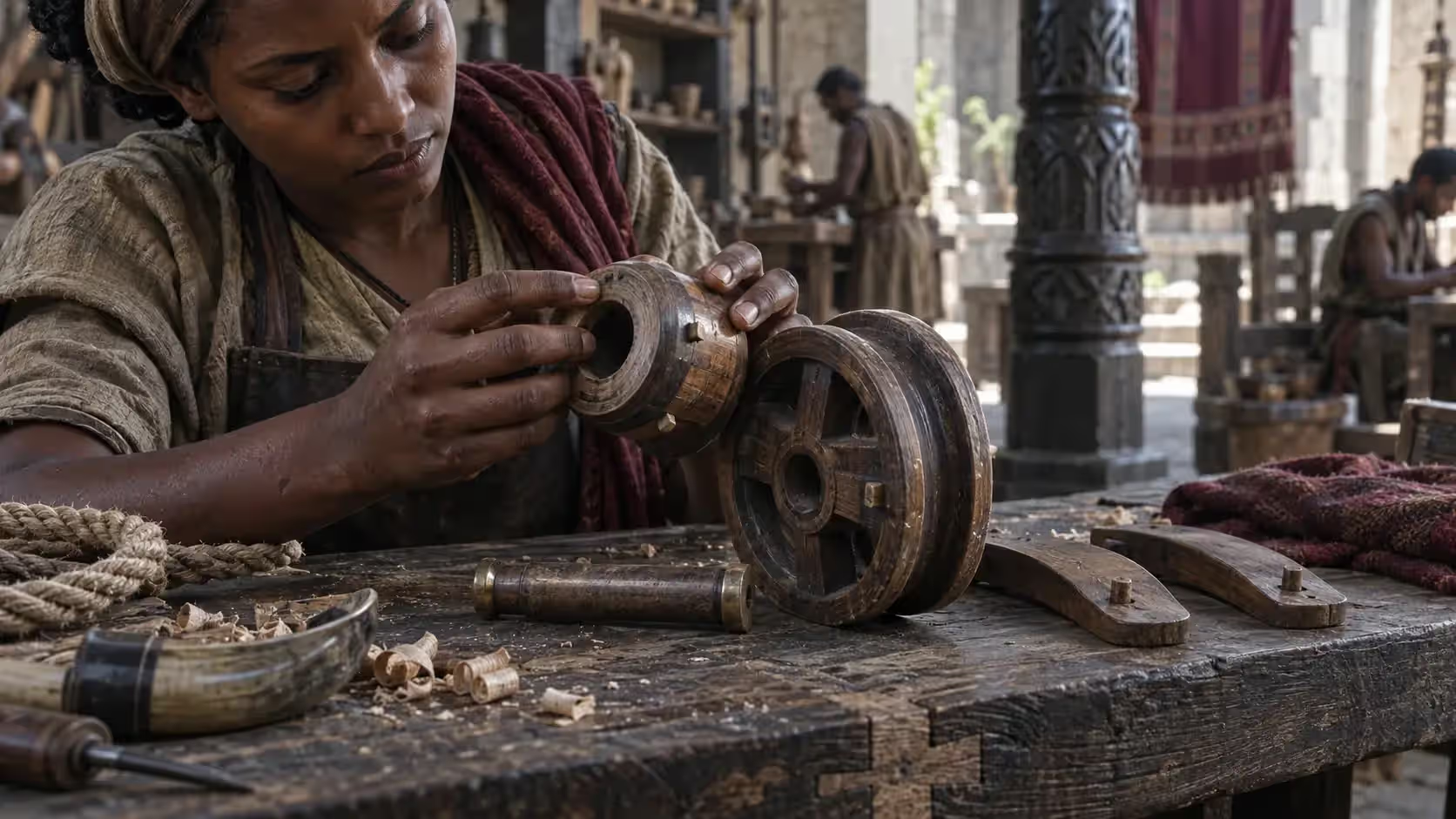
Orlantis · Mirvane’s tall working spaces and cranes allow trusses, bridges, halls and scaffolding to be assembled. Timber reaching this point has already passed through the upstream links.
Orlantis · The chain reaches the Marlen line: downstream floating, ports and shipments to Volonia. The quay connects forest timber with maritime trade.
Orlantis · Between floating and turning, drying sheds and steam rooms form a link of their own. Steam-room workers, shingle splitters and timber calibrators belong to the duchy’s less visible trades.
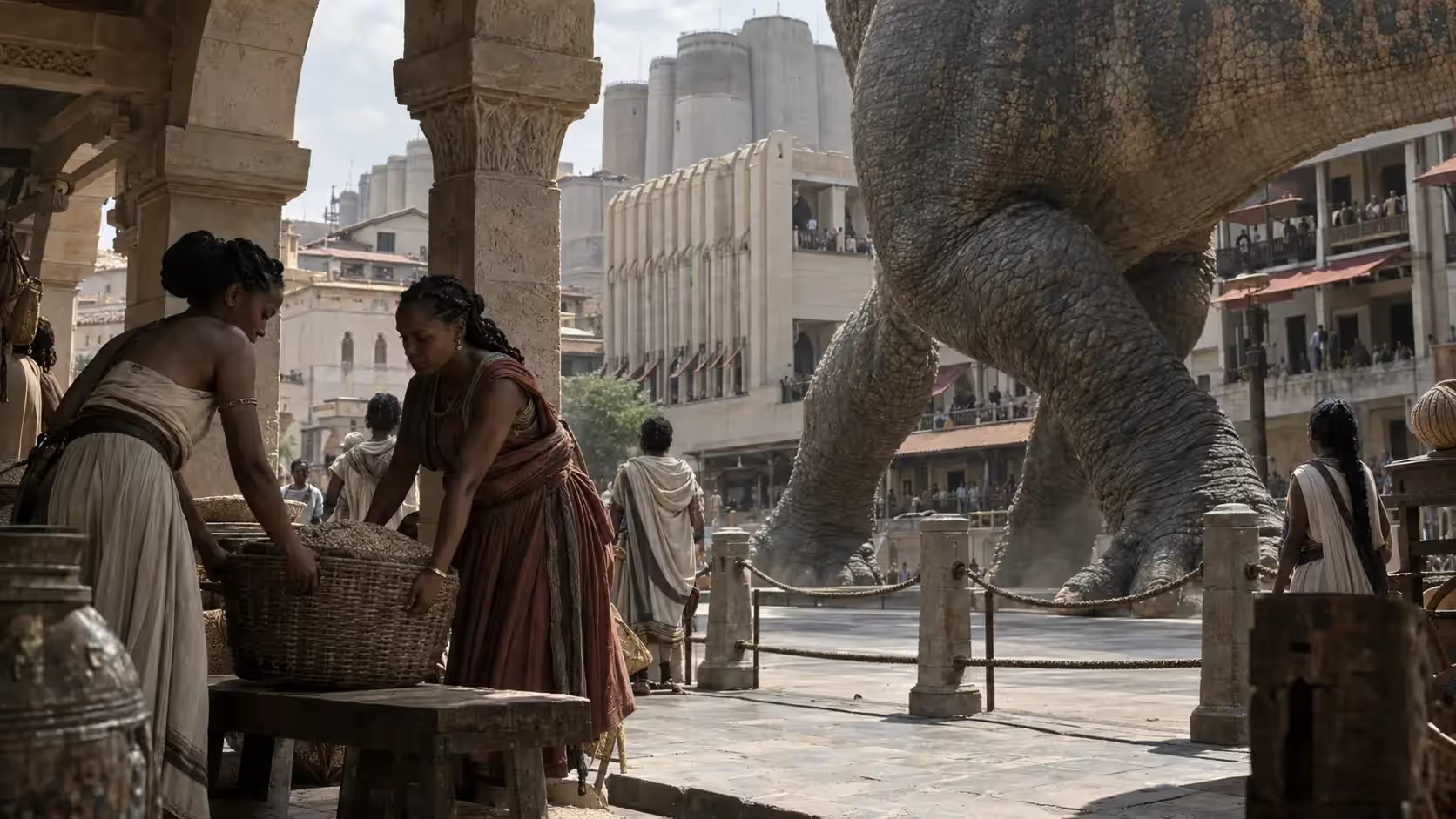
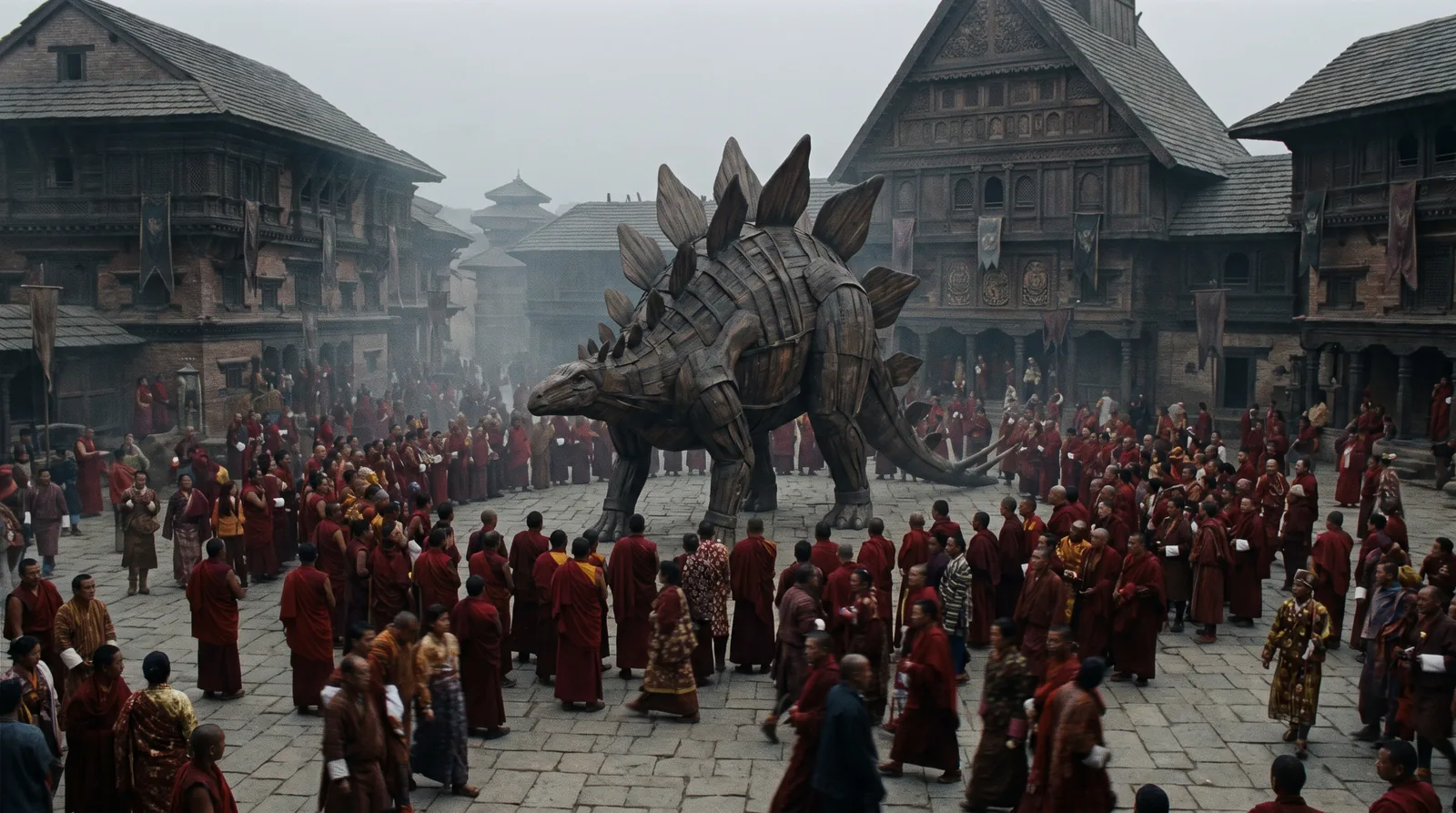
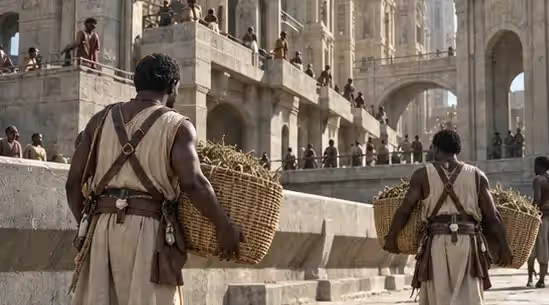
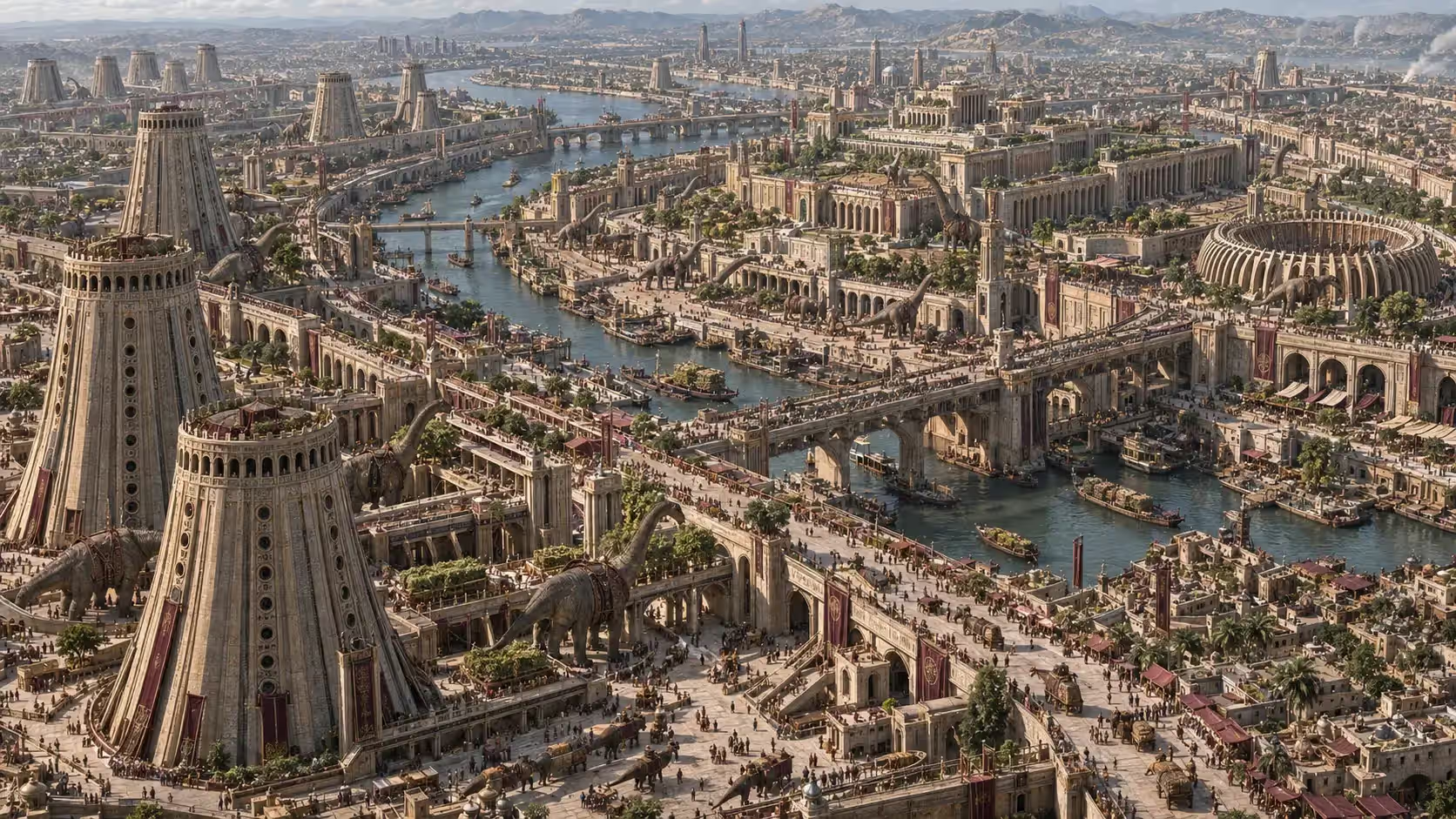
In Urnok, true greatness lies not in the palace but in the fodder chain. A belt of low stores, terraced granaries, inner docks where sauropods line up and ceremonial squares: the fodder station is at once depot, market and place of public accounts.
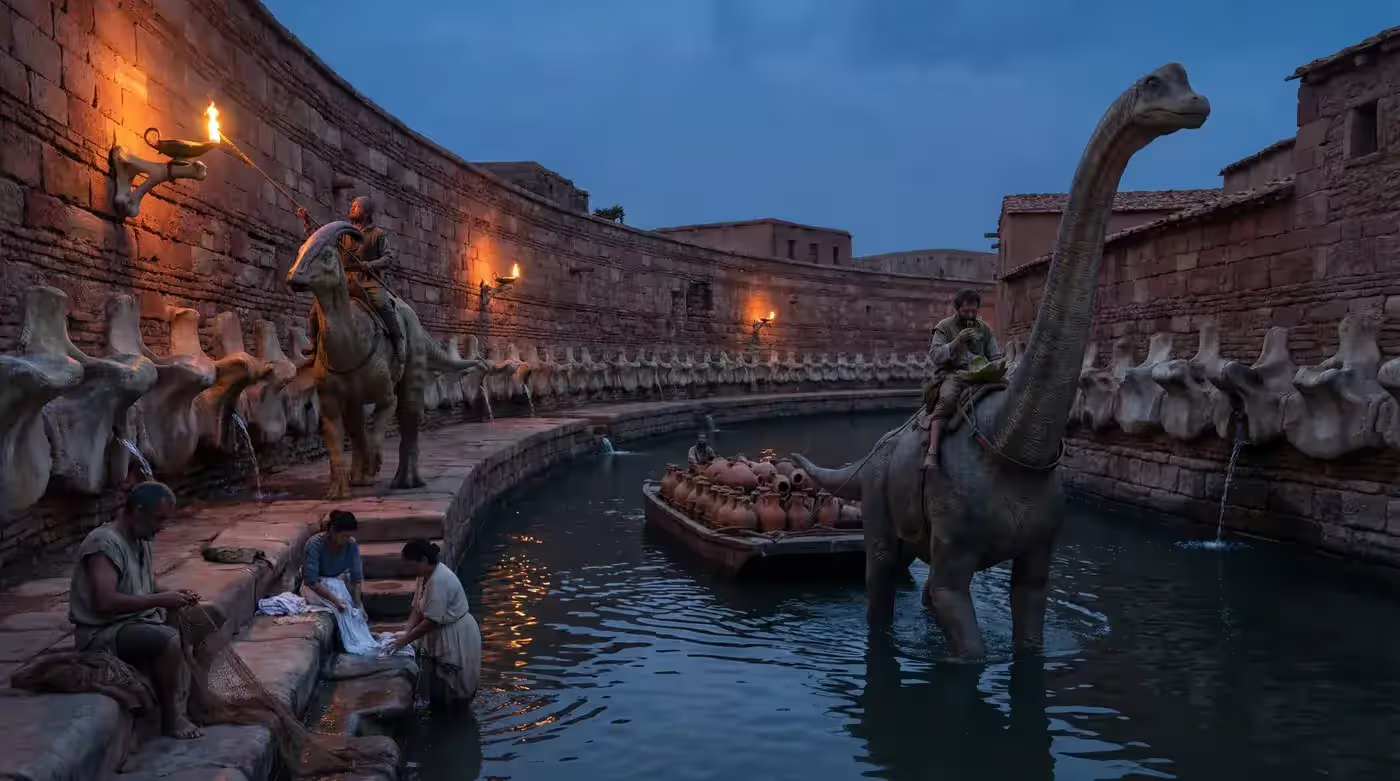
Urnok also thinks of itself as a river port. Fortified quays, towpaths, niches for living barges, customs, locks and transhipment stores extend the roads into the river and the canals.
Orlantis · Upstream in the urban chain, Berlan arrivals enter the log yards and then the floating basins. This is where material arrives before it is transformed.
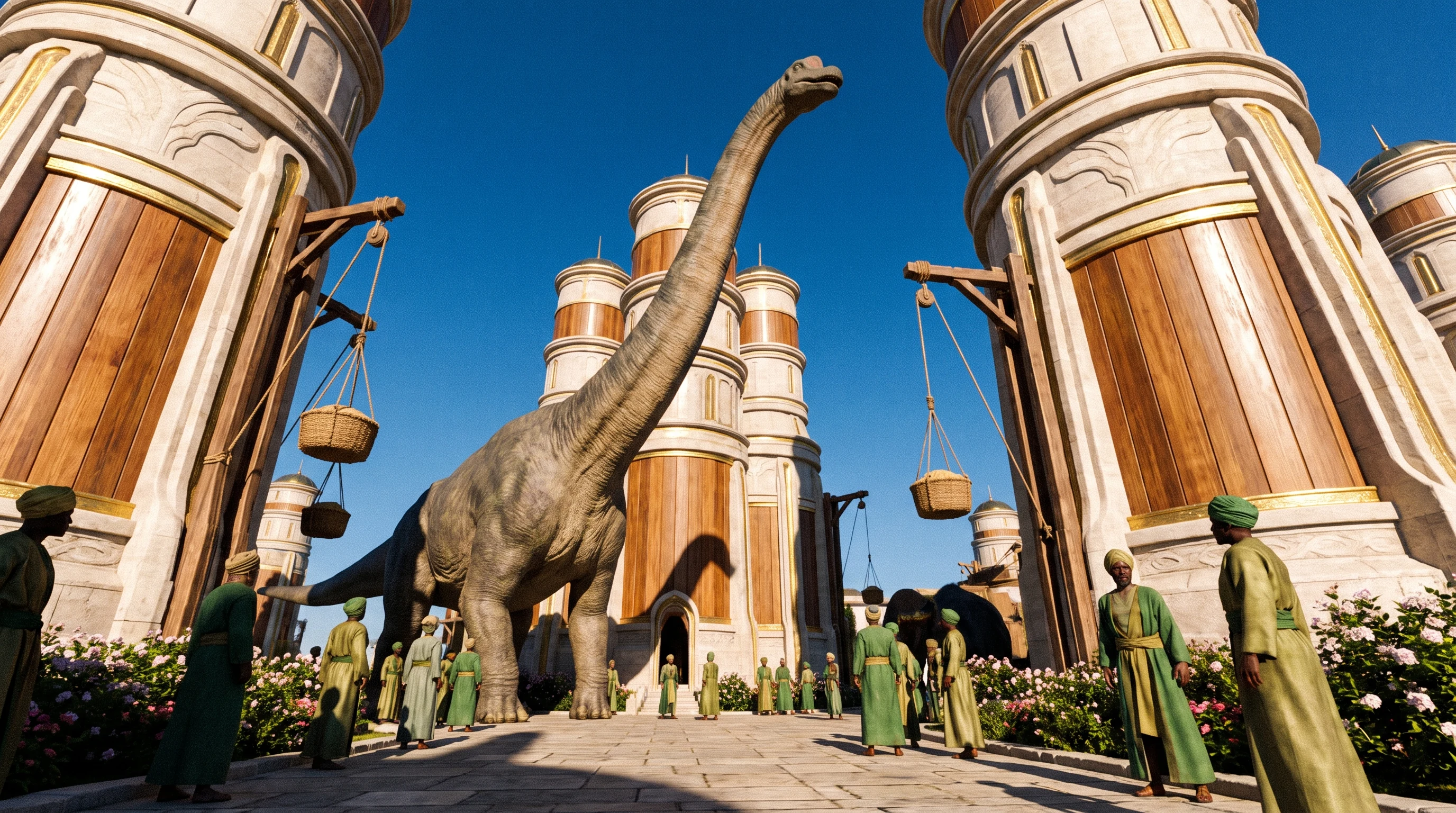
Urnok’s prestige style: marble, domes and arcades crossed by rings, ironwork and polished winches worn like jewels. It dresses the noble districts, the seats of the great houses, embassies and universities: there the city wears its tools as finery.
In Orlantis, districts, workshops, basins and the port are organised by material stages and the space needed by great living beings.
Orlantis · Lomvar enclosures occupy an outer belt connected directly to the forest and the load-bearing road. Logging therefore has an access route that avoids the urban centre.
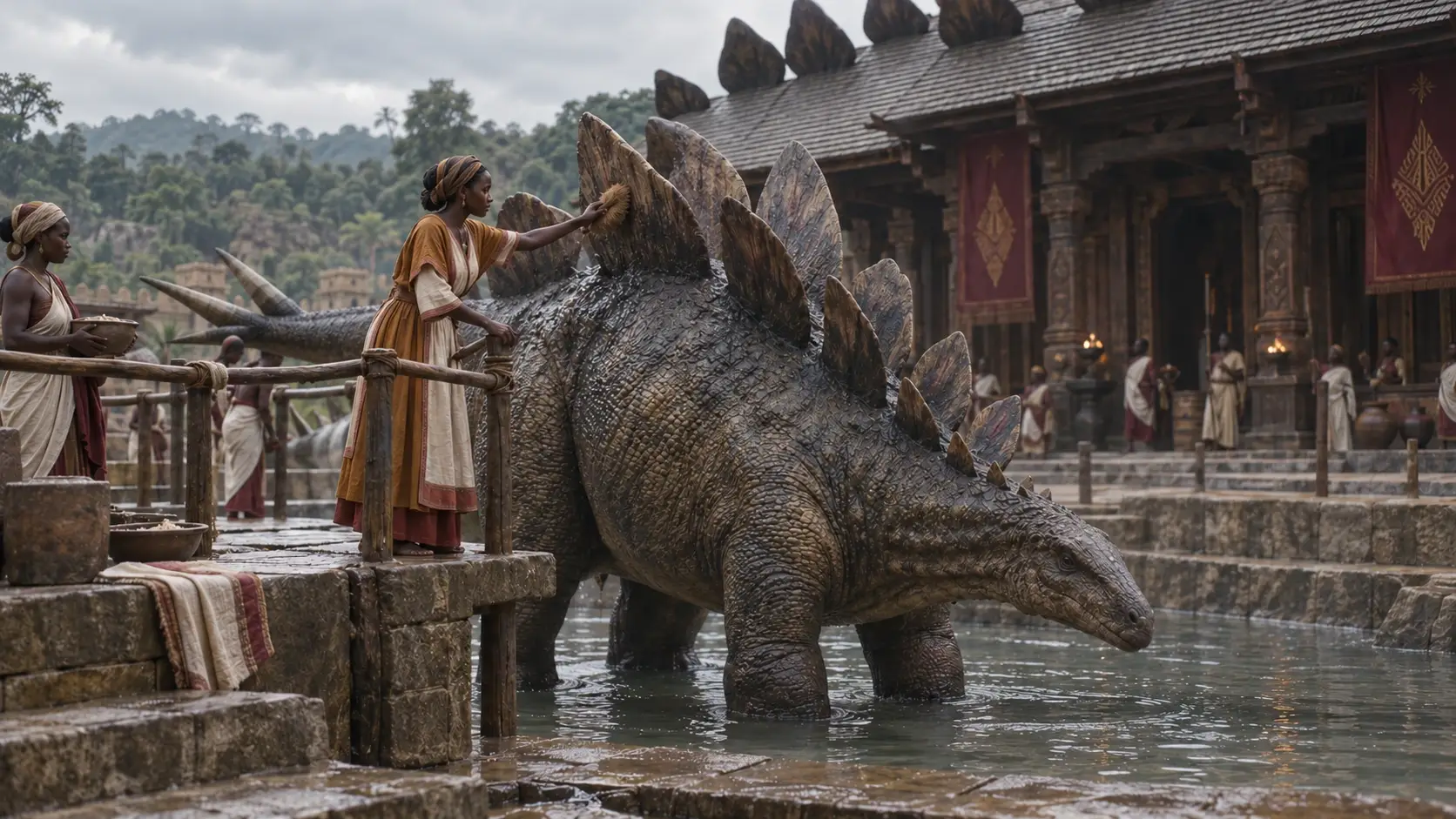
Orlantis · Thermal gardens can combine baths, a civic garden and a veterinary centre. Ramps, drains, non-slip surfaces, inspection platforms, brushes and ointments make care possible.
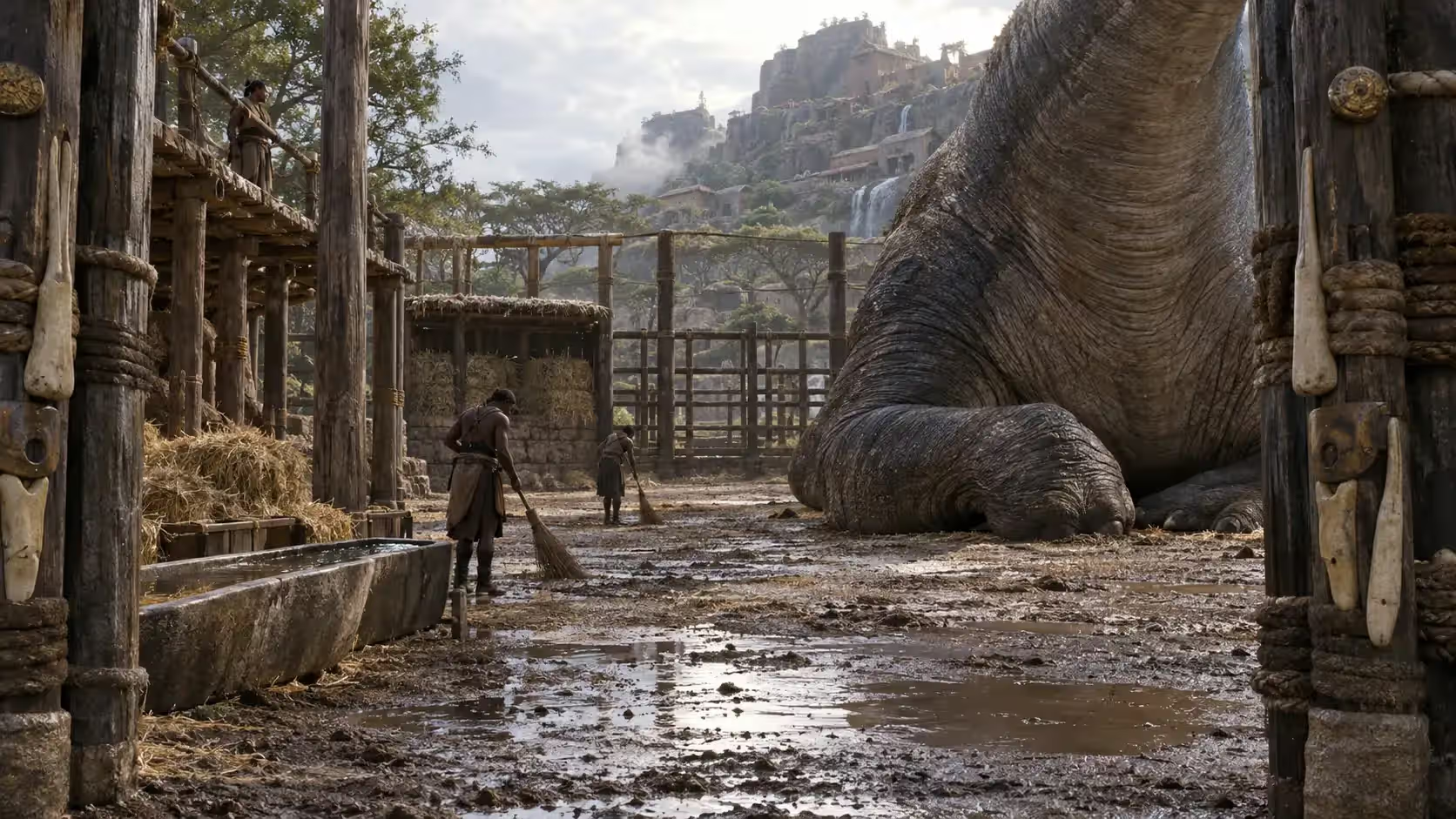
Urnok is an inland port of animals, eggs, leather, bone and fodder. To hold back disease and parasites, its gates are thresholds: curved corridors, steam rooms, baths, polygonal airlocks and lines of pale or dark stone that separate clean from dirty.
An Urnok style in which temple-palaces are gently sloping pyramids that heavy traffic can climb, and gates are curved throats that swallow columns of animals. The façade serves as an engraved traffic map, and one passes under the guardians’ throats.
Orlantis · Tapping supplies the Aversin line; cooking produces pitch, varnish and balms. Fire requires these sites to stay downwind and outside the walls.
Along the entry roads, in quarantine zones and river stations, immense low naves let animals rest in the shade beside side basins. With roof courts and resting yards, they make the pause part of the architecture.
In Urnok, city and duchies must connect stores, water, convoys and living bodies of different sizes.
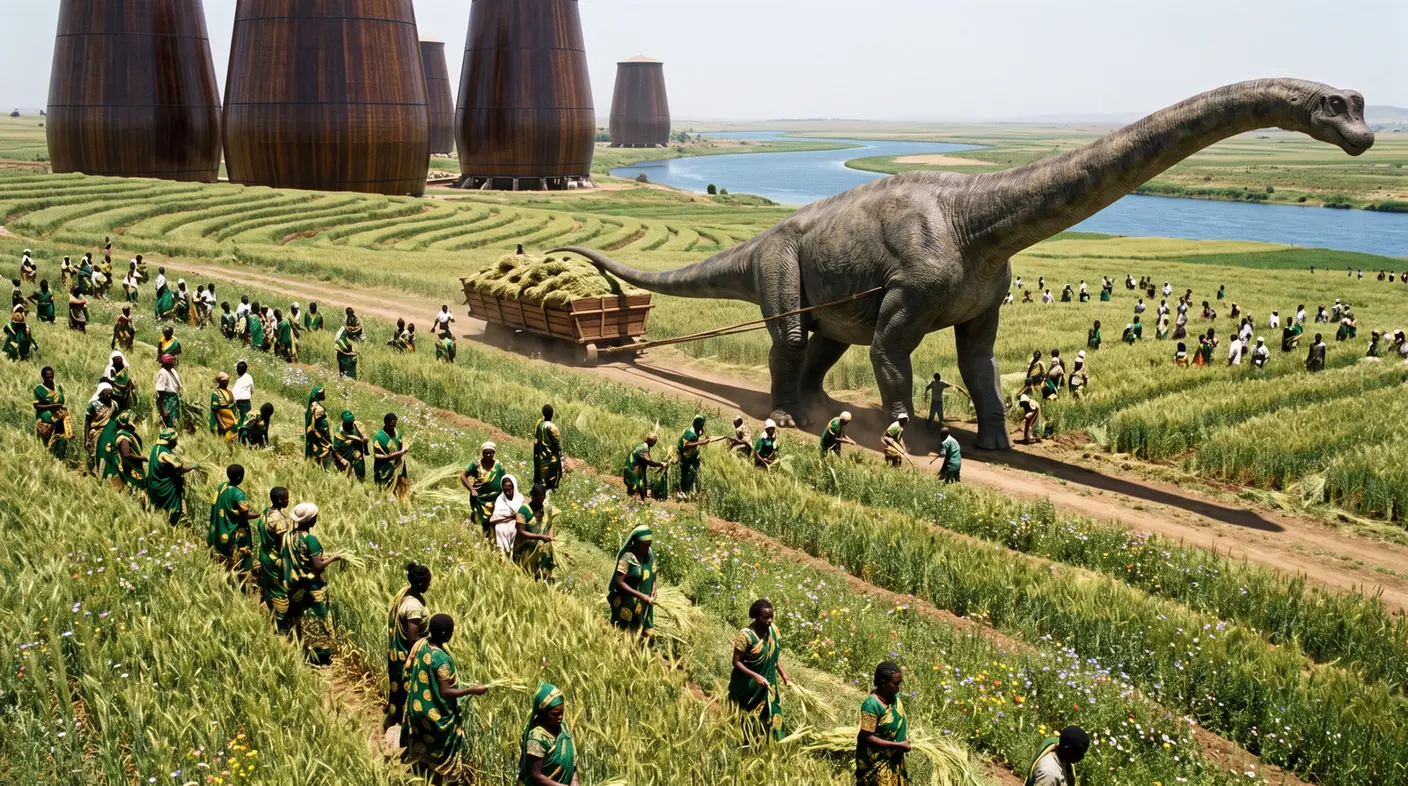
Sarnor is more than granaries: seeds, water, milling, reserve guards and convoys sustain the Empire’s food function.
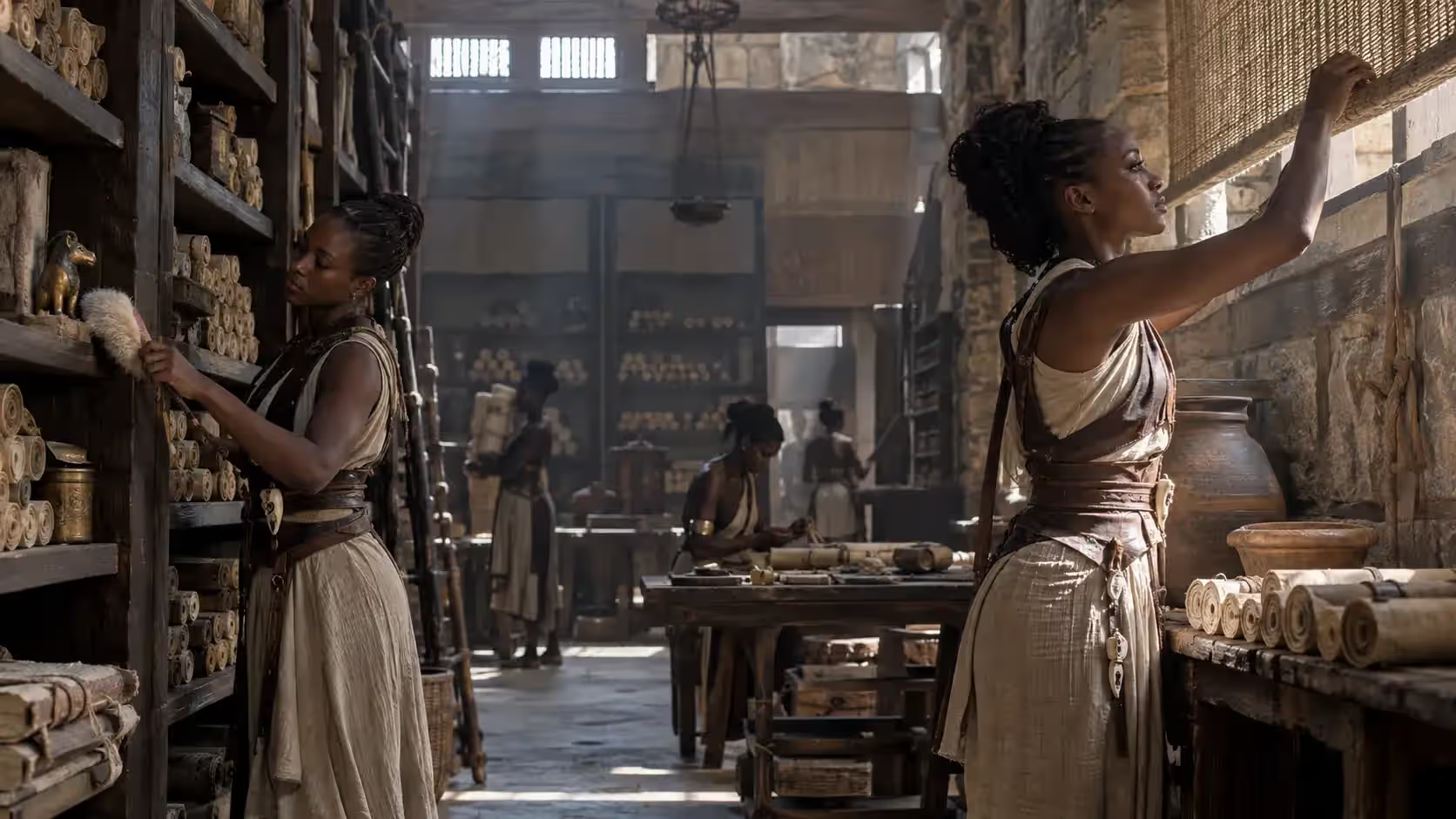
In an empire of registers, archives are buildings of climate: cool rooms, passive ventilation and filtered access. Their gardens drink up water, their hanging galleries overlook the courtyards, and their counting halls open beneath ribbed domes.
Urnok’s hydraulic system: lake-sized watering basins, canals, monumental drainage and squares that drink the storm. Water becomes an architectural material there, and the sacred lies in the water and shade the giants need.
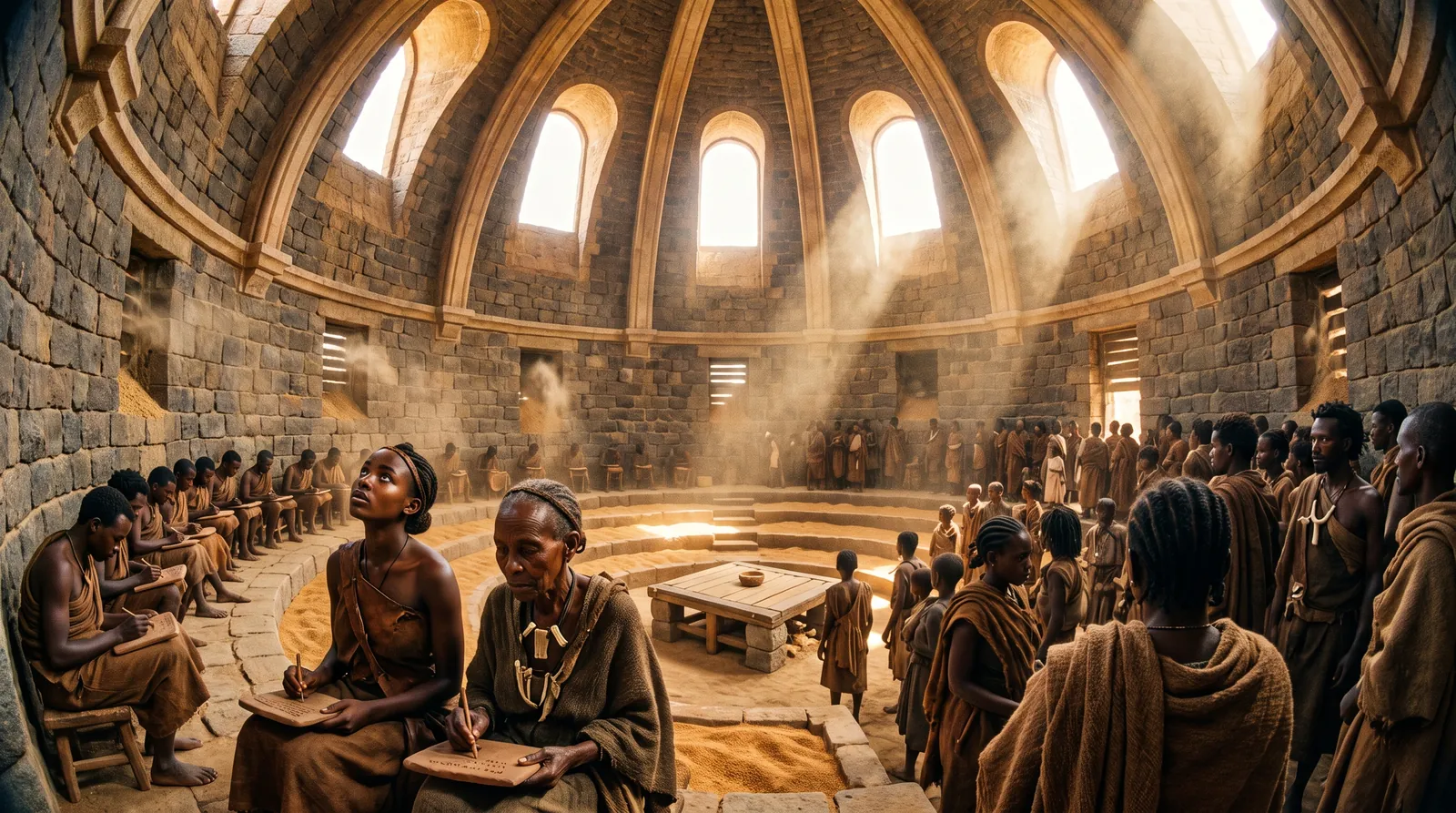
Graduated, ventilated storage towers, the cathedral granaries keep the Empire’s grain, seed and fodder. Their mass makes one of Urnok’s rules visible: power is a capacity to feed.
An Urnok urban system that separates levels of movement: on the ground, great animals advance on a base of infrastructure; above, a continuous pedestrian city spreads as a mezzanine, with covered streets, markets, schools, courts and temples.
24 of 127 results shown
Explore connections between cities, characters, families and trades. Each article leads to related subjects.
Enable spoilers in the menu to include the story’s events and revelations.