
Denominations and coins
Sums are counted in Dracos and paid in Gold, Silver and Bronze Scales. Volonia and N’Goro have local currencies; Korath has no mint of its own, and Ishtir has no domestic currency.
The three Scales
The Draco is a unit of account; it is settled in coins called Scales. The Gold Scale is the standard coin: in practice it is worth one Draco, and it serves as the reserve coin. For everyday sums people use the Silver Scale, twenty of which make a Gold Scale, and the Bronze Scale, ten of which make a Silver Scale, or two hundred to a Gold Scale. These three coinages are legal tender wherever sums are counted in Draco.
The coin is gold, but the currency is no longer backed by gold: the name Gold Scale is a legacy. In Urnok, the Scale rests on stocks, on the grain the Empire keeps in its silos. In Urnâk, the scale is ekal and the Gold Scale ekal-or; debt is darg, interest zûn and the due date mâr.
Local currencies
Volonia mints its own coins. The Volonian coin changes at about 1.1 Gold Scales, because the ports grant it a premium of trust. International exchange goes through the Volonian Maisons d’Endossement (endorsement houses), which convert and insure large transactions and issue bills of exchange and road insurance. Abroad, Ishtir’s ports and orders may use these Volonian coins, like other foreign currencies.
In N’Goro, the Fiole de Venin (venom vial) serves as commodity money: it is worth about five Gold Scales and follows the rate of the dosage. The Réserve de Brume stands in for a bank: remedies, antidotes and emergency eggs are deposited there and withdrawn in times of crisis, and its value follows the scarcity of antidotes. In the marshes and along the coasts, shells serve as small change at a local rate.
Korath has no mint of its own. Ishtir has no domestic currency: no wages, no domestic prices, no inheritable fortune. Scarce resources are allocated there through rights of use, access or priority, which are personal and revisable.
Letters, certificates and tokens
Alongside coins, money-changing uses letters, certificates, strongboxes and tokens. A bill of exchange, sealed by a Maison d’Endossement, costs 0.30 Dracos to issue, seals included.
What a Scale looks like
The coins of the Draco live up to their name. They are not round but oval, slightly domed, and their main face imitates the overlapping of a scaly hide; it is said that a handful of Scales on a table looks like a piece of animal leather. The reverse carries the mark of the Imperial Bank of Scales and Roads and the year of the Scale, the year of striking in the imperial calendar.
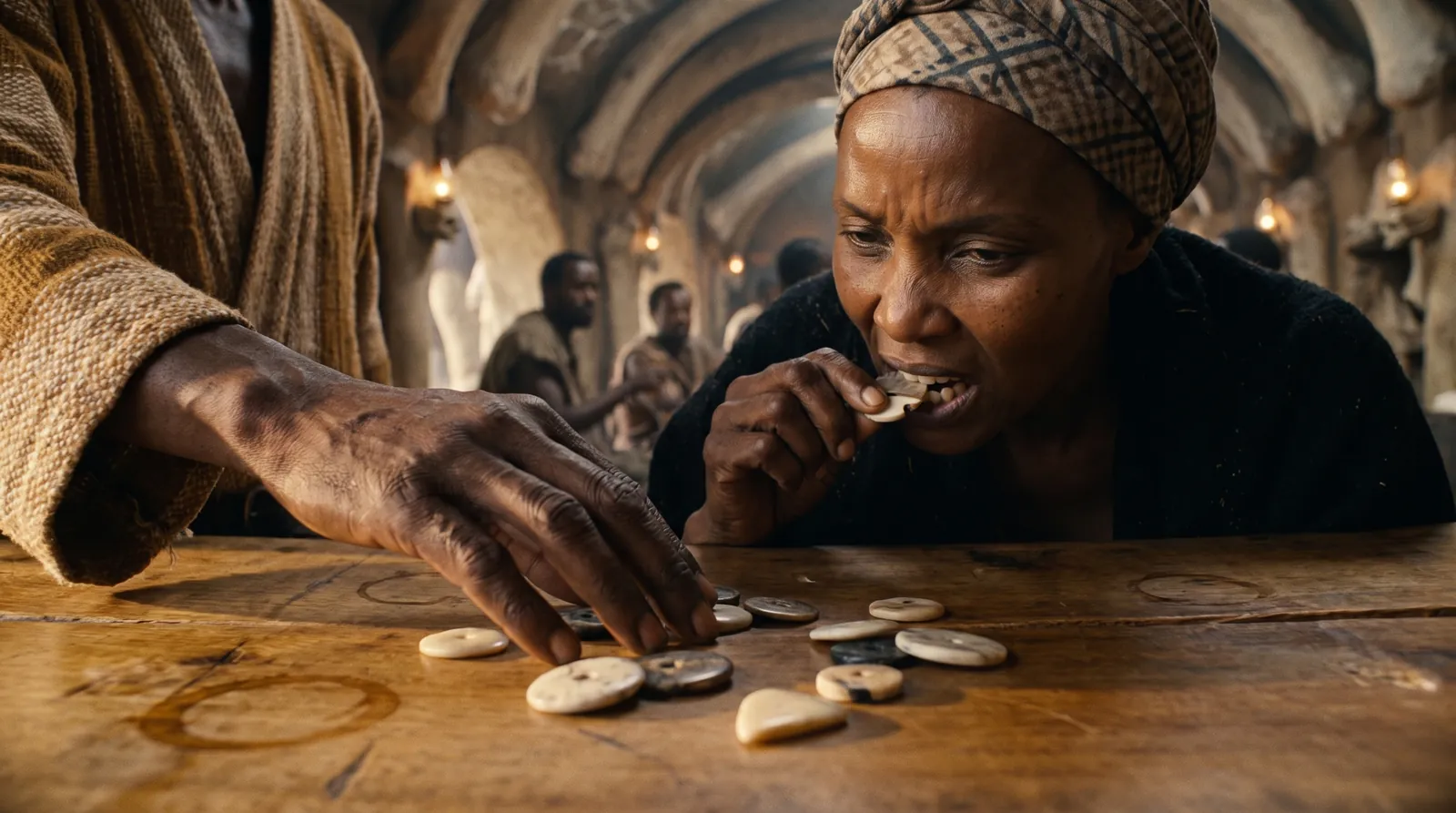
The three metals have three sizes. The gold Scale is small and thick; the silver Scale broader and thinner; the bronze Scale, the largest, is pierced in the centre so that it can be strung. Day labourers carry their bronzes in cords of ten or twenty knotted at the belt, and people often count in cords rather than coins. The edge of the gold and silver coins is grooved, so that one can see at a glance whether someone has filed it.
Accountants abbreviate the Scale as EKL on their slips. The word comes from Urnâk, in which scale is ekal, and it has passed into every language of the ports.
What each coin pays for
Daily life is settled in bronze. It takes two hundred bronze Scales to make a gold Scale, and a labourer’s day is paid twenty-five to forty bronzes; a qualified trainer earns sixty to a hundred and twenty. A dozen table eggs costs a little under forty bronzes at market, and quay insurance against drowning, bites and falls costs a dock worker two bronzes a week.
Silver serves for the week’s purchases. A twenty-five-kilo sack of grain is worth a little more than a gold Scale, or twenty-two silver pieces; a lot of twenty road flatbreads costs seven or eight. Gold, finally, is the money of animals, contracts and great houses: a week’s ration for a barge hadrosaur takes eight, the harness of a very-large animal several.
Most common people almost never hold a gold Scale in their hand. To them, gold is counting-house money, seen passing across the changers’ tables and into the houses’ strongboxes.
Clipping, plating, counterfeiting
Wherever a currency circulates, there are forgers. The humblest clip the edges of gold coins and melt down the dust; others plate Scales, covering a copper core with a thin layer of gold; the boldest strike their own dies. All of this is called, in a single word, false scale.
Changers have their own gestures for recognising it. They weigh the coin on a small bronze balance, ring it on a stone, examine its grooved edge and compare it with a Bank standard. In the great cities, anti-fraud inspectors make the rounds of the markets and counting-houses, looking for plated coins, filed edges and alloys that are too soft.
In Urnok, striking false money amounts to lying to the register, and lying to the register is lying to the Empire: the penalty ranges from confiscation of property to forced labour, and up to death for organised workshops. The Volonian coin owes its premium of trust partly to the reputation of its ports, where there is less clipping than elsewhere.