
Institutions
The Return to the Mountain
The property cycle of Korathian patents: the signature stays with the inventor forever, exclusivity is temporary, then the invention joins the common technical heritage.
The cycle of a patent
An invention’s property cycle has four stages. The author files the demonstration and keeps the signature. The community then checks its properties and limits through the three seals and counterproof. A temporary exclusivity follows: the inventor, the workshop and the financiers exploit licences and income. When exclusivity ends, the Return to the Mountain brings the patent into the common technical heritage.
A signature that is never erased
The Right of Signature forever preserves the inventor’s authorship, name and record of corrections. It separates an invention’s intellectual origin from the temporary rights that draw income from it. After the Return to the Mountain, the signature stays visible: a technique can be taken up, corrected and combined with others without its author disappearing from memory.
Licences, royalties, future shares
Families, workshops and banks live partly on portfolios of licences, royalties, future shares and industrialisation contracts. Karûm-Brakh finances prototypes in exchange for future rights and builds up portfolios of fundamental techniques. Several rights thus circulate around a single technique before it joins the common heritage.
The Seal of Requisition and black patents
The regime holds a Seal of Requisition that lets it impose secrecy, production, standardisation and military use. It does not let the regime erase an invention’s authorship without committing political sacrilege. Black patents, which are classified, remain publicly known by number, author, date and status, while their content stays hidden.
What foreigners take home
Open patents and civil standards do not give free access to everything. Foreign students trained in Korath do not hold the black secrets, but they can recognise the logic of Korathian systems.
Why “the Mountain”
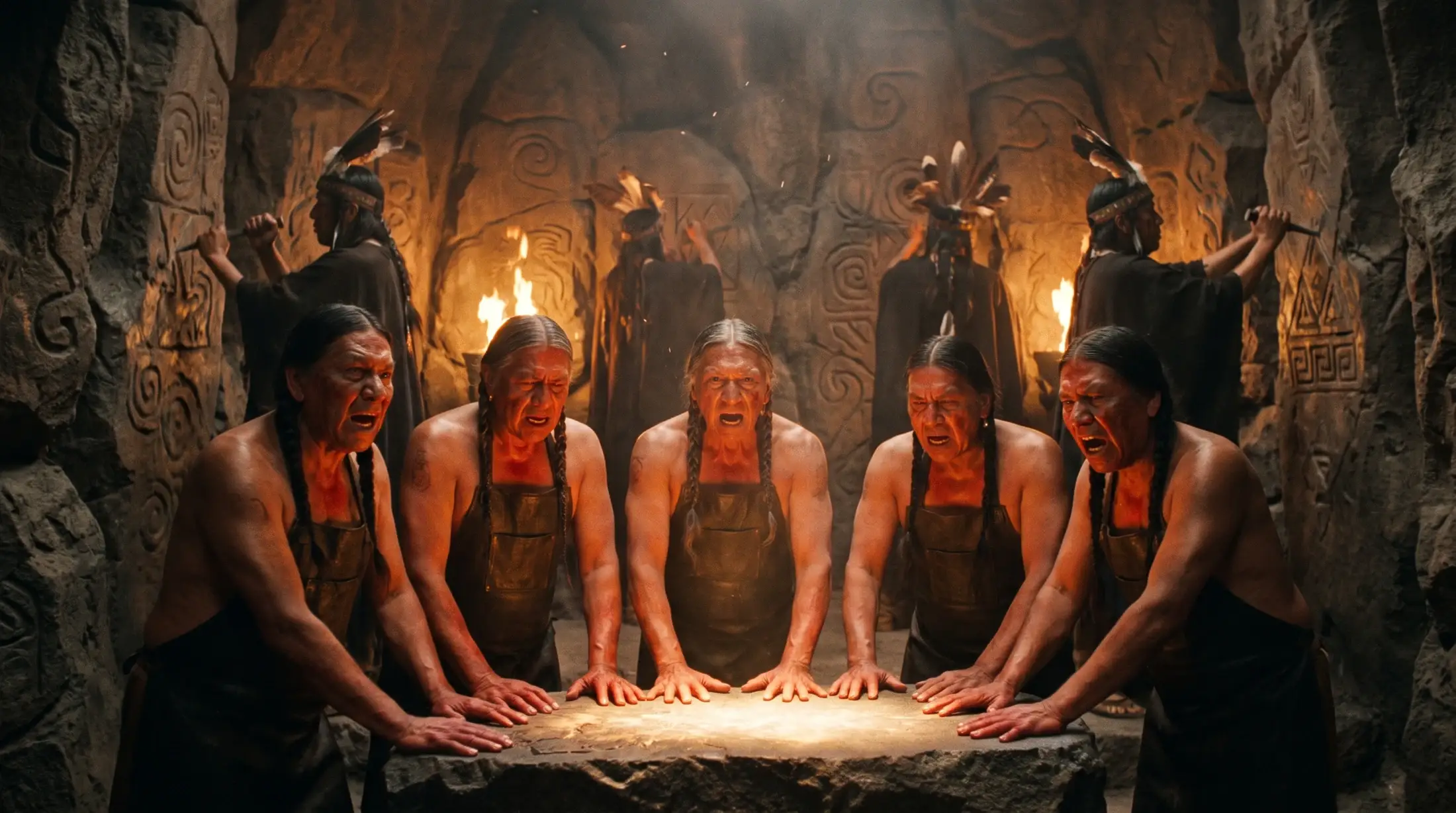
The name of the Return comes from Korathian religion. The Mountain owns matter, the Magma owns force, and humanity owns only Form. An invention is a form; during its exclusivity it belongs to those who designed and funded it, and then it returns to the Mountain, that is, to everyone. The phrase does not mean the object vanishes into the rock: it says that the form stops being private property and becomes a share of the country.
The parallel with the rites of the dead is obvious to a Korathian. A dead person’s body is given back to the magma, while their work remains legible; in the same way, a patent’s exclusivity comes to an end, while its signature stays engraved. In both cases, what belonged to a person goes away, and what they left that was sound remains.
The day of the Return
On the day an exclusivity ends, the Chamber adds a mark to the patent plaque and copies the entire dossier into the common archive, open to every workshop in the country and to foreign students admitted to open patents. The specialist press publishes the list of patents returning to the Mountain that season, and some papers make it an eagerly awaited column.
The following weeks often bring what journeymen call the rush of the Return: dozens of workshops start making the freed part, prices fall, and the object spreads into districts that could not afford it before. A hinge long reserved for bourgeois homes can thus, within a few years, fit the doors of a whole district. For many modest families, the Return to the Mountain is the most concrete way in which other people’s genius enters their home.
Living off patents that leave
The length of exclusivity is not the same for every patent: it is set at the time of recognition, according to the invention’s importance and cost, and no general rule allows an outsider to deduce it. Families, workshops and banks living off licence portfolios therefore know that their income has an end date.
Each prepares in its own way. A workshop files its corrections as separate patents, each with its own exclusivity, so that the improvement stays its own when the original invention returns to the Mountain. A family spreads its licences across the Sides. A bank buys future shares in young inventors, as Karûm-Brakh does, financing prototypes against rights to come. The Return thus forces Korathian fortunes to keep inventing: a house content with its old patents grows poorer as they leave.
Black patents do not return
The Seal of Requisition suspends the ordinary cycle. A classified patent does not return to the Mountain while it stays black: its content remains in the strongrooms, and only its number, author, date and status are public. If it is one day declassified, the patent joins the common heritage like any other, with its signature and its revisions.
This exception is one of the most debated in the country. Workshops know that some essential techniques will stay out of their reach for generations; officers answer that a weapon whose plans everyone has is no longer a weapon. The debate takes place in the papers and the taverns, often in a sharp tone, but it never goes as far as contesting the regime’s right to requisition.