

Trades
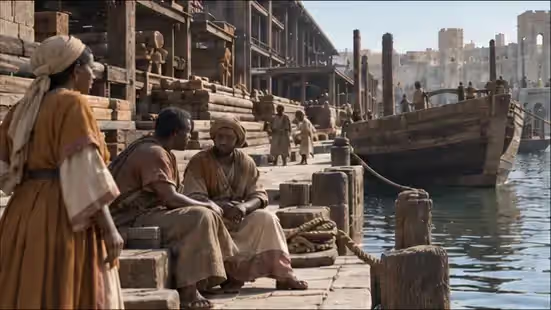
Berlan: deciding which tree falls
Felling and floating involve the present forest and the one future workshops will receive.
Felling is a choice
Berlan handles felling and timber floating in Orlantis. Cutters decide which tree falls and which waits. Their responsibility therefore concerns immediate work and the forest that remains available. The timber duchy is not simply a reserve to empty: choosing what enters the chain belongs to a named trade.
Timber enters upstream
Berlan districts receive arrivals and log yards. Floating basins precede drying areas, steaming workshops and processing shops. This succession organises the town from upstream to downstream. Timber changes place and condition before becoming structural framing, a calibrated part or a port cargo.
Supplying is not governing
Berlan passes on felling and timber-floating expertise within a High Line. Its relationships with drying sheds, carpenters and ports depend on deliveries, contracts and registered responsibilities. Felling decisions shape the forest inherited by later generations, while regular arrivals sustain daily workshop activity.
The duchy in thirty years
Reading a stand
The Berlan’s work begins years before the felling. Their master fellers walk the forests of Orlantis stand by stand, count the trees, measure their girth with a cord and estimate their age. They then cut three kinds of marks into the bark with an axe: the felling mark designates the tree that will come down within the year; the waiting mark, the one left to grow; the promise mark, the one another Line has reserved for a large piece, often the Mirvane carpenters.
The stands are worked in rotation, and a forest is never clear-felled. Seed trees are left standing, as are those that hold a slope or a riverbank, and the ancestral timber of the forests of Larn, which only falls under licence. The register of stands kept by the Berlan is the forest memory of the whole duchy: it shows which tree was marked, under which duke, and when it is to fall.
Felling a giant
Felling a large araucaria takes a team and a day. The fellers first clear the foot, choose the direction of fall by reading the slope, the wind and the weight of the branches, then cut a deep notch with the axe on the side where the tree is to fall. Nalen ropes are tied to the trunk halfway up to guide the fall, and finally the opposite side is attacked with axe and hardwood wedges. At the last crack, the team leader shouts a word everyone knows, and each man steps away along the path prepared in advance.
The fall is the most dangerous moment of the trade. A branch that snaps as it falls, a trunk that twists on its stump or bounces off a rock kills more fellers than everything else. Once the tree is down it is limbed; the bark goes to the Tanoris, the branches to the charcoal burners, and the stegosaurids of the Lomvar Line come to skid the log to the river. The stump receives the team’s mark, so the register knows who felled it.
The timber raft
The logs do not go down the river one by one. On the upstream banks, the Berlan assemble them into timber rafts: rafts of logs bound together with withies of twisted branches and with ropes, sometimes several dozen paces long. Each log carries at its end the Line’s brand and the number of the stand it came from. A raft often carries its crew hut, set in the middle, where the raftsmen sleep during the days of the descent.
The raftsmen steer the raft with hook and pole, and know by heart the channels, shallows and bridges of the river of resins. On arrival at the floating basins, the logs are untied, counted and gauged; the basin master signs the receipt, and responsibility for the wood passes from the Berlan to the drying sheds. A log lost on the way stays on the Berlan’s account until it is found, and riverside people who fish one out bring it back for a reward.
The felling letter and the licence
A standing tree already has a value. The felling letter, a right to a tree the Berlan will fell in ten, twenty or thirty years, can be sold, inherited and pledged with the Caisse des Lignes de Larn; a letter on a great trunk of ancestral timber is worth several dozen Dracos. It is on these letters that many Orlantis Lines finance their orders, borrowing today on tomorrow’s wood.
The ancestral timber of Larn is subject to a ducal licence: the House of Voranis sets each year the number of trunks that may fall, and the Berlan choose which. Their role brings them into regular conflict with their neighbours in the chain. The Aversin accuse them of felling trees in the middle of tapping, the Culorn of closing forests to hunting, the carpenters of keeping the great pieces waiting. The Berlan answer that they are the only ones working for a duchy they will never see.