

Families and social ties
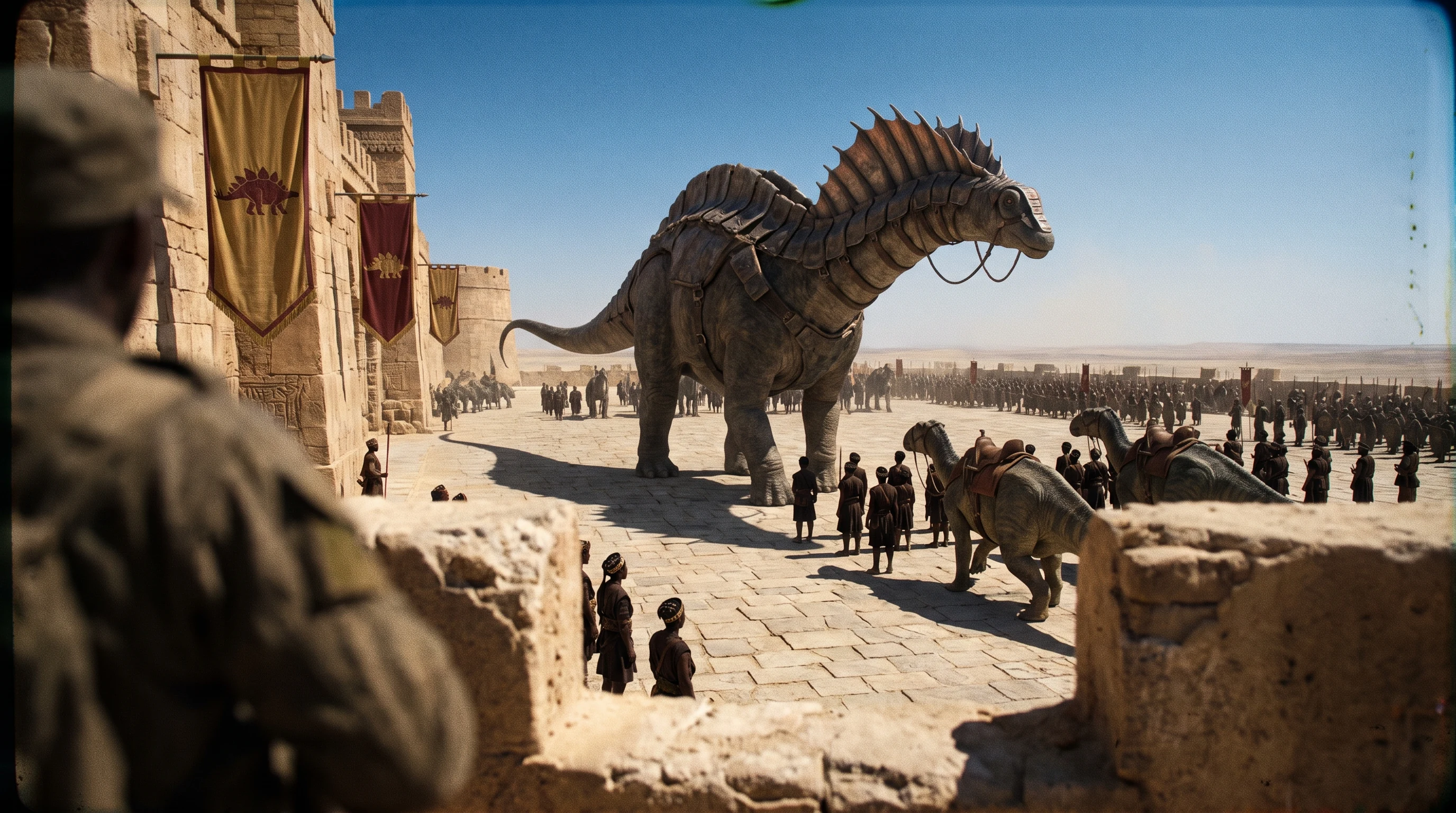
House Drakeris
The current ducal branch of the House of Qor Zaï, the oldest Urnokian lineage. It holds the south-eastern march facing Arkhan.
The oldest Urnokian lineage
Drakeris is the current ducal branch of the House of Qor Zaï. This House is the oldest Urnokian lineage and proclaims itself descended from the first Urnokians; its age is counted at no less than nine thousand five hundred years.
Its name outlives the extinction of branches. The House can change its ruling branch without losing either its historic name or its standing as “first Urnokians”; it has known branches that died out and branches that were restored.
Two Qor Zaïs
The name of the House and of the duchy is also that of Arkhan Qor Zaï, the bone metropolis and centre of the Seven Trails, on the other side of the border. The double meaning is intended. The first Urnokians were starving Arkhans who settled some ten thousand years ago in the plains of the centre; the march bears the name of the capital they had left. The shared name gives the Empire no claim of ownership over the Arkhan city.
Drakeris carries the contact layer of imperial Qor Zaï, made of D, R, K and Q sounds. The march shares its name with the metropolis opposite: that is precisely what makes it a march. Couriers, registers and partners must always state which Qor Zaï is meant, and which jurisdiction a load falls under.
Holding the south-eastern march
Sarek Drakeris holds imperial Qor Zaï, the south-eastern march duchy, open towards Arkhan and the Black Mountains. The territory organises the anti-raptor forts, the march relays, the bone customs, the counter-trails and the border brokers; it also works desert stone mines. The march exists to contain the Horde and its raptors.
The House thus holds an old military legitimacy and a trade of thresholds: knowing what passes, where it comes from, and under whose responsibility traffic resumes. The bone customs handle animal materials; the taboo on human bone applies there without exception. A few Arkhan raptors may enter legally, under very strict control, without becoming ordinary imperial fauna.
The march Amargasaurus
The duchy’s emblem is the march Amargasaurus. Lighter and quicker than the Empire’s other war sauropods, this sauropod with a double row of neck spines patrols along the anti-raptor forts. Strapped iguanodons serve other patrol and draught uses. The Triple Harnesses of Qor Zaï make heavy harnesses, military saddles and anti-raptor straps for the march.
The ducal family
Sarek Drakeris is the duke of the march. His voice is sharp and sparing; he tells his Arkhan adversaries apart by their clan. Among his kin, Joraq Drakeris, a cousin, serves in the customs.
A wife of Arkhanised lineage
Sarek Drakeris is married to Ylena Drakeris-Kor, of an Arkhanised lineage: she embodies the march’s cultural link with Arkhan. The succession passes to Rava Drakeris, of the new generation, whose talents are linguistic and diplomatic.
Branches that die out
The House of Qor Zaï has known branches that died out and branches restored. When a ruling branch disappears without an heir, the name does not die with it: a cadet branch, sometimes several generations removed, takes up the ducal office. Restoration is proved before the registers. The genealogies kept by House Tewolde-Baran and the archives of the march must establish the descent, and the Crown confirms the new branch.
Drakeris is therefore only a moment in a much longer history. The names of the old branches survive in the registers and on a few boundary stones of the march; their descendants often still live in the duchy, among the officers of the forts or the families of customs men, and readily recall that their ancestor once held the title. Joraq Drakeris, the duke’s cousin, serves in the customs like many members of the collateral branches.
The memory of the first Urnokians
To claim descent from the first Urnokians is to claim descent from the starving. About ten thousand years ago, Arkhans driven by hunger stopped in the fertile plains of the centre and settled there; they swore never to be hungry again, and the Empire was born of that oath. The House of Qor Zaï keeps its memory more insistently than any other.
A custom of the House recalls it: at the first meal of each year, the ducal family first eats a hard cake of coarse unsalted grain, in memory of the food of the starving, before the feast is served. This origin also explains the Drakeris’ particular view of Arkhan. They have fought the Horde for generations, but know they descend from those who left it.
The cadets in the forts
No Drakeris holds office in the march without having served in a fort. The sons and daughters of the House spend several years in the anti-raptor posts, first as lookouts, then at the head of patrols of strapped iguanodons. Teren Drakeris, a military cadet of the House, rides an iguanodon named Taillade; Duke Sarek himself rides an iguanodon named Borne.
This rule gives the House leaders who know the relays, the tracks and the clans across the border by name. It also costs it dead: the march registers keep the list of the Drakeris who fell in the forts, and it is long.