

Economy
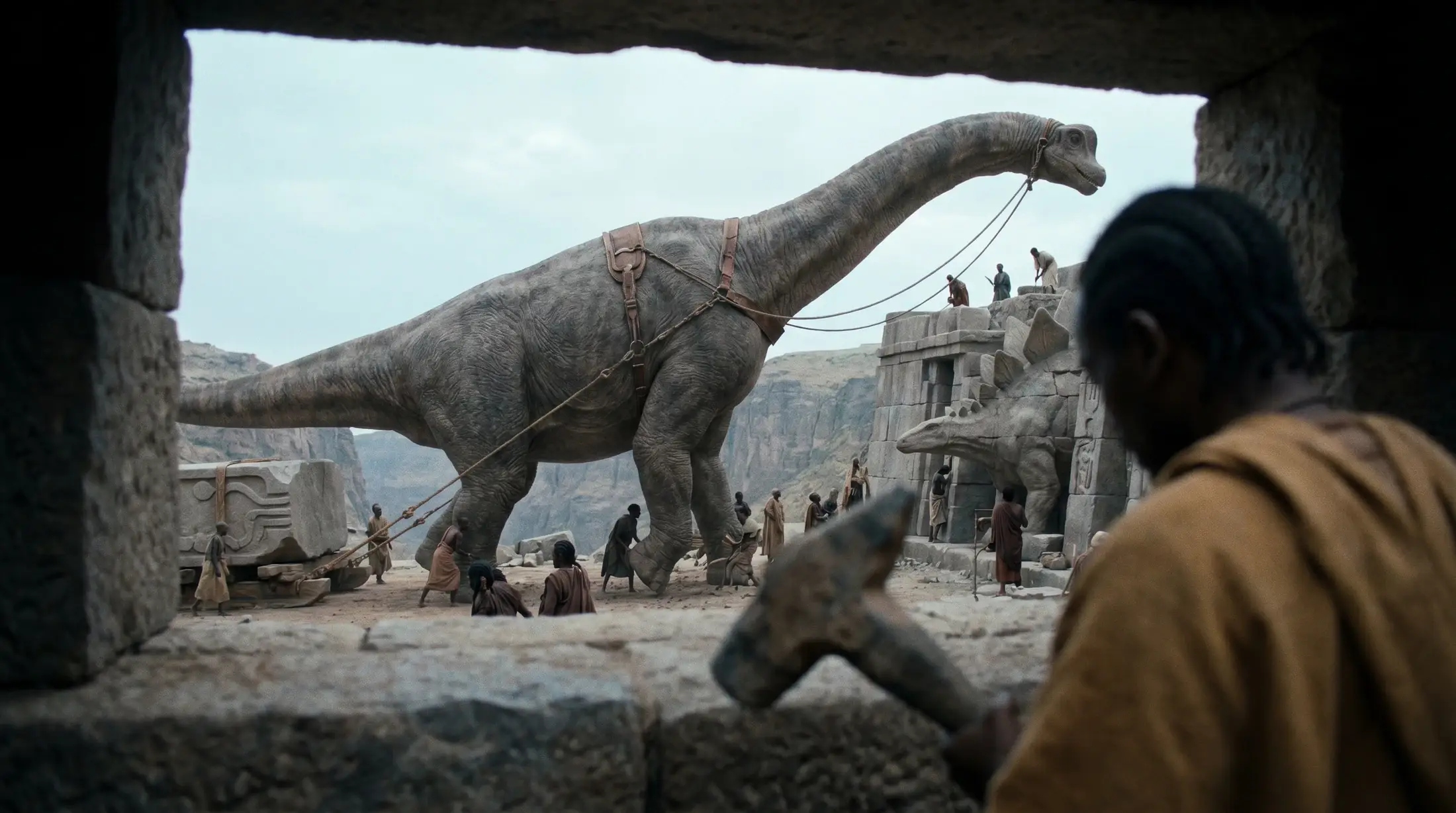
The revenues of Urnok’s great houses
The imperial tax register estimates the receipts of the four tolerated houses: Karûm-Brakh leads with 6.2 million Dracos a year, ahead of Sarnor Trois-Saisons, the Triple Harnesses and the Living Armouries, all taxed at 30% of their profit.
Four houses, four balance sheets
The Empire’s tax register estimates the annual turnover, margin, profit and tax of the great industrial houses. Karûm-Brakh, the largest enterprise in the known world, turns over 6.2 million Dracos at an 18% margin: its profit comes to about 1.12 million, of which 0.33 million goes in tax, leaving it some 0.78 million.
Sarnor Trois-Saisons turns over 2.4 million Dracos at a 16% margin: about 0.38 million in profit, 0.12 million in tax, 0.27 million net. The Triple Harnesses of Qor Zaï turn over 1.6 million at a 20% margin: 0.32 million in profit, 0.10 million in tax, 0.22 million net. The Living Armouries turn over 1.3 million at a 22% margin: 0.29 million in profit, 0.09 million in tax, 0.20 million net.
By comparison, an ordinary business turns over 300,000 Dracos at a 15% margin: on its 45,000 Dracos of profit it pays 15% tax, or 6,750 Dracos, and keeps 38,250.
The price of privilege
The four tolerated houses pay tax at 30% of their profit, twice the rate for ordinary businesses: it is the political price of the privilege of being indispensable. The Living Armouries, which work under state contract, add special contracts on top. In wartime, the Contribution d’Urgence can rise steeply and also falls on the great dynasties and military contracts.
Where the receipts come from
Karûm-Brakh, a house without a duchy, builds roads, bridges, aqueduct-troughs and feeding towers in the Empire and beyond, and leads the great works. Sarnor Trois-Saisons holds fodder, private silos, rations and supply posts: it is the private belly of the imperial granary. The Triple Harnesses make heavy harnesses, military saddles and anti-raptor straps, the interface between animal, rider and road. The Living Armouries, a private company under state contract, produce command armour, living plates and shock-dissipating protection; they depend on Velmor’s black stone and Korath’s parts.
How the treasury estimates
The figures in the tax register are not free declarations. Every great house hands its accounts each year to the tax scribes, who compare them with the registers of the customs, the roads and the Houses of Proof: tonnages passed through tolls, certified contracts, recorded sales. Inspectors then open the company’s books, visit a few worksites or silos, and set the estimate on which the tax will be calculated.
The houses often dispute these estimates, and the discussions last for months. They are rarely settled before a judge: there is negotiation, new documents are produced, a reassessment is accepted in exchange for a delay in payment. The published figure is the result of this long bargaining as much as of a calculation.
Small sums, great weight
On the scale of the Empire these figures are modest. An inhabitant produces on average some sixty-eight Dracos a year, and the Empire, with its thirty million inhabitants, a little over two billion; the four tolerated houses together account for only a very small share of it. Karûm-Brakh’s turnover, the highest in the known world for a single house, equals the annual output of about ninety thousand Urnokians.
Their weight lies in their place in the chain, not in their size. Karûm-Brakh builds and repairs what everything passes through; Trois-Saisons feeds the convoy animals; the Triple Harnesses and the Living Armouries equip what fights. A halt in their workshops, a delay on their worksites or a bankruptcy would hit whole duchies, and that is precisely what earns them their tolerance.
What “tolerated” means
A tolerated house is a company that has grown so large or so indispensable that it escapes the ordinary framework of a Line or a duchy. Karûm-Brakh has no duchy; the Living Armouries work under State contract; Trois-Saisons and the Triple Harnesses hold links on which several duchies depend. The Empire leaves them their privileges — to exist beyond ducal boundaries, to deal directly with the Crown — in exchange for a surtax and permanent oversight.
Tolerance is not an acquired right. It is renegotiated at every great crisis, and the houses know it: their leaders cultivate careful relations with the Chancellery, the Bank and the Grand College, and pay their surtax without fuss. A house that ceased to be indispensable would become a company like any other again.
The Emergency Contribution
In war the Empire can levy an Emergency Contribution. It falls on the great houses, the great dynasties and military contracts, and its rate is set only at the moment of crisis. No war tax is raised without the agreement of the Bank, which guarantees its collection and often advances its proceeds. The tolerated houses pay the most visible share of it; they recover part of it through the contracts war brings them, and public opinion holds it against them at every campaign.