

Trades
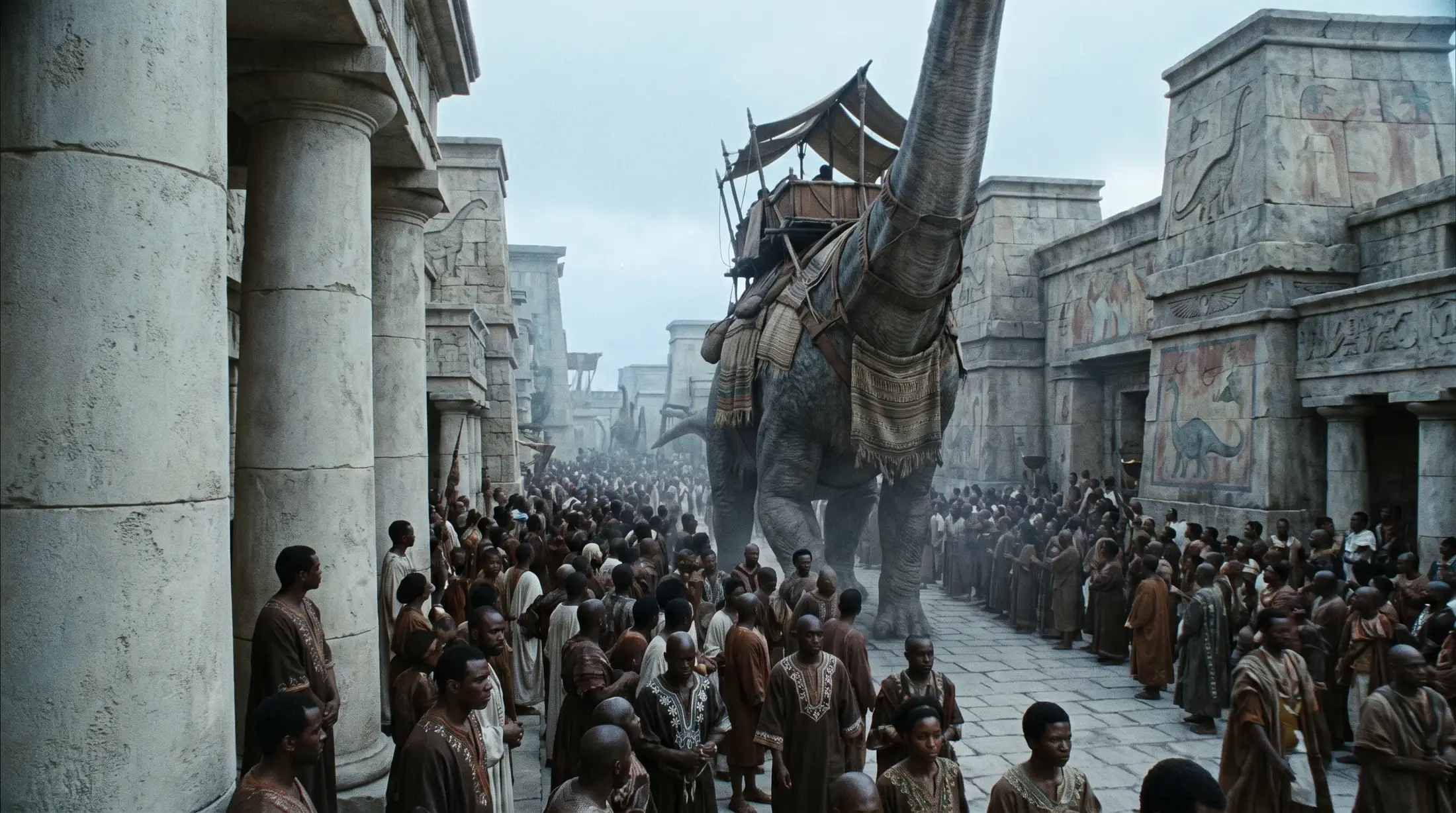
Counting, inspecting, rationing: the fodder trades
Granary counters, yield inspectors, imperial rationers and depot keepers: those who see war coming in the level of the granaries and turn it into rations.
Seeing war in the granaries
The granary counter audits fodder reserves. He sees war coming through the level of the granaries and the price of fodder, often before the generals do. The yield inspector detects falsified granaries; it is his reading that makes Sarnor a power and not a warehouse.
Sarnor’s grain does not belong to a single family: the duchy is the Orlenox’s, but dozens of granary Lines hold the reserves, and the Empire never rests on a single family.
Administrative violence made into figures
The imperial rationer calculates rations by species and weight. He turns civilian stocks into a campaign: administrative violence made into figures. When a convoy sets out, he counts water and fodder, alongside the convoy inspector and the harness inspector.
Other trades hold the chain together. The fodder manager plans meadows and cuttings; the depot keeper guards warehouses, granaries and cages; the ration sergeant keeps, in the army, food discipline and the tally of losses. In Sarnor, the Tanoris Line owns no grain: it owns the right to move it.
The probe and the gauge
The silo counter works with two instruments. The probe is a long hollow bronze rod, pierced with openings that can be closed, which he drives into the mass of grain or fodder to bring up a sample from each depth. The gauge is the graduation painted on the inner wall of the silo, on which he reads the level of the reserve. He climbs to the hatches, probes at fixed points, smells the sample, judges its moisture by hand and its heat with his palm.
His readings are compared with what the silo has declared. A level lower than the recorded intakes and withdrawals, grain heating at the bottom, a smell of mould beneath a sound layer: every gap is noted, dated and signed. Counters visit each large silo at least once a season, and more often when the price of fodder moves, because that is when declarations become least reliable.
What the yield inspector looks for
The yield inspector is the man of frauds. He knows every way of making a silo look fuller than it is: a bottom of sand or straw under the grain, grain wetted to weigh heavier, a layer of fine quality spread over a spoiled mass. This last trick is called “smoothing”, and saying of a Line that it smooths is one of the worst accusations in the duchy of Sarnor.
His audit follows a fixed order: opening of the silo before a witness, deep probing at points he chooses himself, recounting of intakes and withdrawals in the register, and, in serious cases, partial emptying. The silo is then resealed, and the report goes to the Diet of the Great Silos and to the Imperial Bank, which lends against declared reserves. An inspector’s signature can confirm a silo’s rating or bring it down, and with it the credit of a whole Line.
Calculating a ration
The imperial rationer works with tables. For each species, each weight and each task, they say what an animal must receive per day: about a hundred and twenty-five kilos of fodder for a draught hadrosaur, five hundred for a silo camarasaur, more than a tonne for a dreadnoughtus. For people, the ration is counted in twelfth-loaves, grain and salted meat. A campaign is then calculated like a multiplication: heads, days, stages, and a margin for losses, rains and delays.
In times of shortage, the rationer applies a written order. Seed is not touched; next come the draught animals, without which nothing moves, then the garrisons and towns, and finally the markets. The rations of the very-large animals on campaign follow a sealed protocol few people know, because knowing an army’s ration means knowing how far it can go.
Depot keepers and ration sergeants
The depot keeper answers for what sleeps. He guards warehouses, silos and cages, holds one of a reserve’s two keys, the other staying with the silo chief or the steward, and watches against the ordinary enemies of grain: fire, damp, insects, small saurians and thieves. The fodder manager works upstream: he plans the meadows, decides when to mow the bracken, the tall grasses and the royal fern, and provides for reserves before the season makes them necessary.
In the army, the ration sergeant is the man every soldier knows. He hands out his unit’s ration each day, counts its losses and keeps its discipline: stealing a ration is punished more harshly than a brawl, and a sergeant who falsifies his accounts is tried like a deserter. Old soldiers say one can be wrong about a general, never about a ration sergeant.