
Trades
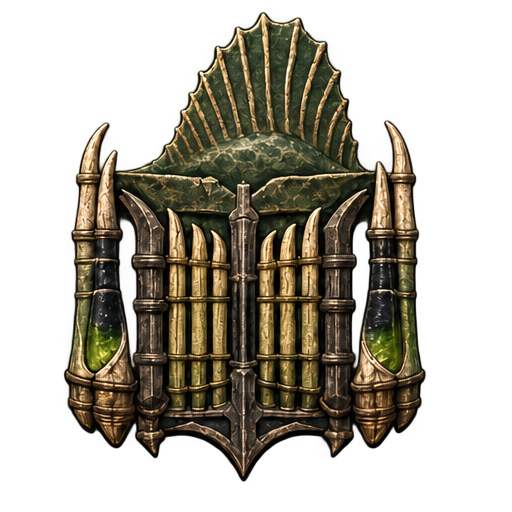
Les Noueurs d’Yveth
Entretien des lianes, lecture des tensions et transmission des messages dans un réseau en trois dimensions.
Entretenir la voie vivante
Les Noueurs d’Yveth, aussi appelés Ordre du Nœud Vivant, sont messagers, jardiniers, cartographes, espions et guerriers. Ils entretiennent les réseaux de lianes des Longues Ramures. Une route n’goro peut devoir être nourrie, recousue, antidotée ou abandonnée. Le travail du jardinier et celui du guide se rencontrent dans cette matière changeante.
Lire nœud, sève, odeur et tension
L’écriture de liane associe nœud, sève, odeur et tension pour coder destination, urgence, maladie, danger ou présence militaire. Les fibres détendues, les insectes déplacés, les odeurs et les vibrations peuvent aussi révéler une armée avant qu’elle soit visible. Le réseau porte ainsi des messages voulus et des renseignements produits par les perturbations du milieu.
Protéger le messager reconnu
Attaquer un messager reconnu est un crime contre le réseau entier. Cette protection permet de maintenir les échanges entre des groupes dont les intérêts peuvent s’opposer. Le choix d’un camp par les Noueurs annoncerait une crise existentielle : il engagerait les accès, les informations et les relations que leur neutralité rend possibles.
Becoming a Knotter
One does not join the Knotters the way one takes up an ordinary trade. Apprentices are chosen young, often after their First Shedding, from among children who have shown they can climb, keep quiet and remember what they are told. Their first task is to keep alive a Knotter’s liana, a selected living liana they plant themselves at the foot of a mangrove and must guide, feed and protect until it reaches the first platform. Some take two years; those whose liana dies start again.
The apprenticeship then lasts several years, alongside a woman master of a stretch. There one learns knots, saps, scents and tensions, the whistled phrases of the posts, the canopy routes and the discipline of silence. The oath of the Order of the Living Knot is sworn at the Grafts of Vey-Ngumi, in the Long Boughs, before the oldest living bridges in the country. The new Knotter swears there to defend the network and to carry everyone’s messages, including those of people they dislike.
Knotted message, carried message
The Knotters’ network carries two kinds of messages. The knotted message travels alone: a Knotter codes it into the liana with knots, sap, a scent and a tension, and the next post reads it, copies it onto its own section and sends it on. It is the fastest means of communication in the marsh, faster than a barge, and inviolable by custom: no one but the Knotters may touch a message knot. Yet it carries only brief things — a destination, an emergency, a sickness, a danger, a military presence.
The carried message is entrusted to a Knotter in person, who takes it along the suspended routes with the proof that goes with it: a sealed flask, a written strip of fibre, a sentence cord. It is used for what is long, secret or disputed. Both services are paid for, in shells or Venom Phials according to distance and urgency, and the Circle of Balances, the Synod, families and merchants are their main clients. The Knotters say a knotted message announces, and a carried message commits.
The Knotters and the other trades
The Knotters rarely work alone. With the Conservatory of Yveth they form a pair: the Conservatory’s gardeners watch over the balance of the living things the lianas are made of, and the Knotters consult them before laying a new route or grafting a bridge. With the cartographers of the Living Mirror they share the country: the Mirror reads the waters, the Knotters read the canopy, and their surveys meet at the Circle of Balances when a route must be arbitrated. With the centipede riders they relay urgent messages, the lianas up high, the roots lower down.
The rope-makers of the Silver Reeds supply their mission cords, and the Sap-Keepers the kits suited to the heights, where Clear Breath is never lacking. In exchange the Knotters render everyone a service no other trade can: they know before anyone what is happening in the canopy — a constricting liana gaining on a route, a colony of insects that has moved, a post gone silent. A Shedding Village preparing its shedding almost always asks the nearest Knotter for advice before the pilot.
A place apart
Neutrality gives the Knotters a singular place in society. They all belong to a water-clan, have families and houses, but they are not asked to take sides in the quarrels of their basin, and they keep out of them. They do not sit in the Circle’s sessions; they are listened to afterwards. They swear no oath to the Black Milk Houses, owe them nothing and receive nothing from them, which earns them a wary respect there. A Knotter who betrayed the secret of a message would lose the mission cord and, with it, the protection of the whole network.
The trade is one of the most honoured in the country, and one of the hardest. Knotters live up high, in wind and damp, sometimes fall, and their hands carry the marks of fibres and insects. Families are proud to count one among their own. It is said of them that a Knotter does not lie, he stays silent; and when a Knotter stays silent before a question, everyone knows it is better not to ask it twice.