

Trades
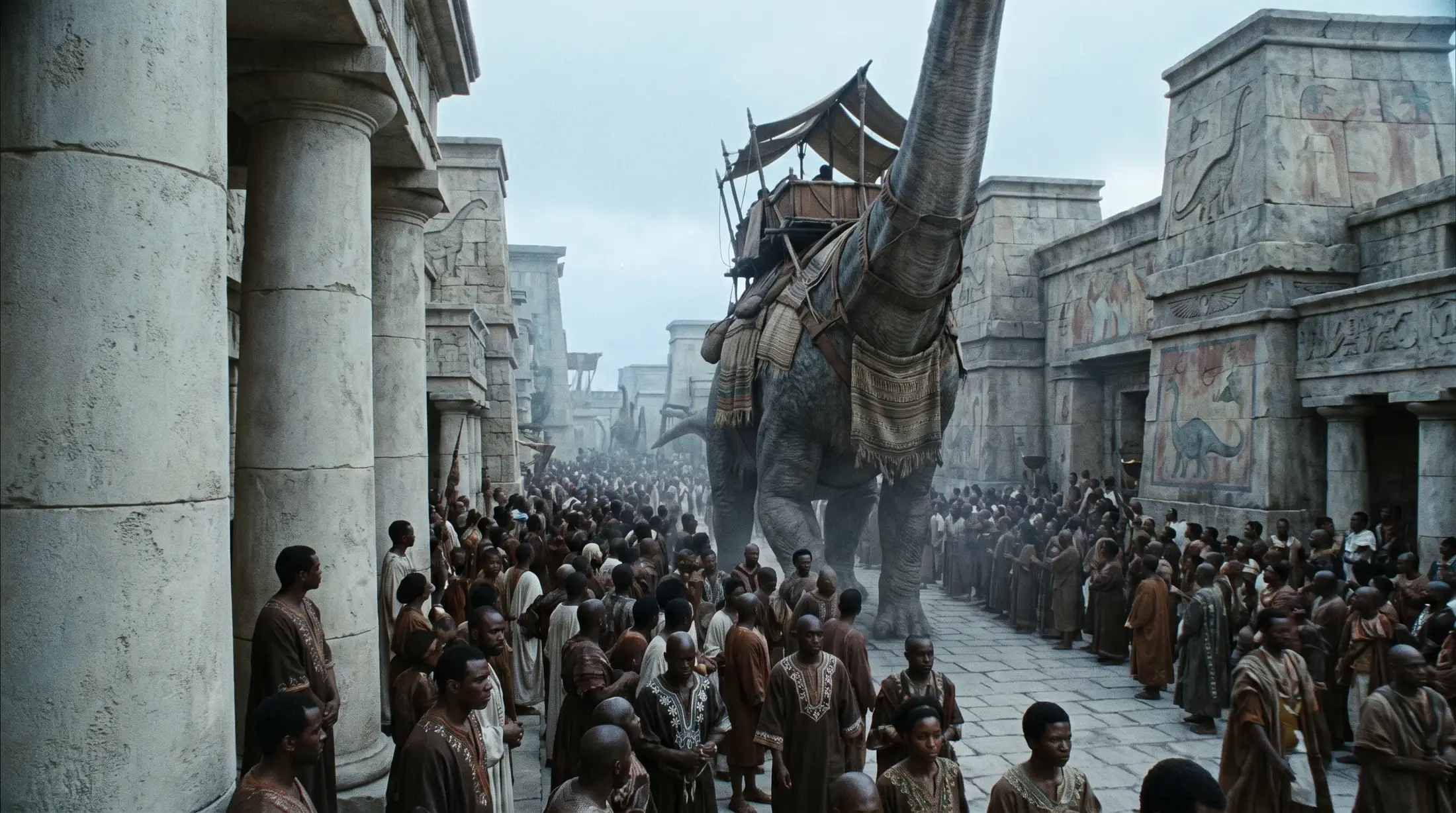
The death-notary
The death-notary records the dead beast, its bloodline, its commander and its debt: in Urnok, loss becomes law.
Loss becomes law
The death-notary records the dead beast, its bloodline, its commander and its debt. In an empire of registers, a beast’s death is written down: through the notary, loss becomes law.
The stakes are real: losing one individual can reduce the breeding or genetic diversity of a strategic line, and forty years of campaigning can vanish with an animal known to several generations.
An incident leaves a trace
When a load breaks, a delay leaves a relay short or a crossing goes wrong, the fact does not vanish with the dust. The incident archivist fixes the circumstances; the death-notary records what must be recorded when a life has been lost; the toll judge separates a disputed crossing from a mere delay. These trades create no new justice: they make responsibility legible.
What a death deed contains
The death notary’s deed follows a fixed order. It first names the animal, its register number and the bronze token on its harness; then its lineage, as entered in the lineage register; then the commander or keeper who answered for it at the time of death; and finally its outstanding debts: a loan secured on the animal, a hire contract, insurance taken out with a Volonian house, works promised and not delivered. Then come the circumstances, the date, the place, the witnesses and the destination of the carcass.
The deed is written in the brown blood-and-iron ink that cannot be scraped off, and the notary seals it in amber. It costs a few Dracos, a modest sum given what it makes possible: without it, no insurance pays, no creditor can claim, no breeding stable can strike the animal from its accounts. It is in this sense that, through the notary, loss becomes law.
When a lineage closes
An animal’s death does not only erase a beast; it withdraws a promise of breeding. The notary passes his deed to the lineage register, which recalculates what the lineage can still give: how many breeding females remain, how many young are expected, which crosses become impossible. When the last female of a lineage dies without registered offspring, the lineage is declared closed, and its closure is read out before the breeders of the stud.
These losses weigh heavily in an empire that raises its very-large animals over decades. The death of a siege sauropod also deprives its team of an animal whose every mood it could read, and which will take years to replace; a closed lineage deprives the Empire of a quality it may never find again. That is why the studs ask the notary to note, in addition to the cause of death, whether the animal had already produced registered eggs.
After the battle
On campaign, death notaries follow the army and keep its register of the dead, for soldiers and animals alike. When the fighting stops, they walk the field with examiners and veterinarians. Each animal carcass is confirmed dead by a carer, marked with ochre and entered; each human body is given a name when one can be given. The unit’s commander countersigns the list before departure.
The notary does not take a death on trust. An animal that nobody saw dead stays in the register as missing, and a disappearance always raises the suspicion of a sale outside the register or of capture by the enemy. The carcasses of military very-large animals revert to the Crown, which sends its teams to recover hide, tendons, bones and equipment; the notary records what was carried away and what had to be left behind.
Why the commander’s name
Entering the commander’s name is not an accusation. The notary’s deed does not judge: it only says who answered for the animal at the moment it died. It is then up to the judges, the army’s Discipline or the Court of Responsibilities to say whether the loss was due to the enemy, to chance or to negligence. A commander who engaged a very-large animal against the advice of a colossus whisperer will find that advice beside his name.
Urnok’s military culture is harsh on this point. Procedure does not excuse a commander who loses, and defeat remains the supreme fault, however good his registers. But a well-kept register also protects: it allows an officer to show that he lost his animals while holding his line, and his family to receive the pension due to them. In the legions they say the death notary always arrives after the battle, but stays longer than anyone else.