

Trades
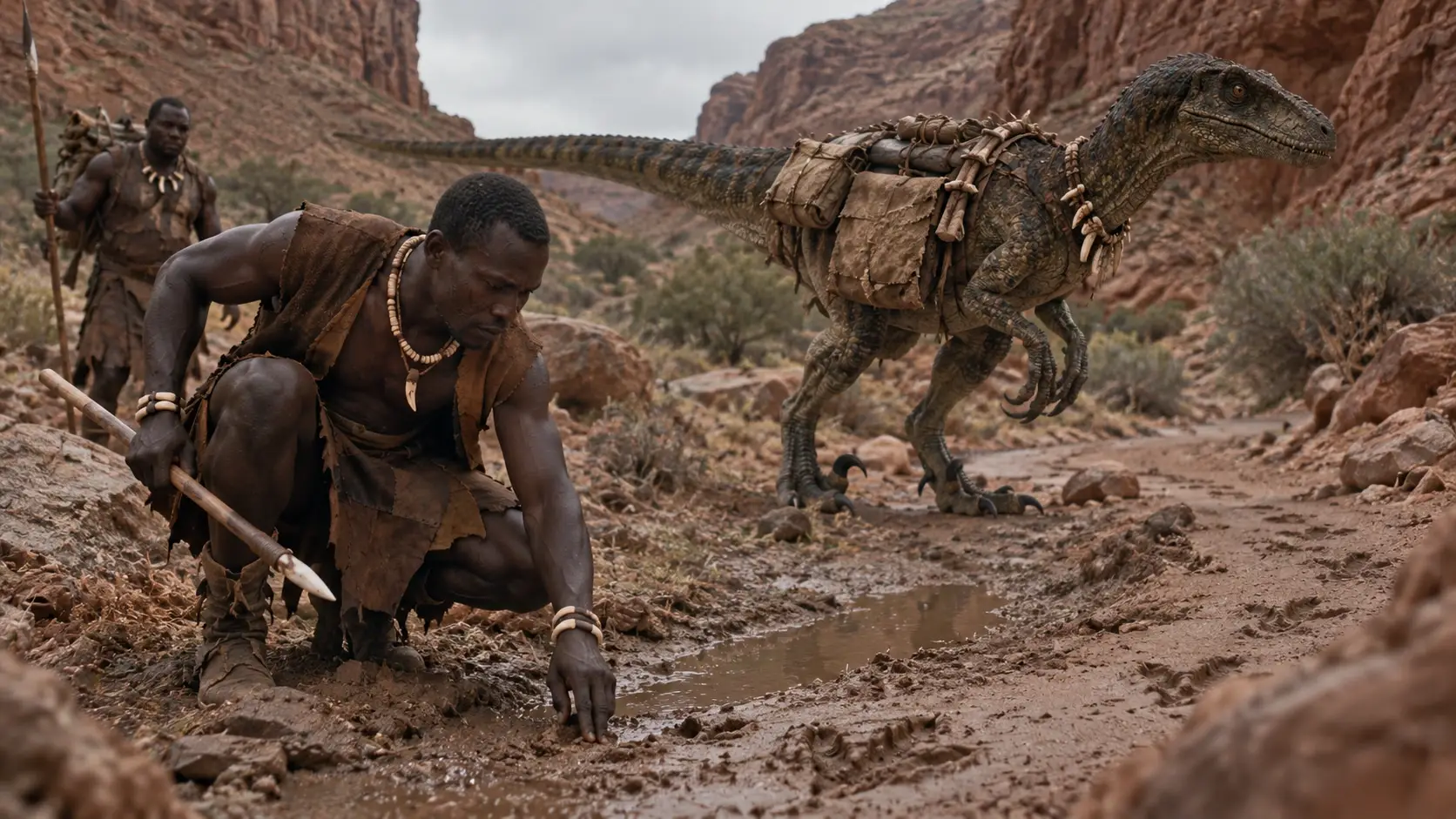
The water-master
A craft of the Longs-Os, the water-master holds the water and endurance that make the Horde credible on the long track.
Making the Horde possible
The water-master is a craft of the Longs-Os, the lineage of long tracks that holds water, carrying and endurance. He makes the Horde logistically credible, when a march counts millions of people and beasts to water. He is the one who shouts down the Horde’s euphoria.
Reading the track with water and wind
An Arkhan track is also read in what is missing, what drinks and what the wind erases. The water-master checks the supply needed for the next stage; the wind-tracer notes the signs that scatter; the track interpreter puts these together with the memory of past crossings. Their conclusion can be modest: slow down, go round, wait.
At the watering points, the Longs-Os counters record bands, beasts and rations: each chief declares, the counter counts, the difference is paid.
Finding water
A water master’s first skill is to find water where it hides. He reads the ground: a dry wadi bed often keeps water under the sand, in the hollow of the outer bend; a greener patch of brush, a swarm of insects at dusk, beast tracks that converge or small pterosaurs that all fly down toward the same point give hidden water away. He digs, tastes, smells, lets it settle, and knows how to recognise water that is too salty or water that is sick.
The rest is memory. Each trail has its song of wells, which lists in order the water points, their flow according to the season, the number of days between them and those that run dry in dry years. A water master knows by heart the songs of several trails and updates them at every passage; a dead well is removed from the song before witnesses, as a name is removed from a cord.
Waterskins, cisterns and measures
The trade has its tools. The water master’s waterskin, a hide sewn with sinew and greased, holding about twenty litres, is the ordinary measure of water on the march; it is loaded in pairs on khaans, by the dozen on the hardy hadrosaurs of the convoys. The relays and the cities keep water in covered cisterns, whose level the water masters know as a merchant knows his storehouse.
Everything comes down to a calculation that apprentices repeat until they are bored: how much a man drinks, how much a mount, how much a great carnivore, how many days to the next well, and how much that well can give to a column of that size. A Horde is measured in days of water more than in leagues. The water master promises nothing beyond this calculation, and that is why he is listened to.
Becoming a water master
The trade is learned among the Longs-Os, around the Well of Kharrug, where the water masters keep their cisterns, their waterskins and their halts. An apprentice first follows an elder on a single trail for several seasons, carries his waterskins and learns his song of wells. He then moves on to other trails, and he is made a master only when he has led a caravan alone across a stretch without water and brought it back whole.
On taking up the charge, he gives up several things: he no longer drinks before the others, takes part in no raid and receives no share of booty; the trails he serves feed him. Many come from families of water masters, but the trade remains open to anyone with the memory and the patience. The khans respect them without liking them: a water master is never on their side, only on the side of the well.
On campaign
In war, the water master marches with the vanguard. Each evening he tells the council what he has seen of the next day’s wells, with the mark of what has been seen, and it is on his word that the length of the stage is set. Hurried khans listen to him with a grimace; those who do not listen pay for it at the next halt, when the waterskins run dry before the well comes into view.
War also raises questions that the trade settles without hesitation. One may deny water to the enemy, close a well in his path or hold it under the lances: that is war. One never poisons it, even in enemy land, for a poisoned well kills without choosing, for years, and the water masters hold this crime to be unforgivable, whoever the culprit. A khan who ordered it of them would find their waterskins empty the next day.