

Institutions
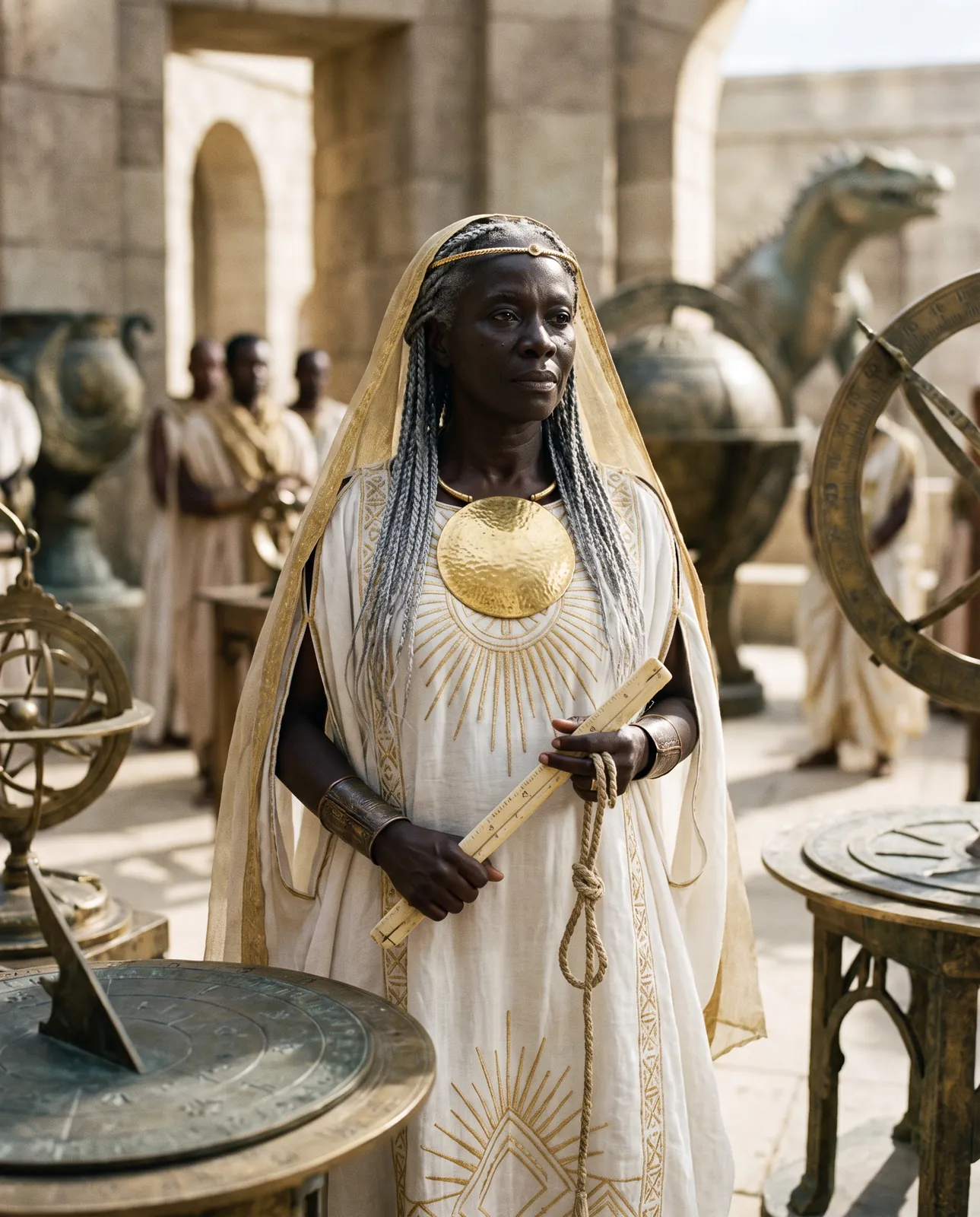
The trades of Measure in Ishtir
Sun-Weighers, certifiers, keepers of marks, masters of trials, arbiters of rights, cohort guardians and Midday criers: the trades that run the Weighing and the economy of rights.
Weighing and certifying
The Sun-Weigher assesses service, precision and conformity at the Weighing: he embodies the system’s neutral violence. With the solar measurer, he works on what must be made comparable — preparation, aptitude, the state of a place, the result of an exercise — without replacing the Weighing or the civic record.
The public certifier organises the theoretical, practical and pressure examinations that make meritocracy visible and verifiable. A certification never guarantees promotion: it only establishes that someone is eligible for a specific responsibility. The master of military trials certifies duels, games, riding, lance, tactics and command; it is through him that a Bronze rises towards Silver.
The chest as biography
The keeper of marks holds the medals, the active certifications and the sanctions for forgery: the chest becomes a public biography, in a society without genealogy. Forging a certification or a strategic medal is an attack on the Weighing and can amount to treason.
Rights instead of prices
The arbiter of rights assigns use, access, priority and responsibility without money: he replaces price with a precise and contestable right. The contribution officer assigns service time and training leave according to abilities and needs: work exists without wages, and without withdrawing the right to live.
Children, the dead and gardens
The cohort guardian follows a small group of children not yet weighed without becoming their owning parent; he preserves attachment and tenderness in collective upbringing. The Midday crier is the public voice of the zenith: he proclaims the names of the dead and turns mourning into mobilisation. The ritual gardener tends sacred herbs and crops.
The tools of the Measure
The trades of the Measure have their tools, and they are simple. The gnomon gives the hour and exact noon; on the walls of public buildings a copper groove receives the shadow and counts time in lines. The knotted cord measures land and distance, the bronze balance weighs whatever must be weighed, clay tablets receive the files, and the keeper of marks works with scraper and punch on the very sleeves of the weighed.
None of these instruments is a machine. Their accuracy rests on the habits of those who use them and the checks of those who verify them: every public gnomon is checked at the solstice, every standard cord compared with the temple’s.
Becoming a Weigher of the Sun
Weighers of the Sun are chosen from adults who have already practised another trade for a long time: one does not weigh a working life without having led one. They are trained in reading files, comparing proofs and the formulas of the Weighing, then posted by rotation to quarters that are never their own cohort’s.
They are weighed themselves under harsher rules than anyone else: blind readings of their decisions, a ghost judge, solar seals on the files. A Weigher whose decision is overturned on appeal is not punished for an honest mistake; they are corrected, and the decision is read to their peers.
The Noon crier
The Noon crier is the public voice of the zenith. Every day at exact noon, from a terrace or a portico, the crier announces what the town needs to know: public decisions, Weighing dates, Respiration departures, flood calls.
The crier also proclaims the names of the dead, one by one, with their cohort, and it is often through the crier that a quarter learns it has lost someone. In wartime the lists become calls to arms: naming the dead aloud, at noon, in front of everyone, turns mourning into mobilisation.
The ritual gardener
The ritual gardener grows the sacred herbs and crops the temples and festivals need: solar grain for the first sheaves, bitter herbs for funeral meals, flowers for the crowns of the Great Respiration, plants for the ritual orchards of the Verger des Halcyons. The gardener works for the Ordre des Jardins and by the calendar of the Zenith, sowing and harvesting at the hours the gnomon’s shadow sets.
The trade counts among those of the Measure because its harvests serve the rites that celebrate it, and because a sheaf cut outside its hour cannot be offered.