

Trades
Les métiers de la mesure à Korath
Jauges, proportions, tolérances et contrepreuves donnent une limite vérifiable aux pièces et aux inventions.
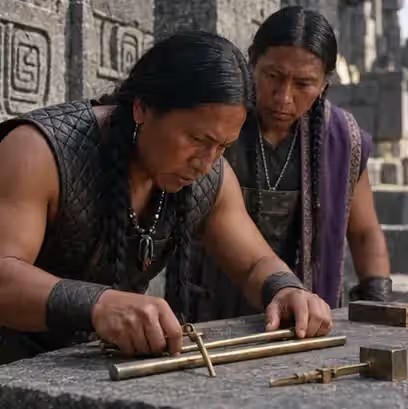
Comparer une pièce à une mesure
La métrologie fait partie du Côté de la Mesure, avec les instruments, l’optique, la visée et les tolérances. Règles, cadrans et jauges figurent dans le mobilier des ateliers ; les jauges accompagnent aussi creusets, moules et pinces près des forges. Ces objets permettent de considérer une pièce par ce qu’elle peut vérifier ou recevoir. La mesure relie ainsi le travail de fabrication à une comparaison, au lieu de laisser la forme seule garantir le résultat.
Démontrer proportions et limites
Le Sceau de Forme exige de démontrer géométrie, forces, tolérances, limites et proportions. Une invention ne se réduit donc pas à un objet qui paraît achevé : celui qui la présente doit rendre sa forme intelligible et annoncer ses limites. Le métier de la mesure est lié à cette obligation de preuve. Une marge cachée ou une précision prétendue peut compromettre un ouvrage autant qu’une pièce manifestement cassée, parce que les autres personnes se fient à ce qui a été annoncé.
Mesurer une pièce dans les conditions qui l’usent
Le Sceau de Matière demande que l’objet fonctionne avec les matériaux annoncés sous froid, chaleur, pression, vibration, usure et mauvais entretien. La preuve concerne donc aussi ce qui change au cours de l’usage. Une forme correcte ne dispense pas d’examiner la matière et les contraintes qu’elle reçoit. Le Sceau d’Usage ajoute une autre question : l’invention résout-elle le problème humain réel auquel elle prétend répondre ? Les mesures prennent leur sens dans cette destination.
Un autre atelier doit pouvoir mettre la preuve à l’épreuve
Un brevet majeur n’est complet qu’après reproduction et attaque méthodique par un atelier rival. La comparaison sort donc du seul atelier qui a fabriqué l’objet. Les révisions, les accidents, les amendements et les limites restent lisibles dans la mémoire du brevet. L’inventeur garde sa signature, mais ne peut protéger son nom en effaçant ce qui a dû être corrigé. Pour les professionnels de la mesure, une limite déclarée fait partie du travail accompli ; sa dissimulation détruit la confiance.
The tolerance tables
The metrologist’s main tool is not a gauge but a book. The tolerance tables of the Forges gather the dimensions, calibres and permitted margins of every standard piece in the country: rivet diameters, chain pitches, plate thicknesses, pin lengths. Every Korathi piece must be traceable to them, and a workshop that works for the army always keeps an up-to-date copy, chained to a lectern beside the checker’s bench.
The tables are not unchanging. Each new edition takes in corrections, flagged in the margin with the date and the reason for the change, and metrologists spend part of their careers proposing such revisions. A difference between two editions can get thousands of pieces rejected, and workshops await a new table with as much anxiety as a change of season.
A checker’s day
In a pass rivet workshop, the checker starts the day by testing his own instruments against the state gauges, since a false gauge falsifies everything else. He then takes pieces from each batch at random, in a proportion set by the tables: one rivet in a hundred for ordinary batches, more for pieces meant for bridges or bardings. Each piece goes through a double gauge, one it must pass through and one it must not.
A rejected batch is not destroyed: it is marked, downgraded, and may be sold for less demanding uses, with a note that says so. The checker signs every decision, and his signature commits his name like that of a Chamber examiner. Workers fear him a little and respect him a great deal, because a bad batch let through today can make a chain give way in a pass the following winter.
Measuring the living
Korathi measurement does not stop at metal. In the lower marches metrologists weigh the beasts, measure harness tension, count the paces of a march and record an animal’s fatigue after a climb. Harness inspectors enforce the standards, check safety and look for sabotage: a harness too tight wounds, a harness too loose lets the load slip, and a tampered harness can betray an intention.
These measurements also serve the care of the beasts. An ankylosaur whose weight drops from one season to the next is underfed or ill, and the carers’ tables show it before the animal collapses. Korathi treat the living harshly, but they measure it with the same rigour as their parts, and that is often what protects it best.
False weights
Cheating on a measurement is one of the gravest faults one can commit in Korath. A lightened weight, a widened gauge, a tolerance rounded the wrong way all count as false precision, just like a falsified trial. The guilty lose their licences and their place in the inspection trades, and their name is entered, with the fault, in the register of the Forges.
The trust foreigners place in Korathi marks rests on this rigour. A Volonian merchant who receives a batch of stamped rivets does not measure them one by one: he trusts the stamp. Metrologists know that this trust is the country’s real capital, more precious than its mines, and that a few known frauds would be enough to ruin it.