

Trades
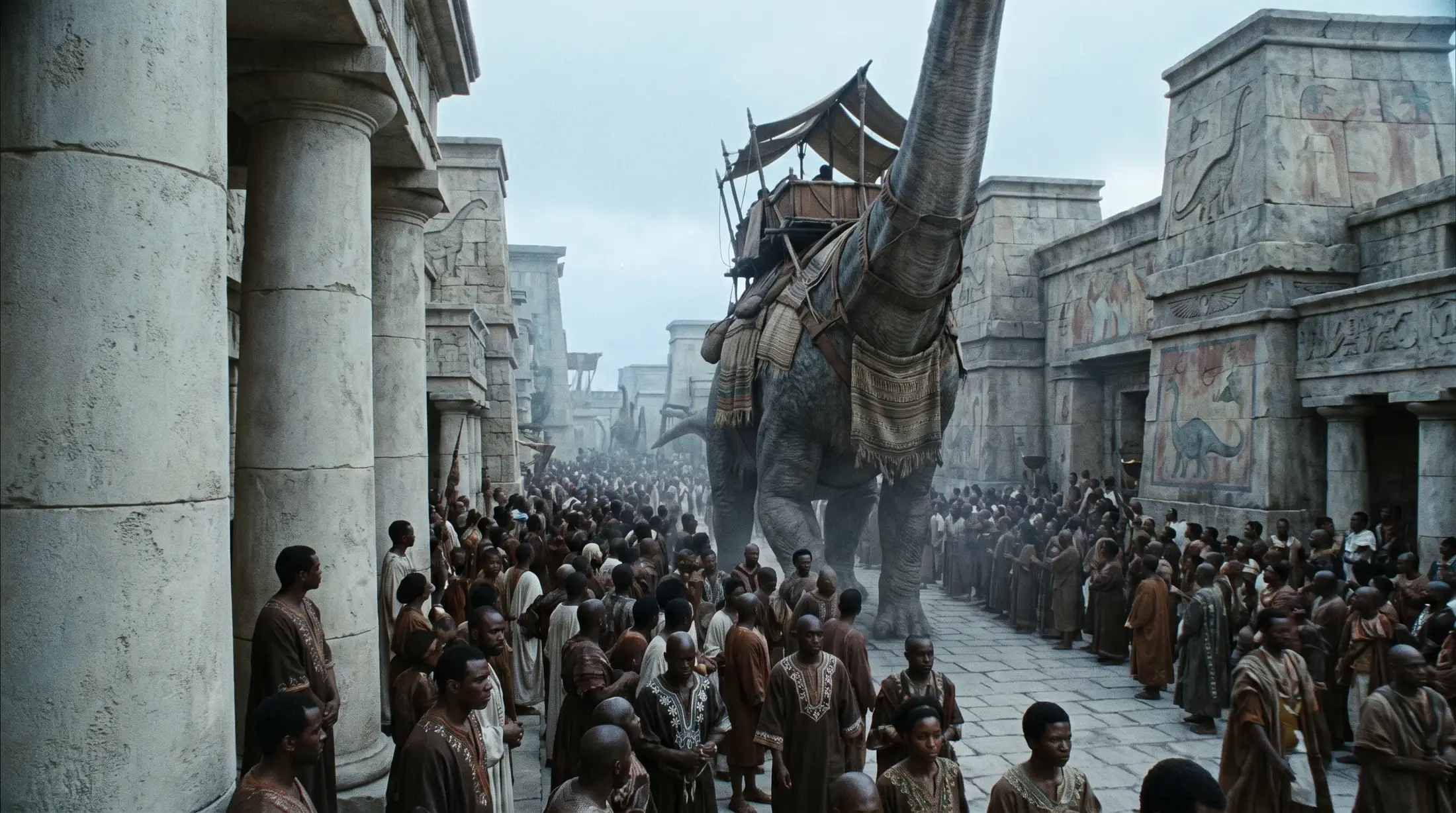
The colossus-whisperer
A sauropod specialist, the colossus-whisperer reads the fatigue and mood of the very large before they show; with a word, he saves or dooms a convoy.
Reading before it shows
Readers and vets
The trade works alongside those who observe and those who heal. The beast-reader Baruk Senai, serving the Living Ways, reads the state of titans and teams before departure, his hand on the flank; the vet examines and treats. The titan-vet tends the great beasts of the Longs-Pas and of the Order of the Diplodocus, and names every titan, even those about to die.
All of them carry on the Empire’s oldest lesson: the first great sauropod domestication, credited to Urnok and a female Diplodocus, was a matter of habit, food and repetition, of humans who learned to become predictable to a gigantic animal.
What a whisperer looks at
A whisperer begins by looking from a distance. He watches the height at which the very-large animal carries its neck, for a neck that sinks as the hours pass announces fatigue long before the legs do; the way the tail swings; the shifting of weight from one foot to another, which betrays a painful sole; the rhythm of the breath and the mist it makes in the morning. Then he comes closer, lays his hand flat on the flank and listens to the sounds of the gut.
He then examines what the animal leaves behind: how much water it drank, the fodder it refused, the look of its dung. The very large also give out very low rumbles, felt more than heard; whisperers say they listen to them through their feet, standing on the paving beside the animal. None of these signs is enough on its own. The craft lies in reading them together and comparing them with what the same animal showed the day before.
Why “whisperer”
The name comes from a gesture. Near the head of a very-large animal, one does not shout: one speaks low, in a steady voice, always the same. The colossi recognise the voices that have surrounded them since their youth, and a familiar voice calms them better than an order. Many whisperers count the animal’s steps under their breath during the march, a habit the teams end up no longer hearing and which the animal seems to wait for.
The craft thus continues the Empire’s oldest lesson: making oneself predictable to a gigantic animal. The same gestures, at the same hour, in the same order. Each very-large animal knows a few whisperers, rarely more than three or four in its lifetime, and replacing one of them is prepared over weeks: the newcomer first walks beside the old one, in silence, until the animal accepts his voice.
A twenty-year training
One does not become a whisperer by passing an examination. Future whisperers enter the sauropod yards as children, often because a parent works there; they carry water, sweep the yards, sleep near the pens and first learn to keep out of the reach of a tail. At about fifteen, a master takes them along on his visits, and they spend years watching without the right to give an opinion.
The Longs-Pas veterinary corps finally recognises a whisperer when his readings have proved right often enough to be entered without a counter-opinion. There are a few hundred in the whole Empire, attached to the yards, to the orders of great living animals and to the corridor stations. Many spend their whole lives with the same animals; some follow the armies, and these are the ones officers listen to least willingly and most often.
The word that stops a convoy
A whisperer’s advice fits in a few words, and those words carry the force of writing. “Not today” is enough to keep a very-large animal in its pen; the advice is dated, signed and attached to the animal’s register. A convoy leader can override it, but from then on he answers for it alone. In war, the whisperer says whether a wounded animal can be engaged again, whether it will last to the next relay or whether it must be left behind with a team.
It is in this sense that he saves or condemns a convoy. Announcing that a colossus will not last a stage forces a whole column to be reorganised, its load redistributed, a siege delayed. Hurried officers reproach him for thinking in seasons when they think in days. Whisperers answer with a saying of the trade: the colossus never lies, it is the calendar that lies.