

Trades
The trades of the register and of standards
Register scribes, border-markers, convoy inspectors, arbiters of weights and measures, toll judges, archivists and calligraphers: the trades through which the Empire of Urnok becomes administrative to the bone.
Writing the Empire
The register scribe writes down the Empire’s roads, debts and bloodlines; he certifies laws, eggs, fodder and relays. Through him, Urnok becomes administrative to the bone. His register is a living land-roll: lands, herds, barges. The register calligrapher gives the imperial script a useful beauty.
This work’s materials have their geography: egg-paper, ink and the register are Calaron’s signature materials, and the lampblack of the Ombrin Line, in Orlantis, makes the ink of the imperial registers. The Synod of Living Measures trains scribes, stewards and technical officers; its examinations deal with calculations in which a single error can endanger crews and animals.
The road is law
The border-marker sets the boundary stones and marks safe zones and “sha” zones, dangerous in the road tongue. The convoy inspector checks loads, rations, seals and losses. The toll judge rules at passes, bridges and on imperial roads; he separates a disputed crossing from a mere delay. The incident archivist records the circumstances of burnings, breakages and attacks. The arbiter of weights and measures keeps the imperial standard.
These trades create no new justice: they make responsibility legible between a part, a road, a load and the people who answered for it. The oath-notary draws up sworn deeds and proofs marked “observed” or “attested”; the common vocabulary of the known world calls the notary an oath-weaver.
The teacher of the Markers
The teacher of the Markers teaches the people about the Horde, eggs and the law of the roads. The Living Markers, for their part, signpost slope, water and turning space along the load-bearing roads.
A scribe’s day
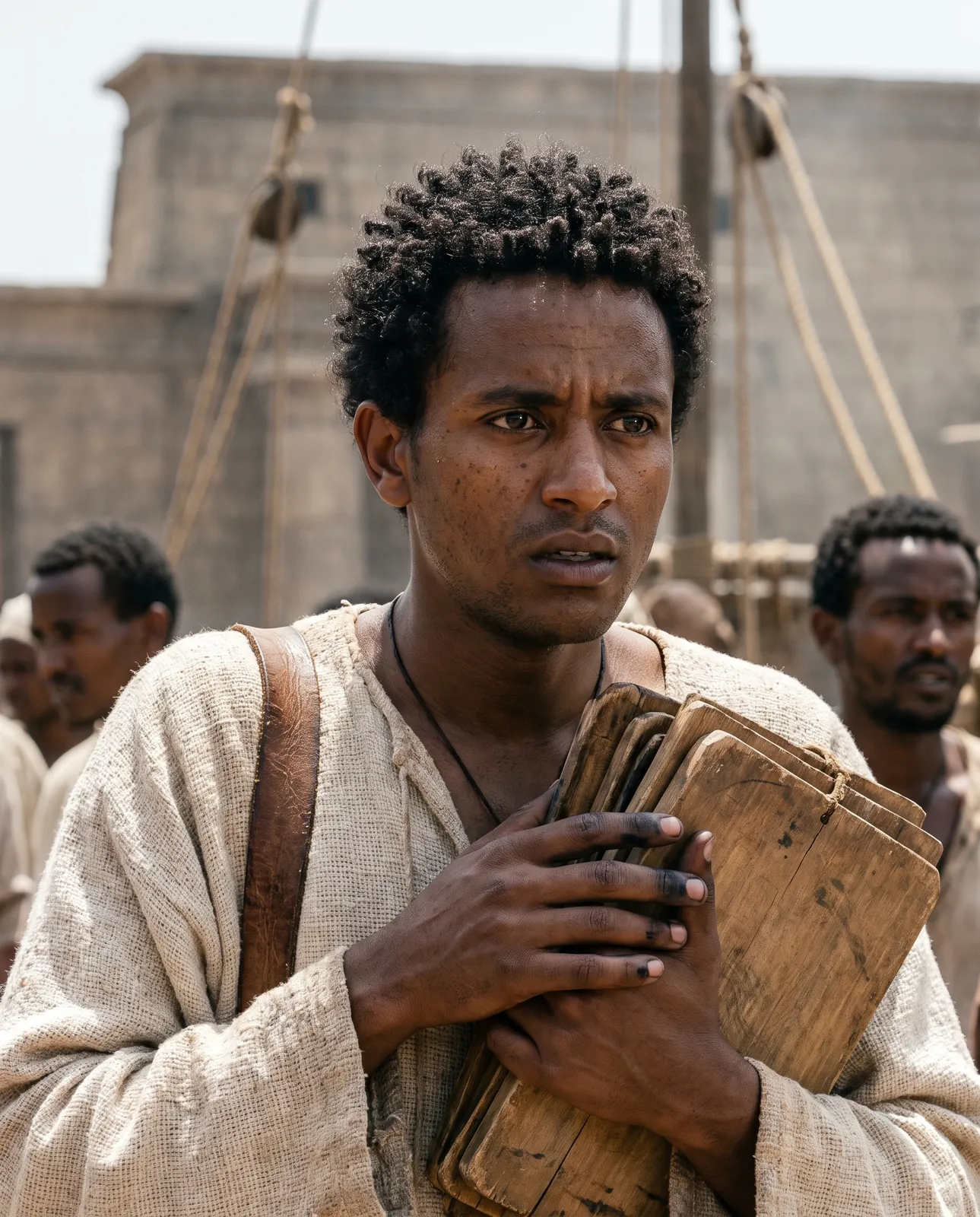
The register scribe works by daylight, because the archives allow no lamp. In the morning he receives declarations on tablets of wax or oiled wood; in the afternoon he copies them out fair on egg paper, in ink, in a hand that every record office in the Empire can read. Important copies are collated in pairs: one scribe reads aloud, the other follows on the original, and both sign in the margin.
The trade leaves marks on the body: a callus on the middle finger, ink stains up to the wrist, eyes that tire before forty. A record-office scribe earns a little more than a workshop journeyman, and much more if he has been through the Synod. Modest families see this trade as the surest way out of work without a line: a child who writes well and counts accurately always finds a table in a record office.
The arbiter of weights and measures
The arbiter of weights and measures keeps the imperial standard in a district or town. He holds a case of standards, rules, weights and gauges certified by the Synod, which he regularly checks against the original, and he goes round the markets, halls and workshops verifying scales and measures. An accurate scale receives its sealed lead; a false one is seized, and its owner entered in the district register.
The arbiter’s work is not limited to trade. The quarry counterweights, the ballast of the hoists, the silo gauges and the surveyors’ measures of length all depend on his standards, and an error in a standard spreads all the way into the load calculations for a bridge. That is why falsifying a standard is a crime against the Empire, and why arbiters are among the few district officials whom even the great houses greet first.
The incident archivist
The incident archivist establishes the circumstances of what went wrong: a field burning that spread to a road, a load failure, an attack on a convoy, an animal that bolted in a town. He gathers testimony, surveys the places, examines the pieces put under seal and writes a report that judges and insurers will read. His report does not say who is guilty; it says what happened, in what order, and what was seen.
Put end to end, these reports form a map of the Empire’s weaknesses. Archivists pass their records to the High Chancellery of the Living Ways, which reads in them which bridges give way, which roads attract raids, which relays lack water every summer. In war, these registers become military secrets: whoever knows the incidents of a road also knows where it ought to be struck.
The school of the Stones
The teacher of the Stones teaches in the open air, on relay squares and at the foot of boundary stones, to anyone who wants to listen: village children, travellers, recruits, foreign merchants. His lessons cover three subjects. The Horde first: recognising the tracks and cries of raptors, knowing where to take refuge, never running in front of a pack. Eggs next: telling the statuses apart, what may be eaten, what must be declared, what is never touched. Finally the law of the roads: reading a stone, giving way, declaring an incident.
The trade has no central body. Each district, each large relay has its teacher, paid by the commune or by the Chancellery, and each teaches in his own way, with his own stories and local examples. Children who have been through the school of the Stones can be recognised by the way they recite the signs of the road before they know their letters.