

Trades
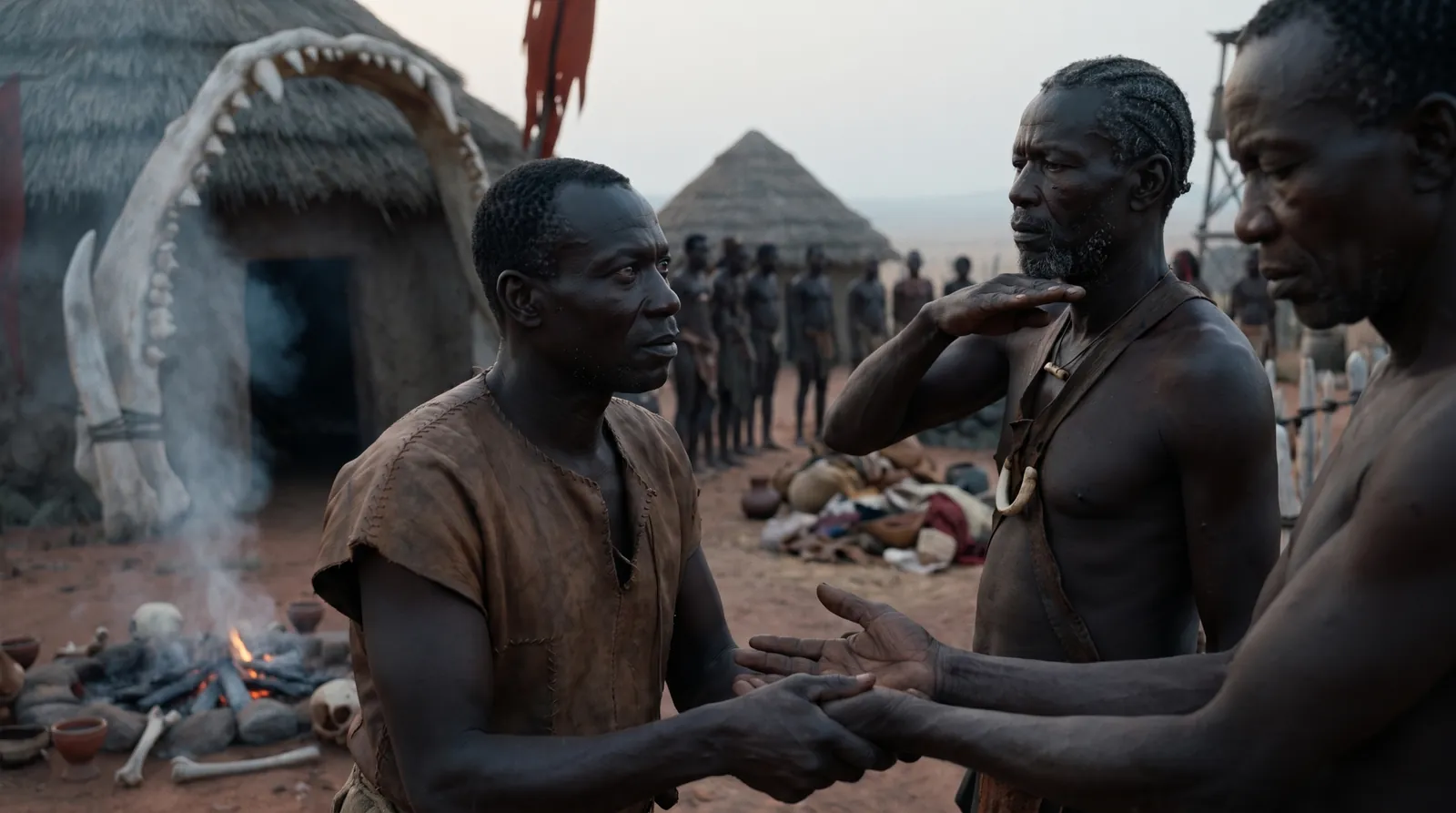
The Butin-Kar
Arkhan’s master of plunder sorts the spoils of a raid — beasts, saddles, seeds, captives, tools, maps and debts — and values each captive before the Rule of Three.
Sharing begins with a count
The Butin-Kar sorts the spoils of a raid: beasts, saddles, seeds, captives, tools, maps and debts. He values each captive before the Rule of Three is applied. The trade holds together the economy of the raid.
The Rule is calculated like a ration: the third given to the pack goes into the beasts’ food. Those who keep the accounts may argue over the total, not over the principle.
Valuing the spoils
Around the Butin-Kar work those who give the spoils a price or a meaning. The trophy-marker values the origin and worth of plunder; the bone-engraver turns bone into plates and symbols; the ransom negotiator turns a captive into a value. In Qor-Zaï, the Butin-Kar hall, with its weighing tables, notched bones and spoils tokens, gives this sorting a place.
A title, not a name
The Butin-Kar is a title, not a man’s name. Every great band, every horde on campaign and every hall of division has its own, and people say “the Butin-Kar of the Fils de la Faim” as they would say the water master of a trail. The holder is chosen by the khan, but he lasts only if the camp accepts his accounts: a Butin-Kar whose divisions are contested after every raid does not see out the season.
He does not work alone. Counters help him keep the notched bones and the tokens of capture, bearers move the lots, and on the trail his mount carries the saddlebags of tokens. The trade is as despised as it is necessary: it is said of the Butin-Kar that they look at a man as a lot and at a lot as a debt, and most of them do not try to deny it.
Weighing a lot
The work is done at dawn, on outspread hides. The Butin-Kar arranges the spoils by category, beasts, saddles, seeds, captives, tools, maps and debts, and assesses each by its own criteria. Beasts are judged by age, teeth, gait and lineage; saddles and tools by their wear; seeds by the handful, to know whether they will sprout in an oasis field; bone maps by what they show and by who might buy them.
The weighing tables carry jade weights, whose standards are kept by the hall of Qor-Zaï. Each assessment is marked by a notch on a tally bone, and each lot receives its token of capture. The final count is spoken before the camp, then compared with the chant of the war-singer who saw the spoils fall; when the two agree, the division begins, and when they differ, the count is redone before witnesses.
Assessing a captive
The most dreaded part of the trade is the assessment of captives, which comes before the Rule of Three is applied. The Butin-Kar looks at age, health, hands, teeth and knowledge: a carer, a tracker, an artisan or a herbalist is worth more than a bearer, and a khan of higher rank may requisition them for their talents. Some Butin-Kar watch how a captive reacts when their mount approaches, and draw their own judgement of his worth from it.
The assessment decides a great deal: the third in which a captive will be placed, the price the broker at Port de Sable will ask if he is sold, and what the third that is kept will be worth. The Arkhans do not claim this work is just; they say it is counted. Foreigners who attend a weighing rarely come back indifferent, and the Volonians, who live off the brokering of ransoms, prefer to wait at the port rather than attend.
Contesting the count
People may quarrel over the total, not over the principle. A rider who thinks his capture was miscounted says so on the spot, before the camp, with his witnesses; the Butin-Kar counts again, the war-singer repeats what he saw, and the Keeper of the Share decides if need be. A dispute raised after the division is almost always lost: what has been accepted before the camp is knotted, and a division is not undone for one man.
The Butin-Kar also answers for his mistakes. If he undervalued a beast or a captive and the sale at Port de Sable proves it, the difference is owed to those he wronged, out of the camp’s share. A holder who is always wrong in the same direction, to his khan’s profit, ends up losing his title, and the camp long remembers the accounts of a Butin-Kar that never came out right.
Gallery2 images
After the raid, captives and spoils are sorted at dawn. The Butin-Kar, inspector of the spoils.