
People
Kheli Anor
Ishtir’s elected supreme leader, at the head of an order that sincerely believes in the Weighing.
A term, no dynasty
Kheli Anor is Ishtir’s elected supreme leader. His single term lasts twenty-five years; he governs with the Ten Golden Wings. His name carries no dynastic surname. His exact native title remains little known; the old “priest-king” label does not make him a hereditary monarch.
Belief at the summit
The faith of Ishtir’s highest leadership is sincere. Kheli Anor belongs to an order that regards the Weighing as a just way of assigning places, even when that assignment causes suffering. Reducing this power to a cynical facade would erase its moral logic and the weight of its decisions.
Biography rather than genealogy
His authority belongs to a society without family surnames, where childhood cohorts and certifications matter more than ancestry. Offices therefore cannot be read like Urnok’s blood alliances. Orders, entitlements and evaluations explain each person’s place.
An office one must leave
At the end of his term Kheli Anor must leave power: he can name neither a child nor a relative as his continuator. With the Ten Golden Wings he decides doctrine, national strategy and the great responsibilities. He has authority over the country’s supreme military means, including the great solar pterosaurs entrusted to the Ordre d’Or; the goods and animals attached to his office belong to the institutions, never to his fortune.
Foreigners call the leader of Ishtir a “Priest-King”, because political authority and solar faith are joined in the office. The name changes neither the length of the term, nor its elective nature, nor the obligation to step down.
Electing the supreme leader
The supreme leader is elected for a single twenty-five-year term, with no family campaign and no hereditary succession. The voting procedure is the business of the Ordre d’Or; its spirit is known to all. No candidate can stand in the name of a house, since none exists, or promise goods, since they own none. They can offer only their biography.
Custom holds that the election takes place in Qer-Aton and concludes at exact noon, the instant the shadow of the great gnomon vanishes: the chosen name is then spoken on the sky plane, the only register of the language in which sacred things and the numbers of measure are uttered. The candidates have decades of service behind them, and their files are read in full, medals, certifications and complaints included, as at any Weighing. The country therefore knows its leader’s life before he begins to govern: it is sewn onto his sleeves.
Twenty-five years, once
Twenty-five years is a large share of an adult life and more than three Weighing cycles. A supreme leader sees three or four seven-yearly Weighings during his term, and a whole generation sits its First Weighing under his authority. The length allows a long vision; its uniqueness prevents it from becoming a dynasty. At the end the holder hands back his insignia and leaves power. He can name no successor, and nothing of his office passes to anyone close to him, since the law recognises no one as close to him by right.
This compulsory departure is lived as a rite rather than a defeat. An outgoing leader is said to “come back down to the ground”, an allusion to the three planes of the Ishtiri language, and custom forbids quoting his decisions under his name once the term is over: they become the decisions of the summit. Kheli Anor, the current holder, will also govern until that end, then step aside.
Priest-King, Ray-Bearer and other names
Foreigners say Priest-King, because political authority and solar faith meet in his person. The word translates nothing Ishtiri: the sacred language has no term for “king”. It calls any office charged with channelling the order of the world a Ray-Bearer, and priests sometimes use the word when they speak of the leader, though it has not become the title of the office. In everyday speech people simply say “the supreme leader”.
The registers write his name as Kheli Anor Sol-Vœu. The last term is not a family name but a vow, spoken in adulthood and kept as a commitment. Nobody addresses him as an equal: following the custom of the Gold rank, one speaks “towards” him, on the sky plane, and a sentence addressed to him one plane too low would pass for an insult.
A power seen through its acts
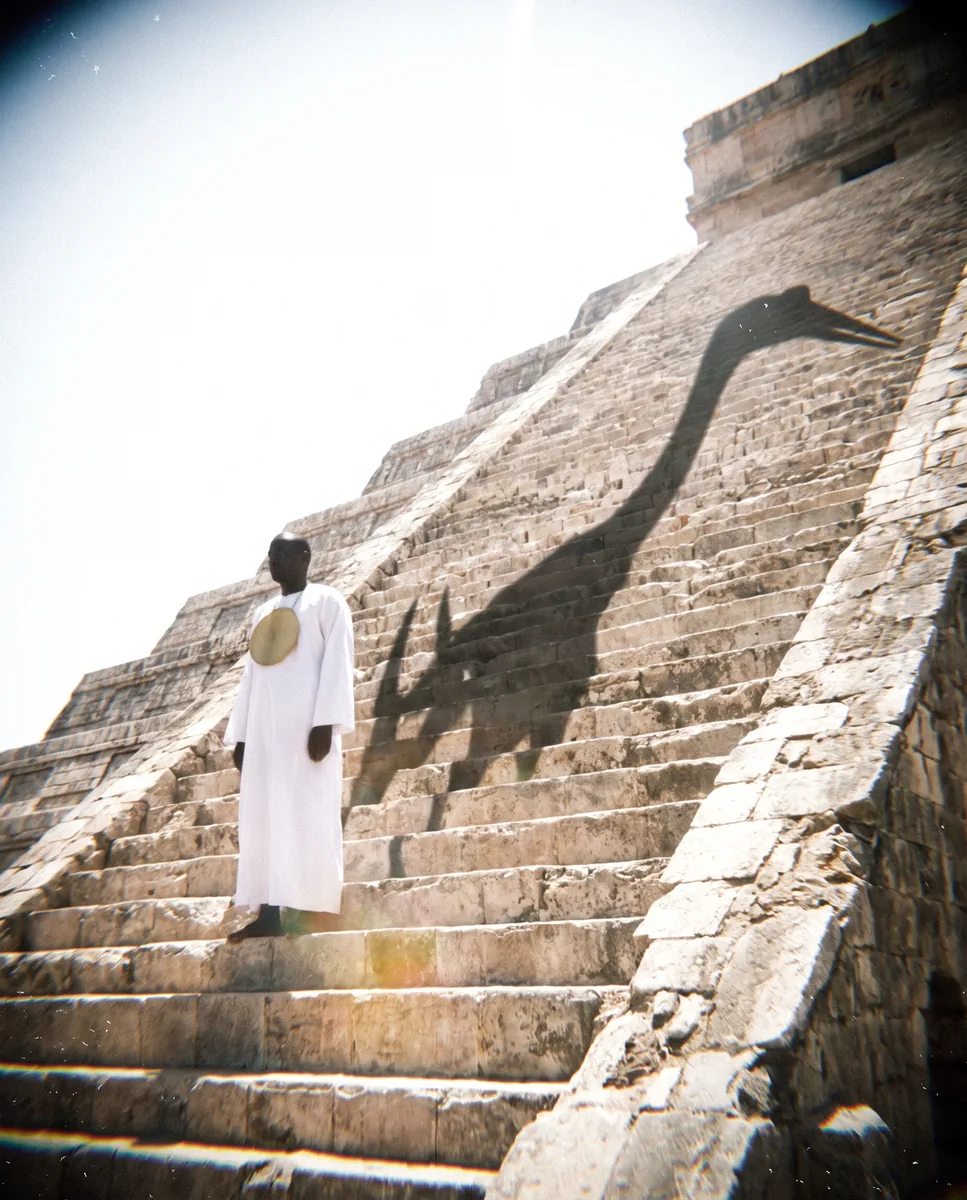
Kheli Anor is seldom seen. His authority is read first in what it sets off: a gate of Qer-Aton closing, a reserve being opened, an order crossing the signal towers all the way to the marches. Ishtiris know his name, his biography and his office, but few have seen him up close, and fewer still could quote a sentence he has spoken in public. He readily lets other voices speak, those of the Ten Wings, the doctrinaires or the Noon criers, and that reserve is part of how people picture his office. He is past fifty, and his hair, gone white under the linen, is taken as a sign of patience.
Like every Gold, he has only one week of Respiration: the common Great Respiration. During those seven days the permitted satire does not spare the supreme office. Children imitate the High Priest in the streets, Bronze dress up as Gold, and custom has the summit laugh with the crowd. On the morning after the last night, white and gold return, and with them the distance.
What the office does not allow
The supreme office is vast, but it has edges everyone knows. The leader owns nothing: no hall, no animal, no object that does not belong to an institution. He cannot place anyone close to him, extend his term or name his successor. He does not weigh citizens himself: the Weighing belongs to the Weighers, their juries and their rules, and a leader who claimed to change someone’s rank by personal decision would place himself outside the law. Nor does he govern alone: doctrine, strategy and the great responsibilities are decided with the Ten Golden Wings, and the summit’s responsibility is collective.
These limits do not lessen his prestige in Ishtiri eyes; they are its foundation. The leader is respected because he proved his place and will hand it back, not because he could keep it.
Part of this article covers events of season 1. Turn spoilers on in the menu to read it.