

Culture
Linen and the worn biography
White cloth, ribbons and decorations make a life public without inherited rank.
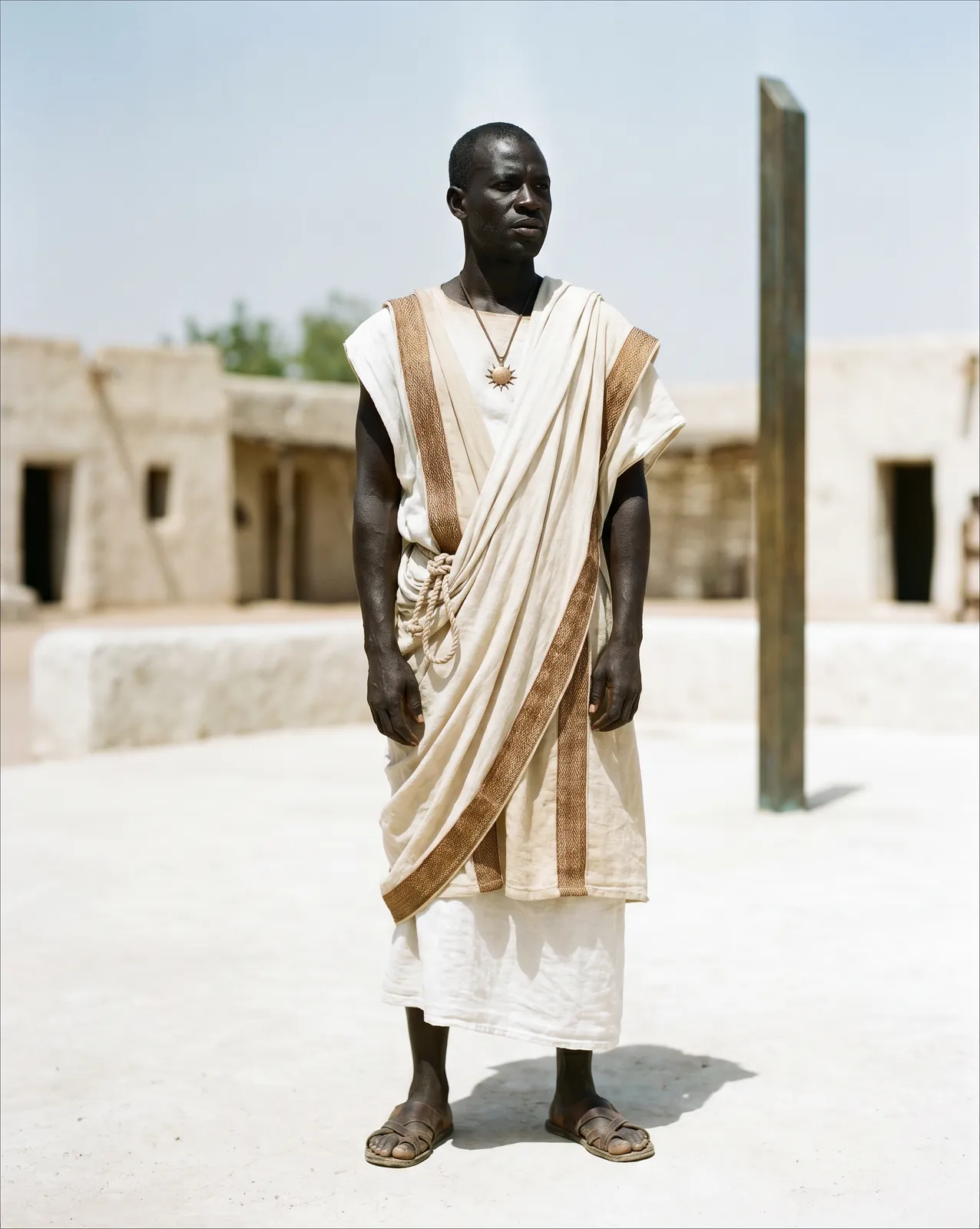
White linen and measured signs
Ishtir dress uses white linen with bronze or matte-gold details. Crowds wear rank ribbons; veils, shaved heads and short braids belong to the local repertoire. This shared fabric connects different trades and ages. Visible distinctions come from worn signs rather than a dynastic cut inherited through a house.
Decoration tells of an achievement
Every adult displays a standardised version of rank, order, active certifications, grade and major medals. These signs form a visible biography. Two people in the same fabric may therefore carry very different responsibilities; reading decorations requires recognising what a sign actually attests.
Ordinary clothing is guaranteed
Ordinary clothing belongs to fundamental rights, alongside housing, water, food and education. Necessary dress does not have to be earned through promotion. Scarce or dangerous resources involve distinct rights of use and responsibility. Dressing the body and displaying competence are therefore two functions meeting on the same person.
From fibre field to white linen
Ishtir’s flax grows in the fibre fields of the Terrasses d’Auréon, the Côtes des Alizés and the Marais Lumineux. After harvest the stalks are retted in the slow canals of the Marais under the watch of the Canaux Clairs, who set aside separate basins so that retting water never touches drinking water. Scutching, spinning and weaving take place in the workshops of the Mains Blanches, which also make the white garments, the embroidery and the sandals.
Linen is worn in two states. Unbleached linen, the colour of straw, is the cloth of work and ordinary life. Bleached linen is kept for temples, public offices, Weighings and the dead. It is bleached in the sun, spread on white terraces for days and watered morning and evening; priests regard this bleaching as a religious act, since it is the light itself that does the work. Dyes, saffron, madder or indigo from the ports, are used for little besides ribbons and Respiration clothing.
Reading an outfit
An Ishtiri outfit is read from top to bottom. The chest carries the great medals, hanging from their ribbons; they are rare, and many adults have none. The sleeve carries the rest: a band embroidered in rank thread, bronze, silver or gold, then the marks of the order and, below them, the active certifications, small plaques of terracotta, bone or bronze, engraved and sewn on. It is on this sleeve that the keeper of marks works with scraper and punch, and it is the sleeve people look at first when they meet someone. The rank badge is worn at the belt and weighs against the hip.
The rank ribbon completes the whole. It is worn knotted at the arm or the forehead, stretched and straight, and its straightness matters as much as its colour: a crooked ribbon passes for carelessness, almost for a confession. Children, all of them Bronze, wear a plain bronze ribbon and nothing on the sleeve, apart from their cohort braid tied at the wrist.
The turned sleeve
During the Respiration, clothing changes its rules. The year is made of pure white and of gold according to rank; the Respiration allows flowers, colours, temporary paint, garlands, veils and absurd hairstyles, and even a Gold looks less institutional in them. Many then take to wearing the turned sleeve: the tunic put on inside out, the marks against the skin, which hides nothing of who one is but signals that one is off duty.
In the carnival’s rankless boxes the turned sleeve is even the rule of entry. On the first morning after the Great Respiration, people can be seen in every street putting their tunics the right way out as they walk, and the keepers of marks have their hands full with plaques unstitched by seven days of dancing.
Wearing out, mending, returning
Ordinary clothes are part of the necessary. They are not bought: one brings a worn tunic back to the hall and receives another in one’s size, with the same sleeve sewn back on by the Mains Blanches. Nothing is thrown away. Old linen becomes bandages for the infirmaries, lamp wicks, cushion stuffing and finally fibre for paper; worn sandals go back to the leather workshops.
The rank thread follows a path of its own. It belongs to the State, not to the person wearing it. When a rank changes, at the Unstitching, the thread is undone, weighed and returned; at death it comes back the same way. Part of the gold thread that embroiders the sleeves of the Gold today has therefore already served others, sometimes for centuries, and Ishtiris speak of it with a certain pride: everyone wears a little of those who held the place before them.