

Creatures
Arkhan tracks: reading before asking for effort
On the tracks, water, wind, ground condition and the animal impose concrete travel decisions.
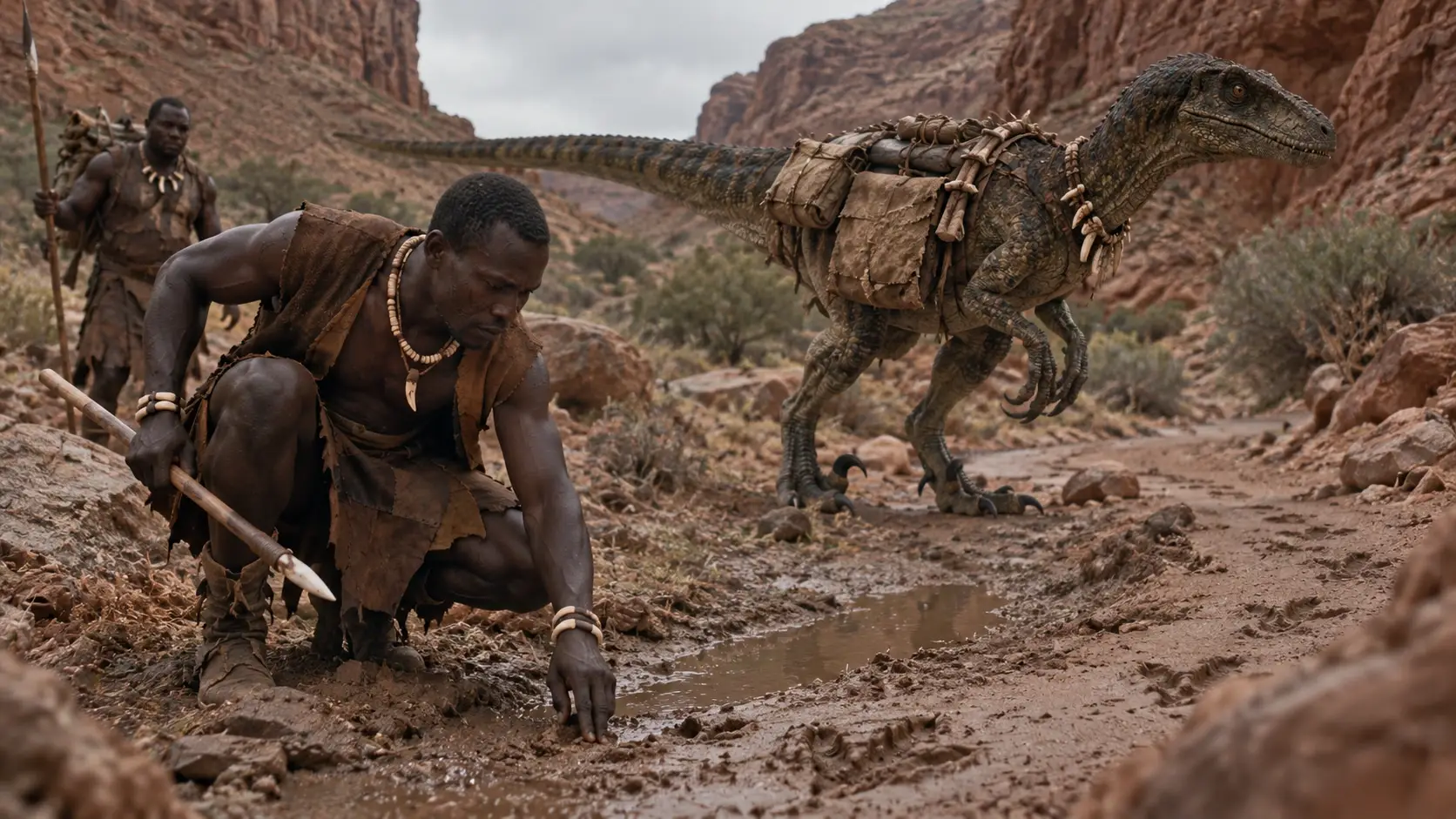
Terrain has a say
Track travel starts with reading the ground, available water and what wind erases. A guide or trainer receives no promise of passage from terrain; they may slow, go around or wait. The decision protects people as much as the animals and loads that depend on them.
Inspecter la monture à la halte
À la halte, l’état du vivant et celui des sangles font partie de la décision de marche. Os, cuir et tendon restent des matières à entretenir.
Guiding without turning life into machinery
Open herds are guided by signals and by teams. This is a herding practice, not perfect obedience: hunger, fatigue, climate and resources remain limits and determine their movements.
A stop for a carnivorous pack
Pack enclosures do not repeat a herbivore stable. Animal rations include farmed flesh, carcasses and offal; the rider’s meal follows another chain. Water, rest and the state of fastenings must still be checked before asking the mount to move.
The Whirlwind Nests include peripheral feeding points, resting niches and care passages. A straight exit and breaks in circulation allow evacuation or reduce panic. These arrangements concern hatcheries, packs and training yards, not every Arkhan town.
Reading a beast on the march
On the trail the rider watches his mount as much as the ground. The signs of fatigue are known to all: a stride that shortens, a tail that drops and no longer serves as a counterweight, jaws half open to breathe, a beast stumbling on a stone it would have avoided in the morning. At the first sign one slows down; at the second one looks for shade; at the third one dismounts and walks alongside. A raptor pushed beyond these signs can collapse, and a mount lost on the march is a fault that is remembered.
Heat is the first danger. Pads burn on black stone and on salt in the middle of the day, and a beast that has walked on them limps the next day. Good columns halt in the burning hours, in the lee of banks or under cloths stretched between lances, and set off again when the sun sinks. The old riders teach the young to lay a hand flat on the stone before taking a mount across it: if the hand cannot stand it, neither will the foot.
Marching by night
During the dry season columns readily march by night. The cool spares the beasts and the water, and raptors, which hear and smell better than they see, find their way easily along a known trail. Riders steer by the stars, first of all by the constellation of the Great Raptor, whose direction the shamans read during the Vigil that opens the year; the water masters, for their part, count the hours of marching to the next well.
The night has its own rules. The column marches without fire, in close file, each beast with its head level with the tail of the one in front; people speak low, whistle their orders, and halt at the slightest warning cry from a lead raptor. Nervous beasts are placed in the middle of the column, old and calm ones in front and behind. A column that reaches a well at dawn, its beasts rested and its waterskins still half full, is a water master’s pride.
Fasting, thirst and return
An Arkhan war beast fasts before a raid: a day or two without meat, because a beast on an empty stomach runs better, hunts more boldly and is less easily distracted. The fast is a technique, not a privation, and it has its limits. A beast leaving on a long march is not made to fast, nor a message beast, nor a young one; the fast is never prolonged beyond what the beast’s master has decided, for a starving raptor ends up obeying nothing but its hunger.
Thirst follows other rules. A raptor can last two or three days without drinking in the heat, longer if it is trained, but it comes out of it weakened, and the water masters count the beasts’ water before the men’s. On returning from a march, a mount is not allowed to drink its fill all at once: it is watered several times, in the shade, then fed. Arkhans say a trail is judged by the return, and the return by the state of the beasts.