

Institutions
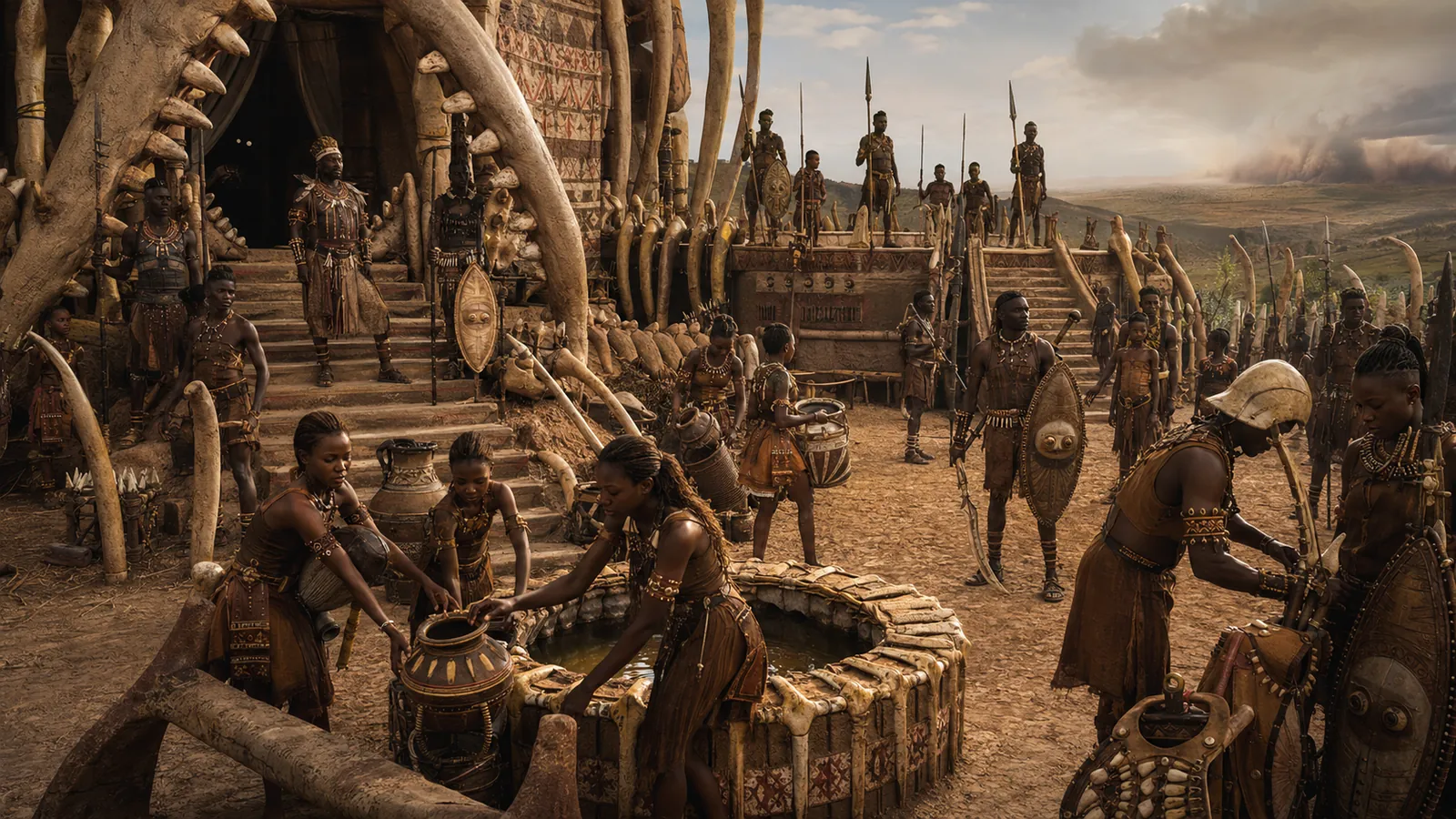
The Water Masters
An Arkhan inter-clan authority holding wells, routes and water rations: it can close or ration a watering point, and stop a Horde without a battle.
Holding the water
The Water Masters hold the wells, the routes and the water rations between clans. They can close or ration a watering point; they are known by their gourd seals and their stones. Their office obliges them to stay neutral between clans. They are held to be Arkhan’s first bureaucracy.
Stopping an army
In a land of trails their power is considerable: they can stop an army without giving battle. A confederal campaign of the Horde requires the consent of the khans and the water masters. Eshka-Ma des Puits, a water mistress, judges victories by the amount of water left; she can back the Supreme Khan against the young khans. Together with the Keeper of the Share and the Bone-Bearer, these offices form the Horde’s material counter-powers: one can order the march, not the water nor the breeders.
Gourd seals and stones
The Water Masters’ signs are simple and readable by all. Stones tell the state of a well: a stone standing upright by the curb marks an open watering point, a stone laid flat a closed well, and a ring of small stones a ration. No one moves these stones without risking the anger of every trail at once.
Gourd seals are used for measurement. A leather gourd sealed by a water master holds a recognised ration: a day’s water for a person, another measure for a saddle beast, another again for a great carnivore. These standard gourds make it possible to divide a well’s water among several bands without quarrelling over quantities, and a false seal is held to be a very serious offence. Some are kept at the main watering points, tied to a post, so that everyone can compare his own gourd.
Neutral between clans
The office obliges water masters to stay neutral between clans, and this neutrality is kept up by concrete customs. The craft comes largely from the Longs-Os, the lineage of the long trails; but a water master who takes up the office is said to stop drinking before others, including those of his own clan. He takes part in no raid and receives no share of booty; he is fed by the trails he serves.
This position makes them natural arbiters. When two bands quarrel over a well, a water master sets the order in which they drink, and the band that refuses his decision finds the next watering points closed. The power is considerable, and so is the temptation to use it for one side: Arkhan history remembers corrupt water masters, and those memories serve as a warning to every new holder.
The first bureaucracy
The Water Masters are held to be Arkhan’s first bureaucracy, and the word is no compliment in a country that despises heavy administration. Their work nonetheless resembles that of all counters: they tally mouths, beasts and days of march, compare what a well can give with what a column will ask, and say whether a march is possible. Their accounts are kept on notched bone tallies and on cords, not in registers.
This work is what gives them the power to stop an army without a battle. The water master is the one who shouts against the Horde’s euphoria when the khans want to go faster than their wells. Eshka-Ma des Puits, one of the most heeded water mistresses, judges victories by the amount of water left and is not impressed by the size of a Horde: a great army, she says, is only a great thirst.
The crime of the well
On the steppe the gravest crime concerns water. Closing a well is a right that can be contested; poisoning one is an act that kills without choosing, for years, and that every trail holds unforgivable. The Water Masters are its guardians: they examine a suspect well, forbid its use and name who must answer for it.
This horror explains the place an old rumour holds in Arkhan memory. It is said of Zarsalaï, Supreme Khan at the time of the Three Waves, that he took power by poisoning his own family’s well. Water masters never speak his name near a well, and the story is told to apprentices so that they know what their office must prevent: a man turning common water into a weapon.
The great wells
Some wells carry a name the whole Confederation knows. The Well of Kharrug, a sacred well on the map of the Seven Trails, lies in the flat desert of the Longs-Os; it is around it that that khanate’s Water Masters keep their cisterns, water-skins and halts. Among the Marcheurs du Vent, the Well-Judges arbitrate water disputes at the Well of Clear Blood, and the Clan of the Three Wells guards the Well of Jehal.
These places also serve as courts. A dispute over the order of drinking, a gourd with a false seal or a moved stone is judged on the spot, before the well, with the witnesses of the halt. It is said that no khan enters the stone circle of the Well of Kharrug armed, and that even the riders of the Horde dismount there to fill their skins.