

Families and social ties
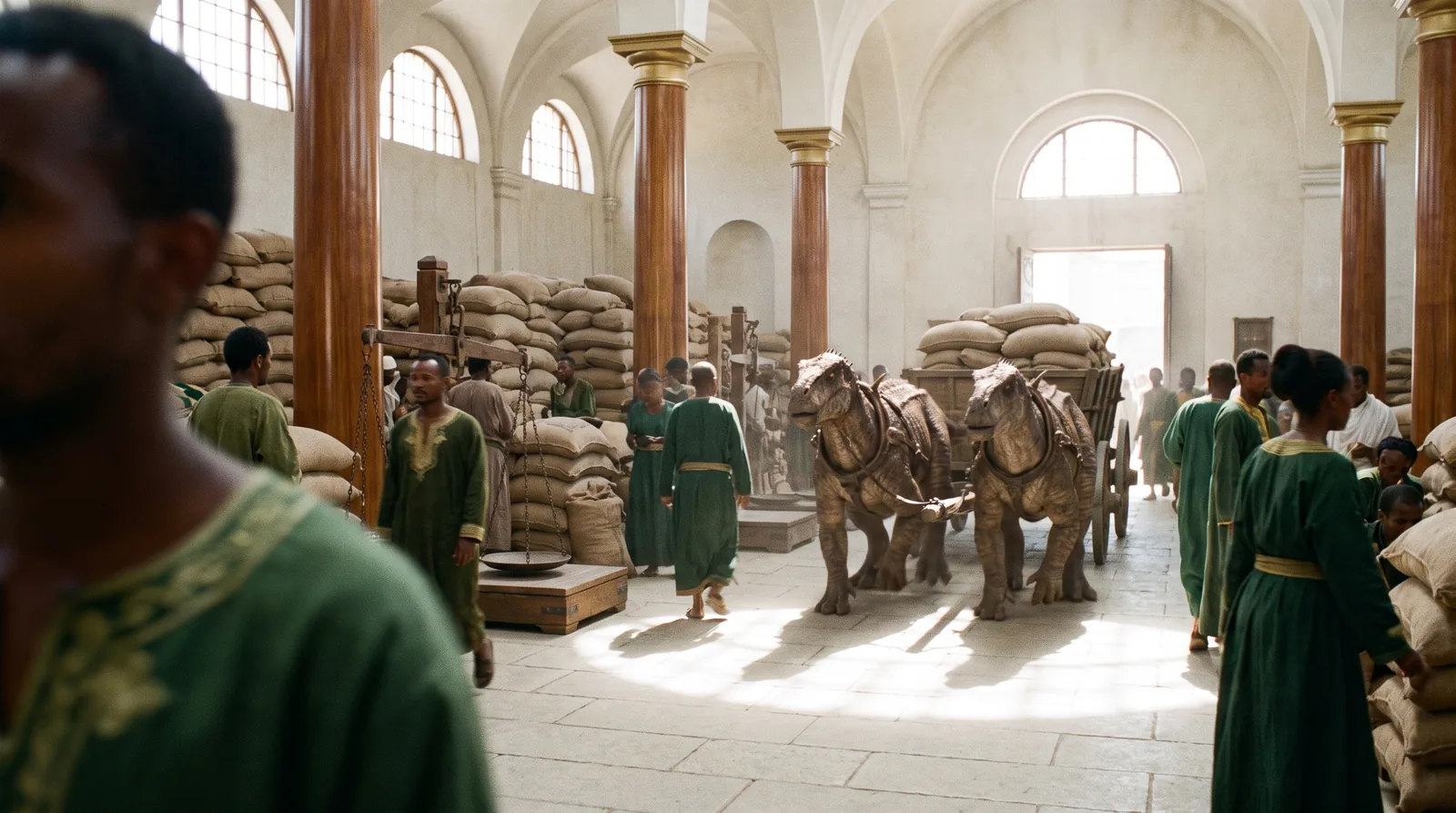
The Tanoris Line of Sarnor
A High Line of Sarnor that owns no grain: it owns the right to move it, from the granary to the mouths it must feed.
The right to move grain
The Tanoris of Sarnor hold rationing and convoys. They own no grain: they own the right to move it. Keeping a reserve and organising its delivery are two distinct responsibilities, and the name registered on a convoy does not designate the owner of what it carries.
A ration must find its road
A delivery depends on the lot as much as on the crews, the teams, water, fodder and passages. A full reserve can remain unavailable to a road if the transport link is not working.
A military campaign draws on the same capacities as civilian traffic: water, food, vehicles, draught animals and crews. Tanoris rationing stands at the point where a duchy’s reserve becomes an army’s march.
Two Tanoris
Another Tanoris Line exists in Orlantis, where it prepares the bark tannins of the tanneries. The two families have separate registrations: their shared name establishes no kinship. In a real register, namesakes are common and accepted; the duchy and the product are enough to tell the two charges apart.
The convoy letter
The right to move grain takes the form of a convoy letter. It identifies the lot by its Line of origin and its silo, states its weight, its destination, the number of animals and wagons, and the relays where the convoy will halt. It carries the seal of the Tanoris Line and the counter-seal of the delivering silo. A load of grain travelling without one is treated as contraband, whoever owns it.
Silos and merchants pay for this right by the tonne and by the league. In exchange, the Tanoris organise the journey, book places at the relays, provide water and fodder for the animals and answer for the lot until it is handed over. On arrival, the recipient weighs and countersigns; the letter then returns to the Line, which files it. In the duchy they say a Tanoris does not own a single grain, but has his signature on every sack on the road.
A grain convoy
An ordinary convoy brings together a few dozen convoy hadrosaurs harnessed to covered wagons loaded with stitched, marked sacks. At the head walks the convoy chief, a Tanoris or a man of the Line; behind him a counter keeps the sack register, and an escort of Silo Pikemen accompanies important loads. On a load-bearing road in good repair, the convoy covers about ten leagues a day.
The day is set by the animals more than by the men. They leave at dawn, halt at midday for water, and stop before nightfall at a relay booked in advance. A convoy hadrosaur eats more than a hundred kilos of fodder a day: a twenty-day journey therefore consumes a significant share of what it carries, unless road depots have been arranged. The Tanoris count these costs before signing, and their price depends on them.
The ration tables
The Tanoris keep the duchy’s ration tables: how much grain a day a working man needs, a soldier on the march, a child, and how much fodder an iguanodon, a hadrosaur or a sauropod needs. These tables are used to calculate everything, from supplying a garrison to feeding a besieged town. A siege ration that feeds one man for a week costs about one Draco and seven tenths in the Empire’s markets.
In times of shortage, the tables also fix the order of shares. Seed is not touched; draught animals come first, without which nothing moves any more, then the garrisons and towns, and finally the markets. This order surprises foreigners, who are astonished to see an animal fed before a man. The Tanoris answer that a halted convoy starves more people than a fed animal.
Those who own nothing
The position of the Tanoris is unusual: they own neither land, nor silo, nor grain, and yet no sack leaves one of the duchy’s silos without them. The silo Lines readily complain about their rates; the merchants about their delays; the stewards about their fodder demands. But when a flood cuts a ford or a relay runs short of water, it is to them that everyone turns.
Private houses such as Sarnor Trois-Saisons sell fodder and road halts; they do not sell the right to move the Lines’ grain. The boundary between the two trades gives rise to regular quarrels before the duchy’s judges. The Tanoris of Sarnor have no kinship with the Tanoris of Orlantis, but the two families enjoy the shared name: one, people say, makes grain walk and the other leather.