

People
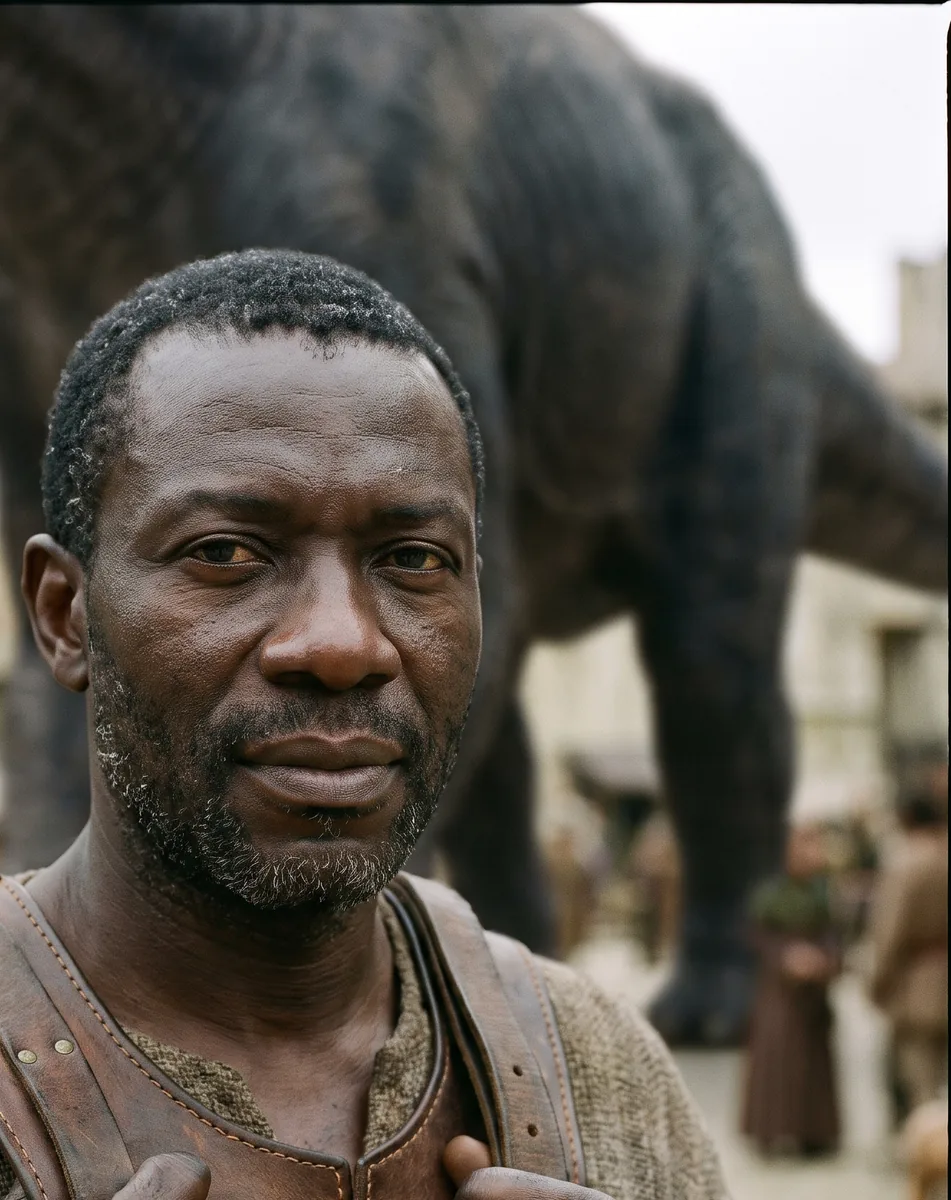
Baruk Senai
Animal reader serving the Living Ways: the animal’s body before rank.
Observing a working animal
Baruk reads the condition of titans and teams. Fatigue, discomfort and illness are concrete questions for him, preceding a convoy’s departure. His diagnosis comes from experience and observation; the gift others see in him confirms no supernatural power.
A hand on the flank
Before answering a human, he places a hand on the animal’s flank. The gesture places the living creature at the centre of the decision. It reminds others that an animal does not become available because an order demands it: it has a body, fatigue and limits that the service must read.
Observing and treating
His work joins that of the veterinarians: the reader notices, the veterinarian examines and treats. Their collaboration does not erase their different functions. An observation passed on in time allows treatment before the animal is demanded by a convoy.
In the service of the Living Ways
Baruk Senai serves the High Chancellery of the Living Ways, the institution that holds the Empire’s roads, bridges, relays and watering places. His post is at departures: where convoys form, where animals are harnessed, where platforms are loaded. Before every important departure he walks along the teams and reads the condition of each animal. He is about forty-four, and his reputation goes before him in the relays.
His opinion does not stop a convoy on its own. He gives it to the convoy master and to the harness inspector, who may refuse a badly prepared departure. Baruk reports a tired animal, a limp in the making, a discomfort; the animal is replaced, the load lightened, or the convoy leaves anyway, and the register keeps a record of what was said. In the relays where he works, convoy masters have learned that an ignored opinion from Baruk often costs more than a day’s delay.
What he looks at
Baruk looks at simple things, and all of them at once: the way an animal sets down its hind foot, the carriage of the tail, the suppleness of the neck, the dryness of the skin, the white of the eye, the rhythm of the breath after a climb. He watches what an animal drinks at the relay and how long it stays standing at a halt, listens to the call of the lambeosaurs, notices the iguanodon that keeps a thumb folded. The droppings tell him what the animal has eaten and how it digested it.
He differs from the colossus-whisperer, who specialises in sauropods alone: Baruk reads whole teams, hadrosaurs, iguanodons and very large animals, and sees the effect of one on another. An animal pulling crooked tires its neighbour; a nervous very large animal makes the whole column nervous. His knowledge is made of experience and observation. Those who credit him with a gift use the wrong word; he only says he looked for longer.
The animal first, the man second
Before answering a human, Baruk lays his hand flat on the animal’s flank. The gesture earns him smiles and a few enmities: he is accused of loving animals more than people, which makes him suspect in the eyes of those who love only rank. He does not defend himself. His loyalty goes to what lives and suffers, and he puts it his own way: “This animal isn’t sulking. It hurts somewhere nobody has looked. Like people.”
Handlers like him better than officers do. He speaks little, in concrete sentences about bodies and animals, with few figures. He turns down compliments on his “talent” and points out that he learned by picking up straps, sleeping in relays and watching animals die that nobody had listened to. In the Chancellery’s stables, young handlers copy his gesture without always knowing why.
Reading a war column
In wartime, Baruk’s work changes scale. Military convoys leave heavier, faster and more often; the animals run stage after stage, the relays lack rest and replacements are scarce. A tired column does not collapse all at once: it slows, stretches, falls into disorder, until a very large animal refuses a bridge or falls across a road. Baruk reads that fatigue before it becomes an accident.
He then works with the vet Tesfa on serious cases: the reader notices, the vet examines and treats. His opinions also go up to the stewards who decide on rotations. He knows that a great animal giving way in the middle of a line is not just a loss: it is a mass of several dozen tonnes that can crush those around it. For him, an army’s safety begins with the most tired animal in the column.