

Institutions
Korath : signature, correction et patrimoine technique
Une invention devient un savoir public par la preuve, la correction et la conservation de son auteur, de ses limites et de ses révisions.
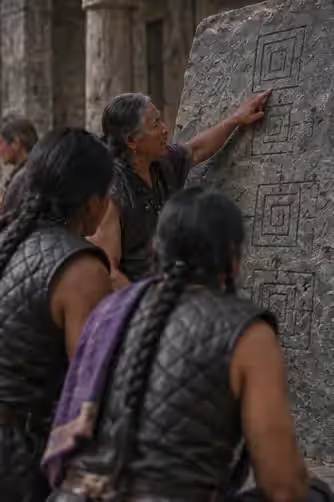
La signature conserve l’auteur et le parcours
Le droit de Signature maintient la paternité d’une invention et la trace de ses corrections. Les modifications, accidents et amendements restent lisibles parce qu’ils expliquent comment l’objet peut être utilisé et où il échoue. La mémoire technique ne se réduit donc pas au résultat final.
Une contrepreuve confronte le brevet au réel
Un atelier rival peut reproduire et attaquer méthodiquement une réalisation. Cette contrepreuve vérifie une méthode par la matière et par l’objection, au lieu de demander une confiance abstraite à l’auteur. Une correction peut ensuite être intégrée au dossier sans effacer qui l’a produite.
L’exclusivité ne dure pas indéfiniment
Après une période d’exclusivité, le Retour à la Montagne verse le brevet dans un patrimoine technique partagé. L’auteur garde sa reconnaissance, mais l’usage du savoir cesse d’être une réserve privée permanente. Cette règle ne permet pas de déduire la durée exacte d’un brevet ni les conditions d’un cas particulier.
Counting revisions
A Korathian patent never comes alone: it carries its revision number. Each correction accepted by the Chamber receives a rank, from the first filing to the latest change, and keeps the name of whoever proposed it, whether the author, a journeyman from the same workshop or a rival. The plaque of a public work states the revision in force; the archives keep all earlier ones, with the reason for each change.
This count has acquired social value. Korath’s funerary plaques cite the work rather than titles, in the form “Here the square of X is closed, third revision”. A long series of revisions is nothing to be ashamed of: it proves that an invention served long enough to reveal its limits, and that its authors declared them. A mechanism left at its first revision for decades even makes old journeymen somewhat wary, as they wonder whether anyone really looked for its flaws.
Priority suits
Priority, knowing who filed first, is the most frequent source of workshop wars. To settle it, the Chamber relies on the time of filing, recorded by a public clockmaker when the file is sealed, and on the witnesses who saw the object work. A filing without a certain time is worth almost nothing in court.
Suits rarely pit two isolated people against each other. Behind each inventor stand a workshop, its backers, its supporters and sometimes a family of the Four Sides. Hearings are public, specialist journals publish the documents, and the judgment can ruin a house: losing priority means losing exclusivity, and with it the licences and revenues that kept workshops and households alive. Judges examine the plans first, then the tests, then the witnesses; a successful demonstration before them weighs more than ten statements.
Stealing a signature
Stealing a signature is one of the faults of false precision, like hiding a margin or falsifying a test. It is a major scientific, social and religious offence, because it lies about the origin of a form, the one thing Korathian religion grants to humanity as its own.
The Chamber restores the true name on the plaque and in the register, and the correction itself remains visible: the memory of the theft becomes part of the file. The culprit loses his licences and his place in examinations; his workshop, if it covered for him, loses its clients’ trust. For a Korathian, the heaviest consequence is not the fine but the bankruptcy of reputation, that social death which can take away workshop, district, guild and imports. Families long remember such dishonour, and marriages suffer for it.
What the law does not reach
The Right of Signature protects the author against everyone, the state included: the Seal of Requisition can impose secrecy, production, standardisation and military use, but erasing authorship would be political sacrilege. Black patents thus keep their author, even when their content disappears into the strongrooms.
The law stops, however, at sovereignty. The Chamber judges mechanisms, not command; it settles a quarrel over a hinge, never the question of who governs the mountain. Every student of patent law learns the saying: one may debate the fourth hinge for three months, but one does not debate who holds the right to close the door. The Korathian system is thus at once one of the world’s most protective for inventors and one of the most closed on the question of power.