
Armies
The Nid d’Alizé
The fleet’s pterosaur carrier (“Trade-Wind Nest”): forty to eighty embarked pterosaurs and anti-aircraft ballistae.
Small and large sea pterosaurs
The fleet distinguishes two uses. Small sea pterosaurs serve for scouting, signalling and spotting shoals; they are received on perch masts and recovery nets. Large sea pterosaurs intercept in the air and provide light transport and relays; they land on ship platforms and perches, and give the fleet its air cover.
The flight deck
The Nid d’Alizé looks like few other ships. Its upper deck, almost entirely clear, is covered with fibre mats that protect the animals’ feet and wings; forward rises a raised launching platform, turned into the wind, from which the great pterosaurs drop to take their first wingbeat. The masts carry perching yards where mast Sénelles roost by the dozen, and large recovery nets are stretched aft to receive the beasts coming home.
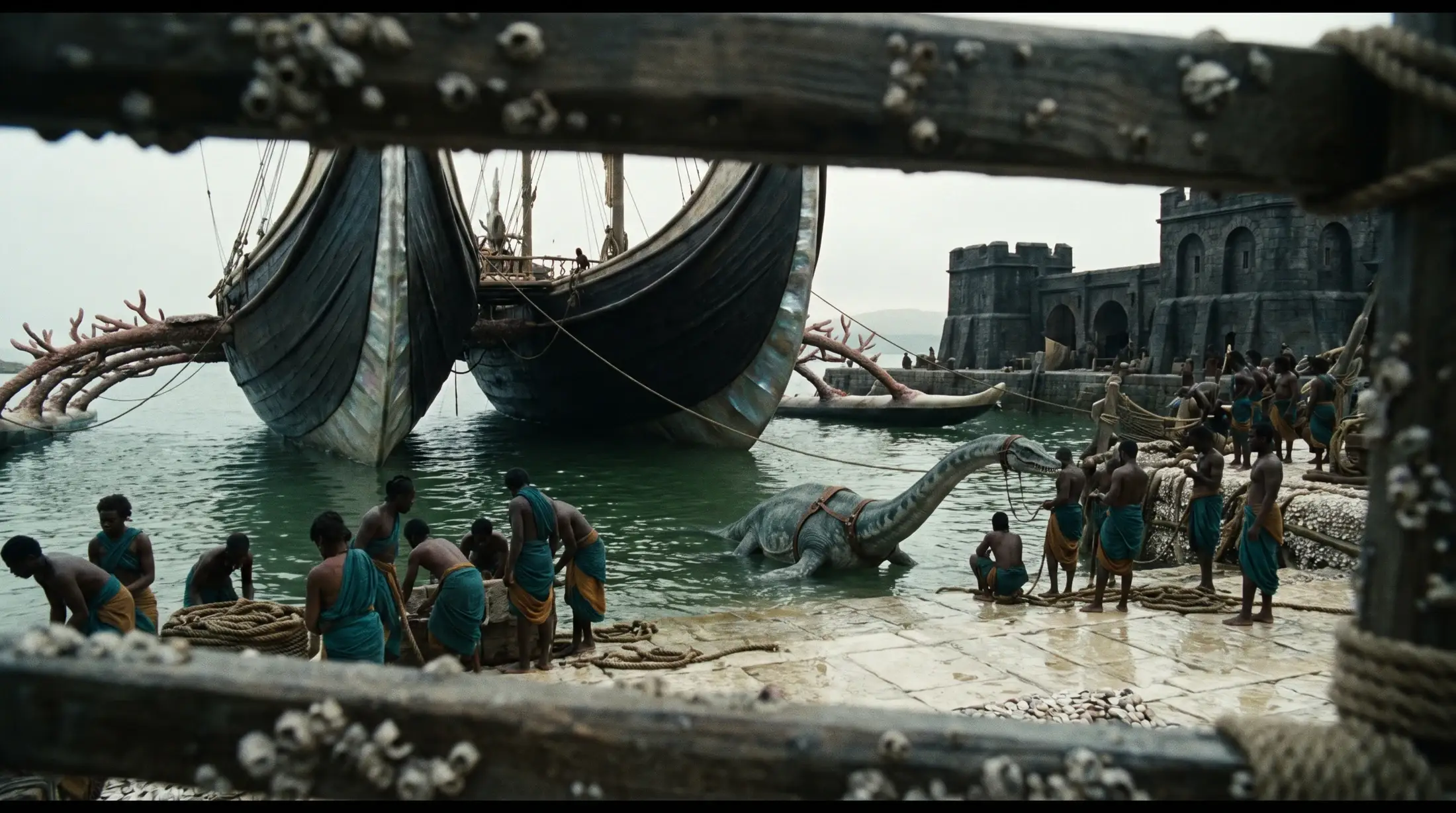
For this the ship must head into the wind at every launch and return. Its plesiosaurs let it turn and hold that heading even in light airs, which no sailing ship alone could do. Below deck the animals sleep in ventilated stalls, separated by species: the great Seno-Vel, relay pteranodons, have wide perches, the small pterosaurs nesting boxes lined along the sides.
The Porte-Aile
Among the seven hundred to eleven hundred people aboard are several hundred Porte-Aile, the keepers and trainers of pterosaurs, most of them schooled at the Volière des Courants et des Ciels in the Silver Wind Archipelago. Each answers for a few beasts, which he feeds on fresh or salted fish, examines daily and accompanies at release. A sea pterosaur fares badly when shut in: it must be given air, allowed to fish around the ship when the sea permits, and its wings watched, for their membrane tears easily on a rope.
The largest Seno-Vel carry a light rider, an archer or a dispatch bearer; the others fly free and return at the signal. The Porte-Aile talk to their animals with whistles and gestures that the deck sailors do not understand. Their reputation aboard is peculiar: they are said to be absent-minded and unable to tie a rope properly, but no one disputes that a Nid d’Alizé is worth exactly what its Porte-Aile are worth.
Battle in the sky
In battle, the Nid d’Alizé first releases its scouts. The Sénelles locate the enemy fleet, its sea beasts and its own pterosaurs, and report to the Tour des Ciels. The great pterosaurs then go out to meet the enemy’s: they intercept messengers, harry scouts and shield the line against attacks from above. Against Ishtir, whose air power is the most feared in the known world, this mission comes before all others.
The ship defends itself with its anti-air ballistae, aimed upward on tilting mounts, and with its anti-pterosaur net teams, which hurl sheets weighted with lead and sea teeth. That is why it is placed at the centre of the formation, shielded by the Great Hulls: a lost Nid, with its dozens of beasts and their keepers, leaves a whole fleet blind for the rest of a campaign.
In peacetime
Outside wartime, the Nids d’Alizé accompany the fishing fleets of the Great Ocean, where their pterosaurs spot the shoals from afar, and relay mail between the archipelagos. On feast days they can also be seen off Port Volon and Séloris, releasing their beasts in formation above the processions. Houses that own them gladly lend them for such occasions: eighty pterosaurs wheeling above a parade basin are worth many a pageant.
Their home port is most often the Silver Wind Archipelago, where the Volière breeds and trains young pterosaurs, or Velasar, which keeps its own perches. A Nid never strays far from these bases for long: its beasts must be renewed there, cared for after a long campaign and replaced as they age.