

Armies
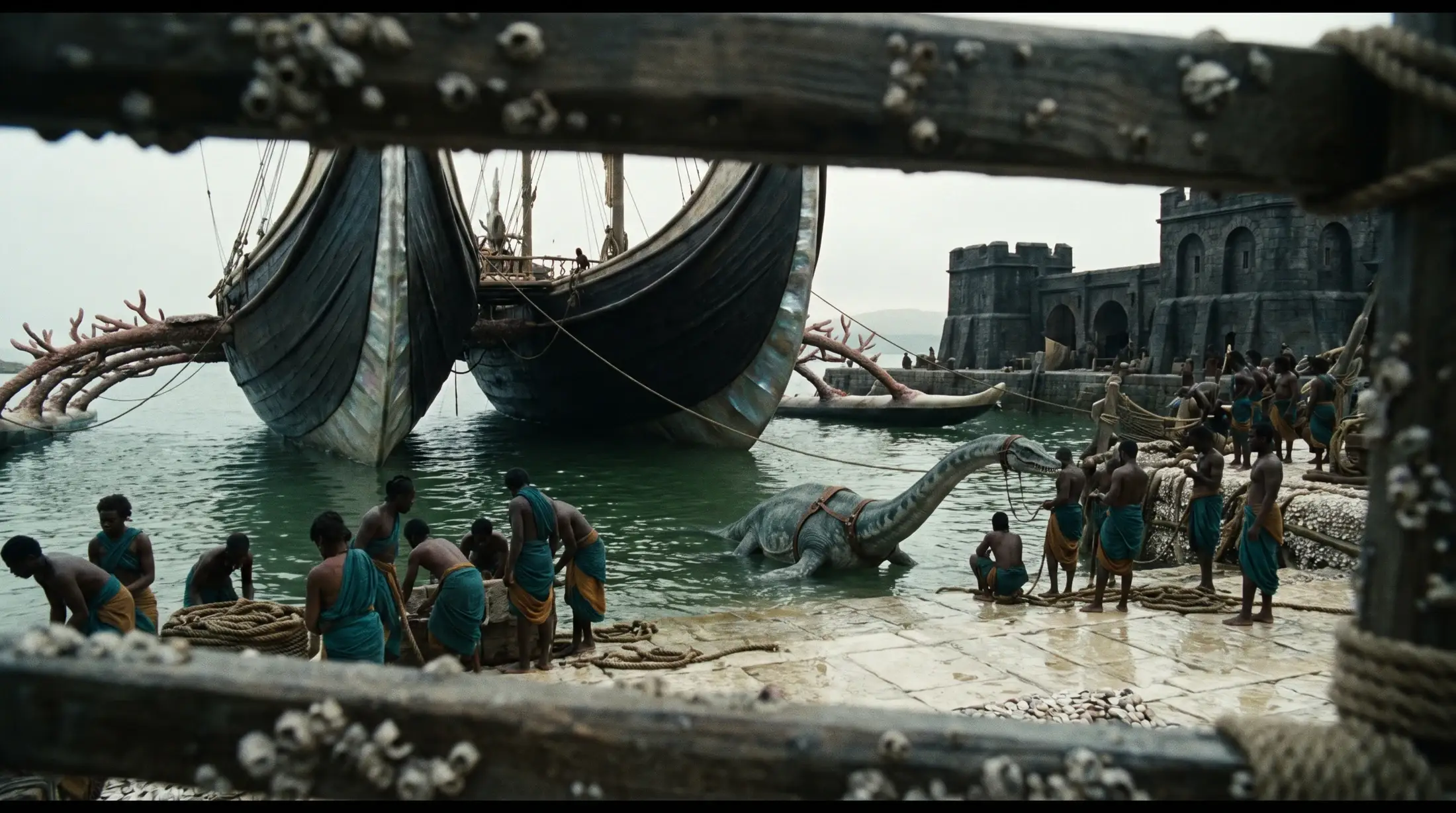
The Navire-École des Pilotes
The training ship (“Pilots’ School Ship”), where pilots and officers learn navigation and command.
Learning at sea
The Navire-École des Pilotes trains pilots and officers in navigation and command. It carries training artillery and sails with plesiosaurs. Forty-five to seventy metres long, it has two hundred and fifty to five hundred people on board.
A qualified crew counts as much as the number of armed ships: without certified pilots, the Great Hulls do not venture out of sight of the coast.
A student’s life aboard
A Navire-École carries both a full crew and several classes of students, which explains its complement of two hundred and fifty to five hundred people. Student pilots and future officers live aboard as sailors: they sleep on the lower deck, stand their watches, go aloft and row when they must. The regulations say no student commands before serving at every post aboard, from the rowing bench to the helm.
The days are ruled by the bell. Mornings are given to manoeuvres, afternoons to surveys and calculations, evenings to the masters’ lessons, in which they comment on the day and tell of the routes. Each student fills in his route book aboard. Cadets of great houses and children of the poor quays who came with a bursary share the same hammocks and chores; many friendships and a few lifelong rivalries are born on these decks.
Learning to command
Command is learned in turns. On each outing one student takes the post of officer of the watch, another that of master of traction, a third that of gun captain; the masters observe, correct and grade. The student must learn to give a clear order, to listen to a pilot, to judge the fatigue of a plesiosaur team and to recognize the moment when a manoeuvre must be abandoned.
The ship’s plesiosaurs are chosen for this: calm, experienced beasts, used to beginners’ mistakes. With them the students learn to harness and unharness, to relieve a team under way, to tow a disabled hull. A seasoned master of traction accompanies every exercise and can stop it with a signal. Former students say they learned to command people after learning not to exhaust beasts.
The training artillery
The Navire-École’s training artillery is made of real ballistae and catapults, but its projectiles are not real. The bolts have rounded wooden heads, the shot is of terracotta that shatters on impact, and the targets are rafts towed at a distance or painted buoys. Students learn to serve a piece, to set the tension, to correct their aim on a rolling deck and to command a battery.
Once a season several training ships meet in a mock battle off the Pilots’ Isles, refereed by the masters. Chalk-tipped bolts mark the hulls that are hit, and manoeuvres are judged like those of a real fleet. The students’ families come to watch from boats; victory earns nothing, but it is talked about for a long time in the taverns of the archipelago.
The school cruise
Training ends with a long voyage, the school cruise. The Navire-École leaves the archipelago for several months and follows a great League route: trading posts, ports of call, difficult passes, sometimes the margins of the Great Ocean. Final-year students exercise every function aboard under their masters’ eyes, and must finally take the ship alone through a pass at night.
The ports of call are part of the teaching. In each harbour the students learn to deal with a harbour master, to declare a cargo, to negotiate a mooring, and discover the customs of foreign sailors. Many see Port de Sable or the coasts of Urnok for the first time, and bring back the stories that will feed their own lessons years later, when they are masters in turn.
The schools in wartime
In wartime the Navires-Écoles do not fight in the front line. The Admiralty keeps them in reserve to pass signals, carry messages, take in the wounded or replace a lost support ship, and their most advanced students may be called up as junior officers on the Great Hulls. The houses see in this one more reason to fund the School: in peace as in war, it is on these decks that tomorrow’s fleet is formed.