

Economy
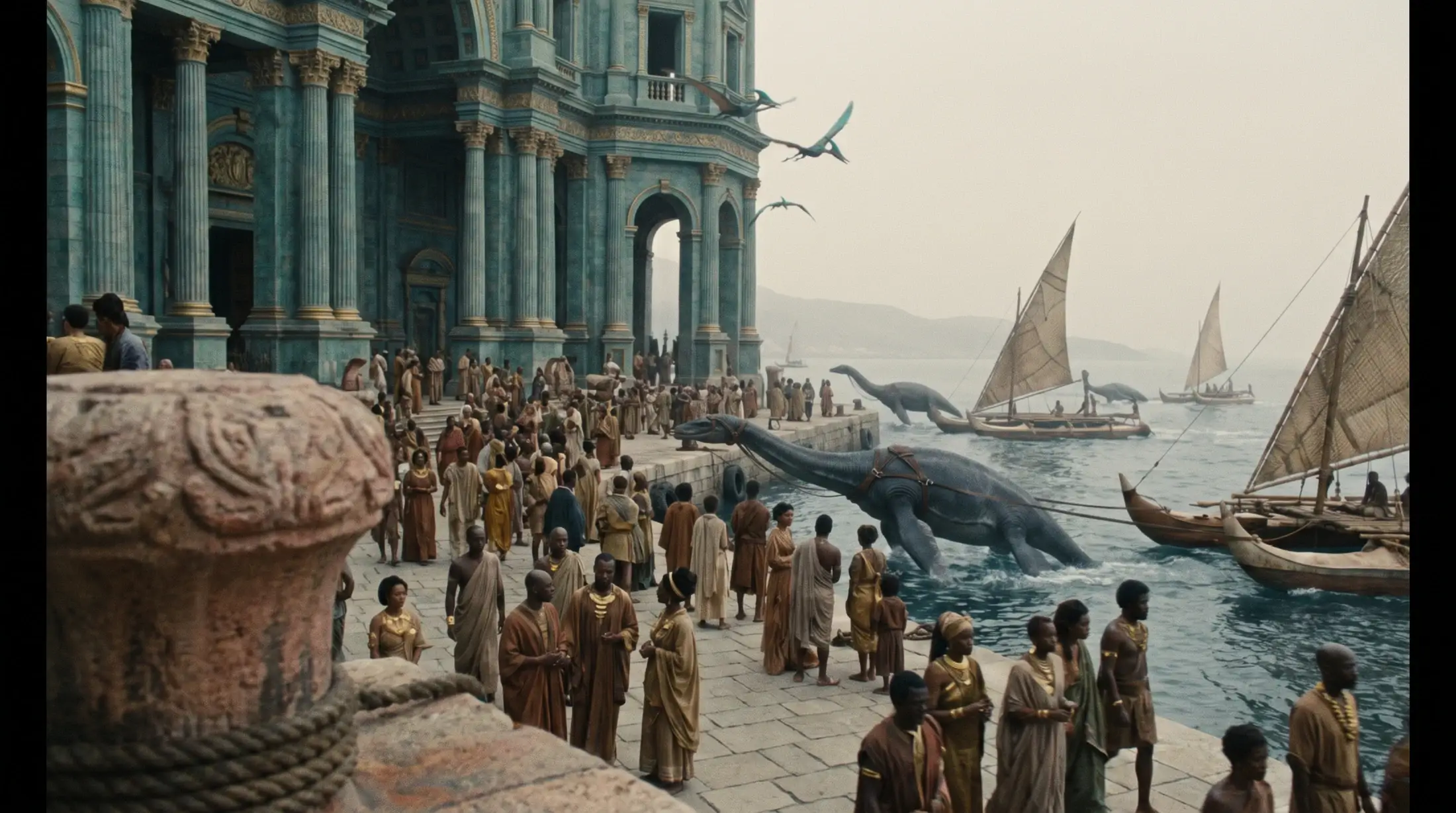
The Pêcheur du Grand Océan
The large deep-sea fishing ship (“Great Ocean Fisher”), which fishes, processes and stores on the high seas.
An industry before a war fleet
The Pêcheur du Grand Océan is one of the largest ships in the register, seventy to one hundred and twenty metres long. It works deep nets, processes and stores its catch on board. It sails with six to twelve plesiosaurs and carries a medium defence.
It is a reminder that Volonia’s naval infrastructure was not born of war alone: a distant-water fishing industry is what later makes it possible to maintain powerful squadrons. Volonia is the only great power to work the Grand Océan regularly, with a near-monopoly on ultra-deep fishing.
Fishing plesiosaurs
Volonia distinguishes fishing plesiosaurs: they serve for nets, deep shoals and carrying catches, with fishing harnesses and safety lines.
What it brings back
The Pêcheur brings back above all deep-water fish, salted or smoked, and squid caught at night. It also brings back the rare products that make the Great Ocean’s wealth: fish and sea-reptile oils, ivory and teeth of great wild reptiles, sea amber, and a concretion the great ichthyosaurs expel and which is recovered offshore, bile amber, without which the perfumers of Séloris could not fix their essences. These catches are sold at the Exchange of Great Catches, where the Institute of Deep Fisheries keeps count of what each bank has yielded.
No Pêcheur sails without a licence. The Institute grants each ship an annual quota on a named deep bank, and the pilot on board carries the chart of that bank, numbered, which he must return on coming home. A captain who fishes outside his bank or beyond his quota risks losing his licence, and the crews know it: on these ships, the catch book is watched as closely as the nets. The return of a fishing fleet is a feast in the home ports, where families wait on the quays for the tally of the holds.
A reserve for war
The Pêcheur carries a medium defence, light ballistae and net-throwers, because it works far from any escort. Its enemies are the great wild reptiles, which sometimes follow fishing fleets for the waste they leave in their wake, and pirates, who covet its full holds on the way home. Returning convoys therefore form a few days from the coast, where escorts come to meet them.
In war, these ships become a reserve. Their plesiosaur teams, used to pulling heavy loads for weeks, and their crews, hardened to the high seas, are precious to the gathered fleet; some Pêcheurs serve as transports, others as supply ships. Every Pêcheur kept in port is missed, however, by the country’s tables and basins, and a long war is also measured by the fish Volonia no longer catches.
Life on board
Sailors call these ships salt towns. People sleep in hammocks slung between the barrels, live in the smell of the oil vats, and eat fresh fish at every meal, which everyone tires of after two weeks. Work follows the watches: when the nets come up, the whole crew goes to the cutting tables, day or night, until the catch is salted.
Pay is by shares. Each crew member receives a share of the sale of the catch, larger for the traction masters, the pilot and the physician; a fortunate campaign can feed a family for a whole season. An old custom requires the first fish of the campaign to be given back to the sea, and no captain does without it.