

Institutions
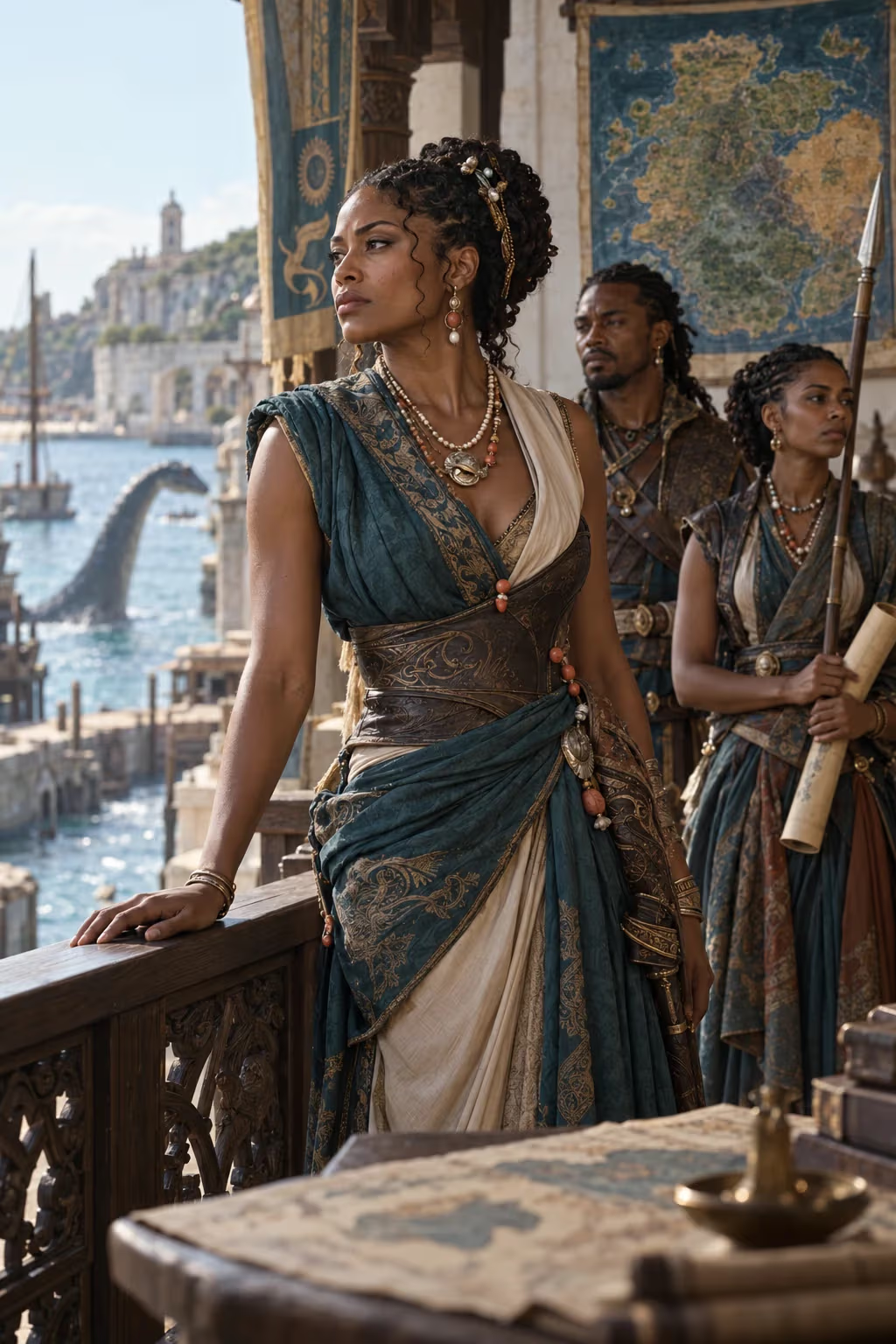
The Admiralty of the United Fleets
The joint operational command of Volonia’s fleets, activated by the Meeting of Flags: it commands ships it does not own.
Commanding without owning
The Admiralty of the United Fleets holds supreme command in a recognised war once the Meeting of Flags has been declared. It commands forces it does not own: houses keep ownership of their hulls, animals and officers, but not operational orders.
A three-level fleet
The united fleet acts in the sky, on the surface and under water. Sea pterosaurs provide reconnaissance and relays; Great Hulls carry artillery and landing forces; divers, plesiosaurs and the great marine predators act in the depths. Rescue craft, animal reserves, workshops and supply ships accompany the fighting vessels. The largest current Great Hull model reaches about one hundred and fifty metres.
Choosing where to fight
The Admiralty chooses the approaches, anchorages and routes where the united forces can actually support one another. Volonia has exceptional coastal defence and strong ocean reach, but a long land conquest suits it less: its best means depend on ports, water and their upkeep. The other powers and the pirates also have navies, which calls for escorts, air defence and weapons able to hold off enemy animals.
The Admiralty in peacetime
Between wars, the Admiralty of the United Fleets does not vanish. It keeps a small staff, housed on the League Quay in Port Volon, near the Register of Hulls and Routes and the Captains’ quarter. Its officers maintain the chart room there, where the approaches to every port of the League are filed — passes, depths and anchorages able to take a Great Hull — together with the logs of every past campaign.
The Admiralty also lives on services. In peacetime it hires out escorts to convoys and signs the letters of marque that the League grants to certain captains against pirates. These revenues pay its permanent officers, its attached pilots and the small guard of Double-Fins that protects its basins. Above all, they give it a continuous knowledge of the routes: an Admiralty that never escorted would no longer know, when the day came, where the convoys pass.
Each season its officers draw up the mobilization statement: how many hulls, draught animals, Grenier du Large supply ships and Atelier des Coques repair ships the houses could gather within a few tides, and in which ports. The table binds no one, but it is the first document opened when the Council of the Five Families speaks of war.
Who commands a gathered fleet
The Admiralty chooses its commanders for their expertise, not their wealth. The Council of the Five Families appoints the admiral of a campaign from a list the Admiralty draws up itself, among former captains of Great Hulls, pilots of the Great Ocean and officers who have already led a squadron under fire. An old rule has it that an admiral never boards a hull of his own house: his flagship is lent by another, so that no one can suspect him of sparing his own.
Around him, the staff brings together functions that the navies of other powers sometimes entrust to a single man. The master of signals keeps the code book and the aerial relays. The master of traction allocates the plesiosaur teams and decides when they rest; he is often the one who says whether the fleet can still fight. The master of stores follows the supply ships, the fleet physician the hospital ships, the judge of prizes the captures.
The prestige of these posts does not lie in their titles. A renowned master of traction, whose teams arrive fresh at the moment of contact, is worth as much as an admiral in the eyes of sailors, and between wars the houses compete for his services.
Battle in three elements
The Admiralty’s doctrine begins above the sea. Small mast pterosaurs and large marine pterosaurs go out first, locate the enemy, his beasts and his formations, and report back to the Tours des Ciels, the fleet’s aerial command ships. The Nids d’Alizé, pterosaur carriers armed with anti-air ballistae, then cover the line against the enemy sky.
On the surface, the Coupe-Courant interdictors first close the passes with their chains, nets and heavy harpoons, to keep the enemy’s sea beasts from turning the formation. The Harponneur ships stand ready against the great enemy reptiles. The Great Hulls of the Line, around the Souverain des Marées when it is committed, carry the heavy ballistae and catapults; the Frégates d’Écume and the convoy escorts guard their flanks. A Fort de Marée can hold an anchorage or the mouth of a strait while the rest of the fleet manoeuvres.
Under water act the divers, the foam riders and the Cloches d’Abîme, which carry charges beneath the keels of enemy ships. The great marine predators are committed only sparingly. One rule runs through the whole arrangement: a fleet that has towed all night does not fight at dawn. The Admiralty chooses the hour of contact according to the fatigue of its teams as much as according to the wind.
What the Admiralty cannot do
The Admiralty’s powers are broad, but the act of Gathering bounds them. It may not sell, dismantle or reinsure a hull it does not own; it may not replace a house’s officers without a written reason; it may not extend a campaign beyond the term voted. If the war goes on, it is the Chambers of Stakes that decide to continue it, and the admiral accounts for his conduct before the Council.
Some institutions remain outside its command. The Quarantine of Vaesh goes on inspecting ships coming home, gathered hulls included: a war does not suspend the sanitary threshold, and a victorious fleet may wait in the roads like any convoy. The College of Pilots provides pilots to the fleet but keeps its charts of the Great Ocean.
At the end of a campaign, the Admiralty publishes the fleet log: routes followed, orders given, losses, prizes. The document is read at the Great Counting House when the war account is closed. Sailors say an admiral is judged twice, once on the water and once before that log.