
Armies
The Atelier des Coques
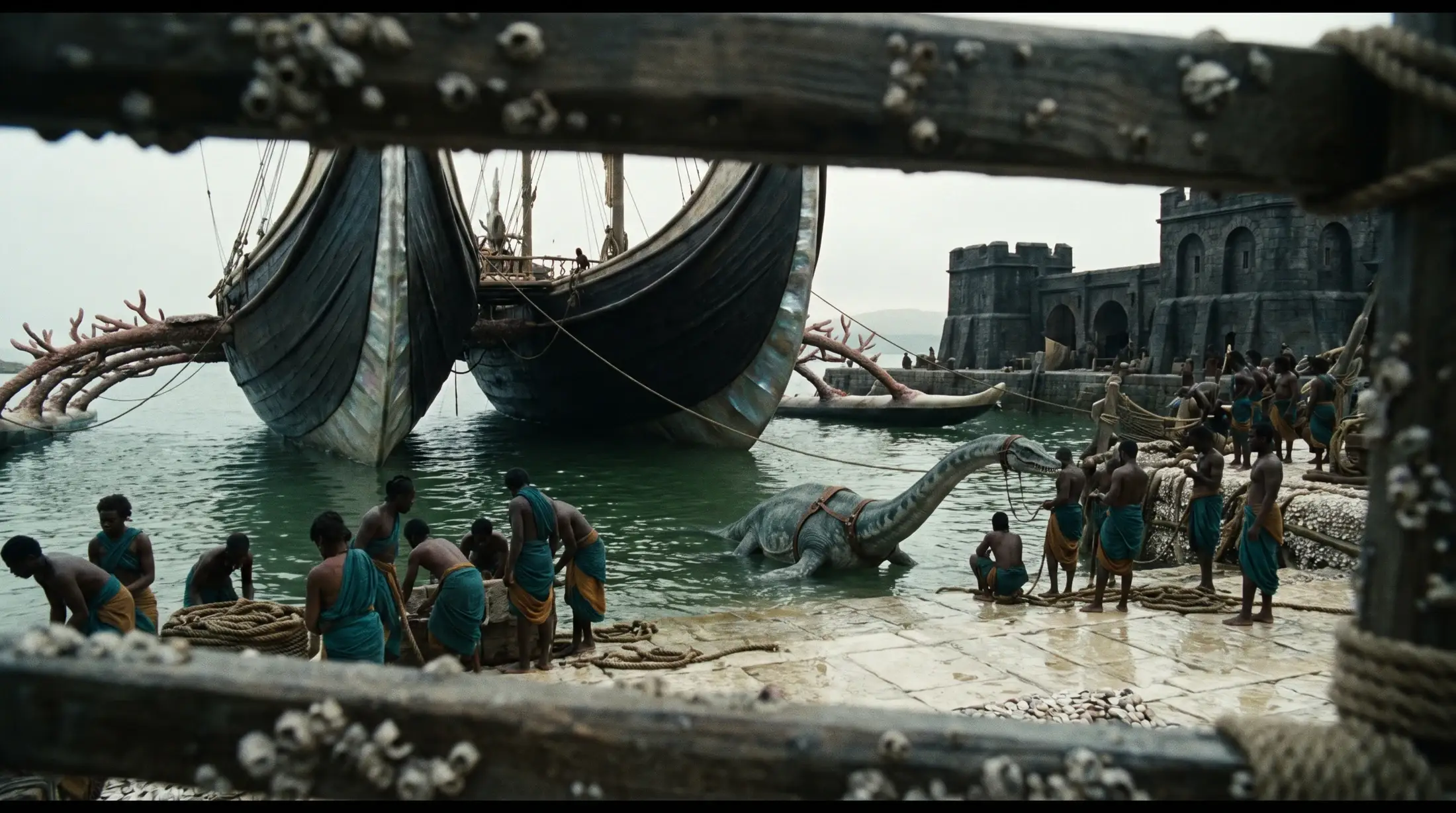
The fleet’s repair ship (“Hull Workshop”), which carries cranes, timber, resins, metal and craftsmen.
A shipyard that follows the fleet
The Atelier des Coques carries cranes, timber, resins, metal and the craftsmen who know how to use them. A campaign leaves split hulls, worn parts and materials to replace; this ship deals with them before they immobilise a whole formation.
It sails and can be towed. Fifty-five to ninety metres long, it carries three hundred and fifty to seven hundred people. At sea it continues the work of the port’s shipyards, carpenters and caulkers.
A shipyard in a hold
The Atelier des Coques carries enough to rebuild part of a ship. Its holds contain planking and frames already bent and numbered, spare masts and yards, barrels of resin and tar, oakum for caulking, copper sheets for sheathing, nails, rivets and iron chains, sails and ropes. On deck, mast cranes and winches can lift a piece weighing several tonnes or set a mast upright again.
A ship’s forge, set on a brick hearth surrounded by sand, repairs fittings, harpoon heads and ballista parts. It is the squadron’s only permanent fire apart from the galleys, and it is watched constantly. Smaller workshops house the sailmakers, rope makers, harness makers and ballista carpenters.
Refitting without a dry dock
The Atelier’s great skill is to repair a Great Hull at anchor, far from any dry dock. To reach damage below the waterline, the ship is hove down: its plesiosaurs and tackles fixed to its masts heel it over until part of its hull is exposed, which the carpenters repair from rafts. When the damage lies too low, divers first fit a collision mat, a large tarred mat pressed against the breach, then an open caisson that lets work proceed in the dry below sea level.
Such operations need a calm sea and time. The Admiralty chooses sheltered bays for them, and an Atelier may hold a ship for several days while it restores her. But a Great Hull repaired this way returns to port under its own power instead of being lost: that is the whole point of taking a shipyard along with the fleet.
The Atelier’s people
Most of the three hundred and fifty to seven hundred people aboard the Atelier are craftsmen. Shipwrights, caulkers, smiths, sailmakers, rope makers, divers and crane masters work there under a master of works, often from Velasar, who decides the order of repairs. Korathi engineers sometimes come aboard for the war engines and recoil parts that only they know how to adjust.
The master of works holds real power over the fleet. It is he who says whether a hull can rejoin the line, how many days it needs, and which goes first when several are waiting. Captains vie for his favour, and it is said some invite him to their table long before the first damage. Work is paid by the job; the best craftsmen earn in one campaign what they would earn in several seasons in port.
Towed, but indispensable
The Atelier des Coques is heavy and slow, so laden that it is often towed to keep up with the squadron. In peacetime it accompanies the fishing fleets of the Great Ocean, repairs ships in trading posts that lack a yard and steps in after storms in the ports of the League. Velasar also hires them out to foreign clients: an Atelier anchored in a distant port is the best advertisement for its yards.
In war it is a prime target. To sink an Atelier is to condemn for seasons every hull the fleet could have repaired at sea. It is therefore kept to the rear, near the Greniers du Large and the Hôpital des Marées, under escort. Sailors say a squadron that has lost its Atelier fights only once more.
Parts numbered in advance
The Atelier’s work begins in the yard, long before the campaign. Velasar’s carpenters prepare sets of spare parts for each class of ship, frames, planks, rudders, yards, cut to the measurements taken from the plans and numbered as on the slipway. A part marked for a Grande-Coque de Ligne thus fits almost without adjustment on any hull of the same class. This care explains the speed of Volonian repairs, which foreign captains often find hard to believe.