

Places and landscapes
Séloris: workshops and prestige
Fashion, perfumes and arts meet a city of lagoon terraces.
Reputation passes through workshops
Séloris is associated with silk, spices, fashion and perfumes. Workshops, artists and parades feed its prestige routes. Luxury connects trades to a public reputation here: an object also gains value through the way it is worn, displayed and circulated.
Étoffes et bijoux dans un atelier
Vue de détail.
Workshops among the basins
In Séloris, lagoon terraces can bring together workshops, markets, theatres and middle-class housing. Awnings, drained floors, ramps and service channels give the city’s activities a workable form. Animal basins remain separate from other waters. Visible prestige rests on a neighbourhood where materials, people and animals have maintained routes.
The object enters the spectacle
Volonian culture circulates styles, artists and reputations. Fashion, jewellery, tourism and performances form Vornëa’s field, with prestige routes passing through Séloris. This meeting of place and trades gives a parade economic weight: displaying a creation can attract visitors, commissions and alliances.
From cocoon to parade
Séloris is the only Volonian city where silk makes the whole journey without leaving town. Cocoons arrive from the silkworm farms of the nearby hills and from the High Isles; they are stifled, reeled, and the raw silk is spun in the workshops of the lower districts. Then the dyers take over, followed by the weavers, the dressmakers and the mother-of-pearl embroiderers. A parade gown can thus pass through a dozen workshops in a season, all within an hour’s boat ride of one another.
The purple dyers prepare there the two colours associated with Volonia: the purple drawn from the glands of the shield crab and the blue drawn from the ink of the nacre-shells. Their vats occupy a separate district on an arm of the lagoon, for the smell and the rinsing water must not touch the basins of the other districts. Dyers can be recognized by their forearms, stained to the elbow with a violet that lagoon baths never quite wash away.
Part of the silk goes to the shipyards: the silk sails of racing yachts, light and expensive, are cut in Séloris for the houses that bet on speed.
Spices, rum and perfumes
The hinterland of Séloris is the hottest and driest in the republic. Its meadows carry plantations of the Souths where molasses, ember-pepper and sweet bark are harvested, pressed and dried; in its ponds, water-lily flowers are picked at dawn for the perfumers to draw their essences. Séloris perfumes are sold in small wax-sealed flasks that the elegant women of Port Volon and foreign courts recognize by their seal.
The spice docks, run by a trading house long established on the silk quays, fit out the convoys that go further afield, to the Far Souths, for the spices the island does not produce. The molasses goes to the distilleries: port rum, aged rum and the crews’ shipboard blends come in large part from the cellars of Séloris. During the harvest season, the smell of spices and warm molasses drowns out that of the sea in all the lower districts.
The marine racecourse
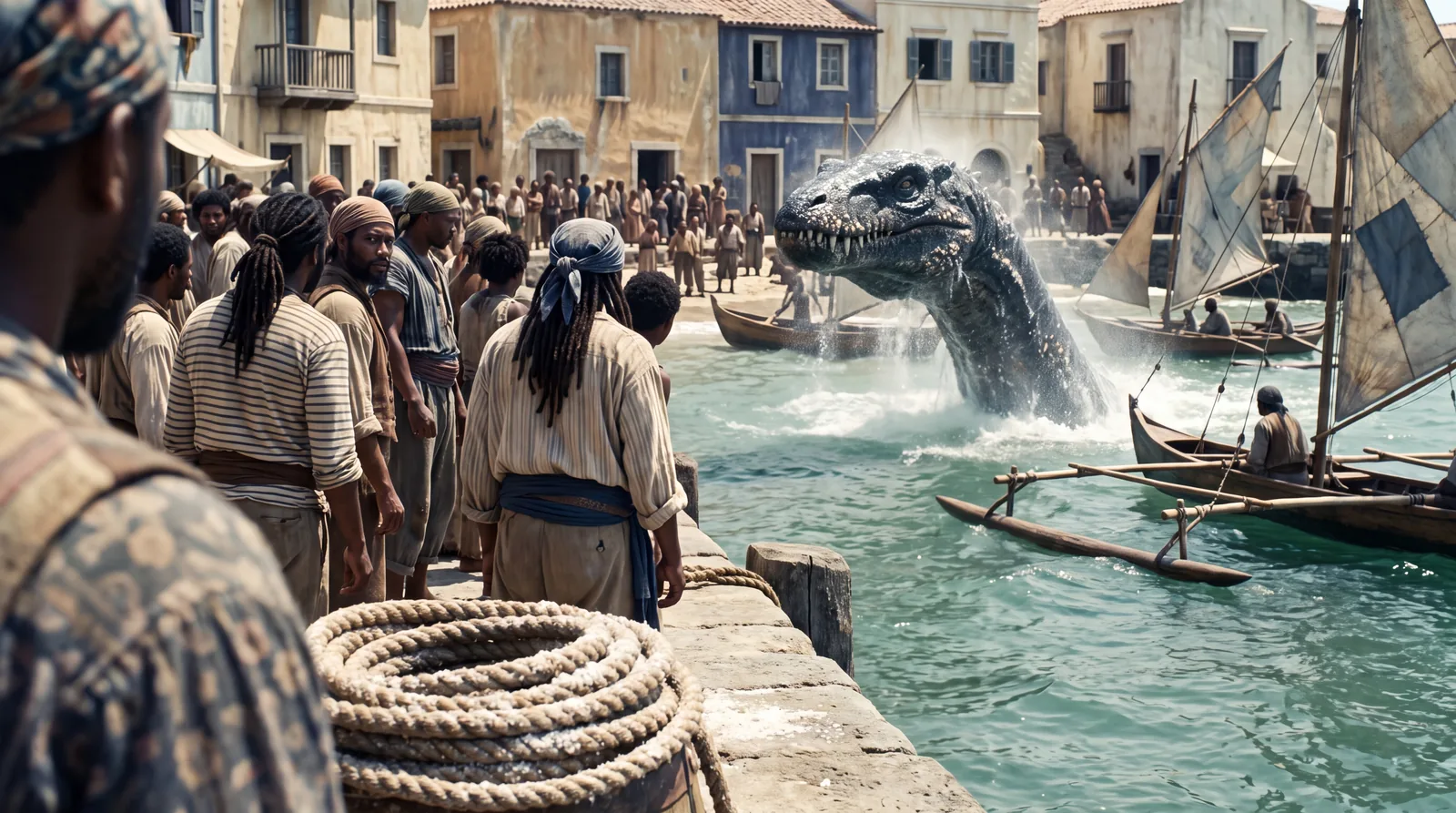
Séloris has the most famous of the marine racecourses: a long racing canal lined with stands, where flèches-mer and ridden plesiosaurs race before a crowd that bets on every start. On days of great races, the stands fill from the morning tide, the houses parade their colours and star riders are welcomed like heroes. For a house, a renowned racing rider can be worth as much as a fleet: he draws bettors, orders and attention.
Bets are recorded by board-keepers, and their winnings pay the Fifteenth like any others. The racing stables, kept by the great houses, employ trainers, keepers, harness-makers and riders; their animals live in separate basins, fed and rested with a care many crews would envy.
Vornëa’s city
Séloris lives by the calendar of the house of Vornëa. The house’s collection showings, grand receptions and festive nights set the city’s seasons far more than the tides do. Before a showing, the workshops work night and day; boat-hirers, water-lily florists, musicians and cooks are booked weeks in advance, and the inns double their prices.
The fashion palaces, faced with mother-of-pearl and painted blue and gold, line the parade pontoons where models walk before guests seated on the water, in barges arranged in an arc. Places are allotted with care: being seated near the house or far from it is read, the next day, in the conversations of the whole city. Foreign visitors — merchants from Urnok, envoys from Korath, passing princes — come as much to buy as to be seen.
Behind this setting work thousands of artisans and seamstresses, many of whom live in the lagoon terraces on the outskirts and will never see a parade except from the quays.