

Places and landscapes
Volonia: work between dock and channel
Ports connect fishing, repair, credit, quarantine and pilotage before the sea carries a cargo away.
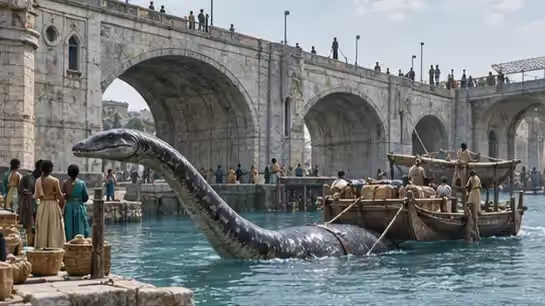
The dock sorts before loading
In Volonian ports, catches, timber, resins and luxury goods pass through docks where they are measured, prepared, repaired and recorded. Fishers, haulers, caulkers, keepers of live pens and clerks do not perform the same trade, but a cargo depends on their sequence. A port is a work chain, not a backdrop for ships.
Pièces de levage et accès au quai
Vue de détail.
Quarantine changes the port’s rhythm
A channel requires pilots able to read currents, reefs and waiting areas. When living cargo or sensitive material must be isolated, work reorganises: separate routes, waiting, cleaning and inspection. Quarantine requires guards, carers, handlers and places where people can wait without exposing the rest of the dock.
An arrival, tide by tide
A ship’s arrival in a great Volonian port follows an order every trade knows. The signal tower announces it; the pilot boat goes out to meet it; the watch pilot brings it into the pass, where the port’s draught plesiosaurs take up the tow, for a Great Hull does not manoeuvre alone in a channel. At the berth, the line handlers pass the hawsers, and the quaymaster sets the order of unloading.
Then come the hands. Porters and small quay hadrosaurs bring down the loads, gaugers weigh and measure, clerks enter each lot on the bill of lading in Quay Notation. Whatever is alive or suspect goes to Vaesh; whatever is perishable goes to the fish ponds, the salting houses or the day’s auction; the rest makes for the warehouses. Meanwhile caulkers come aboard to inspect the hull, and keepers receive the crew’s plesiosaurs to feed and rest them. A well-handled ship leaves again within a few tides; a badly kept one can stay at the quay for a season.
Hiring at the sound of the bell
Quay work is handed out every morning. A bell rings the hiring at the day’s tide; gang bosses choose their men and women among those waiting, according to the ships announced. The guilds and unions of dockers, haulers and divers negotiate rates, the order of turns and, more and more, a minimum cover in case of accident. A docker injured without a policy often loses more than his wage: he loses his place in the morning line.
The vocabulary of the ports names the places where this system jams. Cold quays are those where hiring has dried up, because a route has closed, a quarantine is holding up arrivals or a house has moved its ships elsewhere. Sealless sailors are those who have lost their certification or their cover and can no longer be entered on a crew’s roll. The share of those seeking work without finding it varies, depending on the season, from three to eight in a hundred; it rises sharply when a port closes.
What the ports send one another
No Volonian port lives alone, and each sends the others what it does best. Marévant feeds the other ports with the fish of its banks, its lobsters and its fish meals; Vaesh makes the salt of the whole country; Girvane sends almost all its pearls and mother-of-pearl to Séloris and supplies building coral; Séloris sells its silk, rum and perfumes to the capital and the arsenal; Velasar and Port Volon make the planking, frames, sails and refits for the whole fleet.
Other cargoes come from far away, and every port lacks them at once. Planks, resin, tar and ropes arrive from Orlantis, often by way of the Broken Isles; grain and long-keeping rations come partly from the Urnokian duchy of Sarnor; iron, anchors and chains come from Korath. A season in which these ships are late shows first in the shipyards, then in the quay kitchens.
Everyday dangers
A Volonian quay is a dangerous place, and its rules say so. The animals’ lanes are separated from people’s by barriers and painted posts; crossing a team lane during a manoeuvre earns a fine for porter and captain alike. Suspended loads never pass over an occupied boat. Fire is the chief enemy: in a port of tarred timber, ropes and oil jars, an overturned lamp can destroy a district, and every quay has its reserve of sand and its buckets.
Accidents remain frequent: crushing between hull and quay, falls into holds, bites from nervous beasts, drownings at night. The richest ports maintain rescuers and foam riders on watch; the poorest rely on the solidarity of the gangs. The port chapel keeps the names of those whom work has taken.