

Places and landscapes
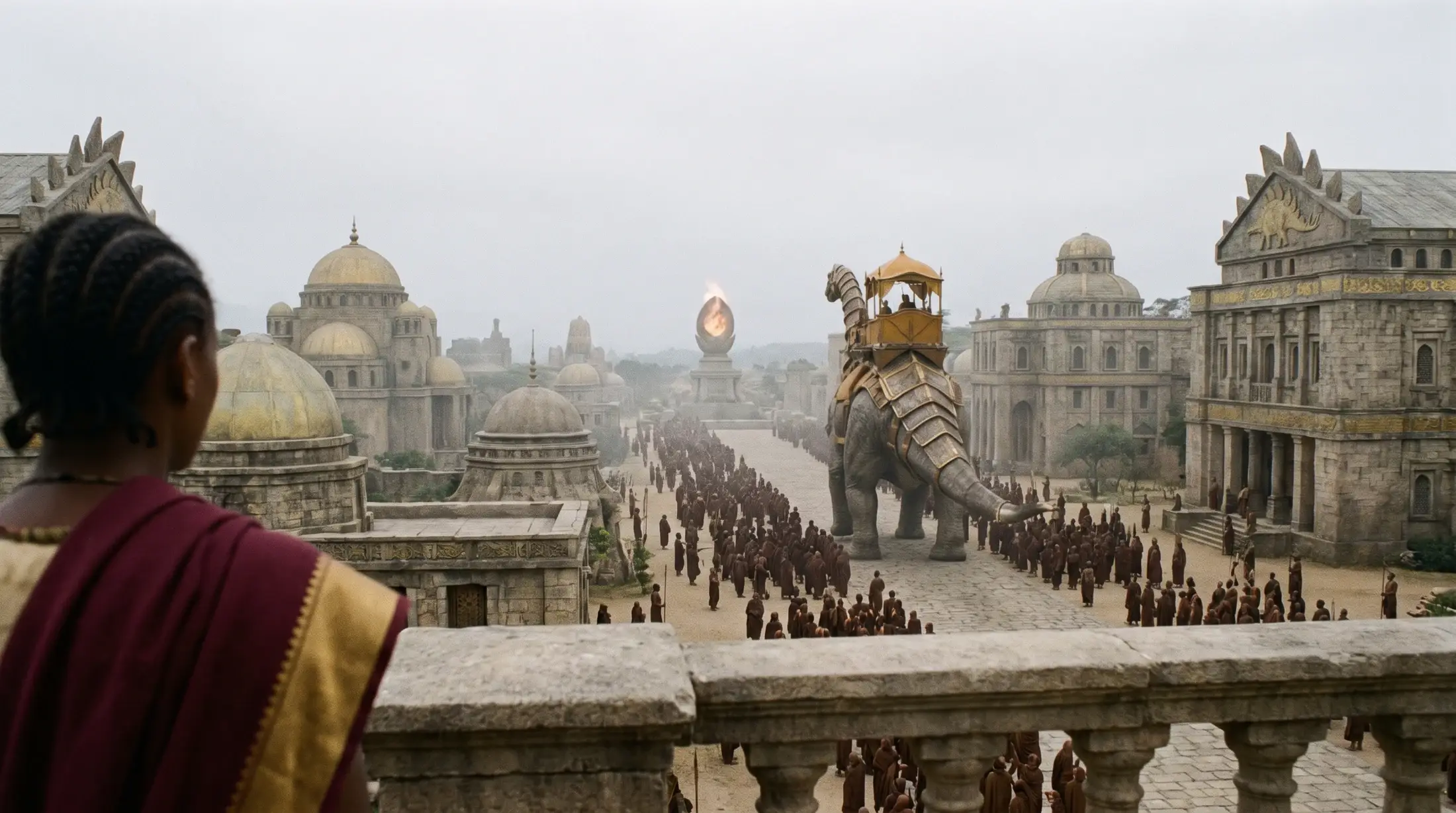
Quarantine gates and sorting halls
Urnok is an inland port of animals, eggs, leather, bone and fodder. To hold back disease and parasites, its gates are thresholds: curved corridors, steam rooms, baths, polygonal airlocks and lines of pale or dark stone that separate clean from dirty.
A city of thresholds
In Urnok, health dictates town planning. The capital receives animals, eggs, leather, bone and fodder, and with them disease, parasites and contamination. Imperial architecture has drawn from this an aesthetic of sanitary security: thresholds everywhere. Airlocks, resin showers and fumigation equip the entrances; giant control gates let herds through; whole districts can be sealed off like the compartments of a ship.
On the ground, the border is literal: pale stone marks the clean zone, dark stone the dirty zone, and ritual guards control the passage. Crossing a threshold is at once a legal act, a rite and an imperial check.
The fortress-mouth
The quarantine gate takes the form of a fortress-mouth: a double-curved entrance with solid walls, under a diffuse light from above that calms the animals. Its curved corridors limit panic and jams; its solid walls remove distractions. One passes through steam rooms, showers, mineral baths and marking posts. Absorbent walls of earth, fibre and leather deaden the echo to lower the animals’ stress, and so accidents. In prestige districts, these gates are treated like jewels, without losing any of their curved corridors.
Sorting halls and airlocks
Behind the gate, the sorting hall combines polygonal pens, curved corridors and inner platforms from which people inspect without going down to ground level. Each shape of airlock matches a protocol: rest, examination, isolation or transit. Side pens can be sealed off as quarantine pockets; inspection gantries apply seals and wax tags; washing yards with overflowing basins and resin fumigation towers complete the arrangement.
The chain is always the same: airlock, washing, inspection, marking, release. It uses stone, lime, water, steam, leather, bile, antiseptic herbs, bone barriers, cloth, tallow and pigments, and serves the city as much as the army against animal epidemics. Washing solutions, fumigations and ointments made of shell lime, herbs and vinegar are its consumables. Health steles, statue-bollards, recall protocols, prohibitions and sanitary rites.
Going through a quarantine gate
A convoy arriving from the marches first halts before the gate, in a waiting yard paved with dark stone. The convoy leader declares his beasts, his cargo, his route and the relays where he stopped; a threshold scribe writes it all down. The threshold wardens then examine each animal: the soles of the feet, the skin under the straps, the eyes, the breath, the night’s droppings.
If nothing is amiss, the convoy enters the airlocks. The beasts pass under the resin showers and through the steam rooms, the men wash with quarantine soap, a cake of bile and green salt that stings the hands a little, and each animal is marked with a sign in wax or ochre before release. The passage takes a few hours. If anything is worrying, the whole convoy is sent to a quarantine pocket, where it stays until the keepers declare it sound, sometimes for weeks.
The threshold wardens
The threshold wardens wear the resin-green of care and carry a white staff, which they lay across the passage to stop a convoy. They are keepers, guards and officiants at once: every crossing begins with a short formula reminding all that they are entering the clean city, and ends with an entry in the threshold register. Their training lasts several years, with the veterinarians and in the gates themselves.
Their power is great and their reputation stern. A warden can refuse entry to a noble as to a carter, and the law punishes harshly anyone who tries to bribe one: a bribe offered at the threshold is judged as an attack on the city’s health. Warden families often hand the office down, and a stubborn child is said to “have the white staff”.
Eggs, hides and bones
Goods cross the same thresholds as beasts. Hides are unfolded and examined for parasites, then fumigated with resin; bones are whitened with lime before entering the clean city; fodder bales from far away are opened at random and probed. Eggs are subject to a special check: any egg gathered from a wild nest must be declared, as a table egg or as seed, at the first quarantine gate it passes, and the gate puts its mark on it.
A refused cargo is not always destroyed. Depending on the risk, it is sent back, washed and examined again, or burned in the gate’s furnaces in front of its owner, who signs the record.
When a gate closes
A herd disease does more damage than a fire. When an animal epidemic is reported in a region, the capital’s gates first close their entrances on that side, then the affected quarters seal themselves behind their own thresholds, like the compartments of a ship. Convoys are diverted to sorting halls outside the walls, and beast markets are suspended.
The army applies the same rule. A field camp has its quarantine gates of canvas and timber, its resin baths and its isolation pens, and beasts requisitioned on the way do not enter the lines without examination. Veterans say a campaign can be lost to a herd fever before the first battle, and the quartermasters believe them.