

Places and landscapes
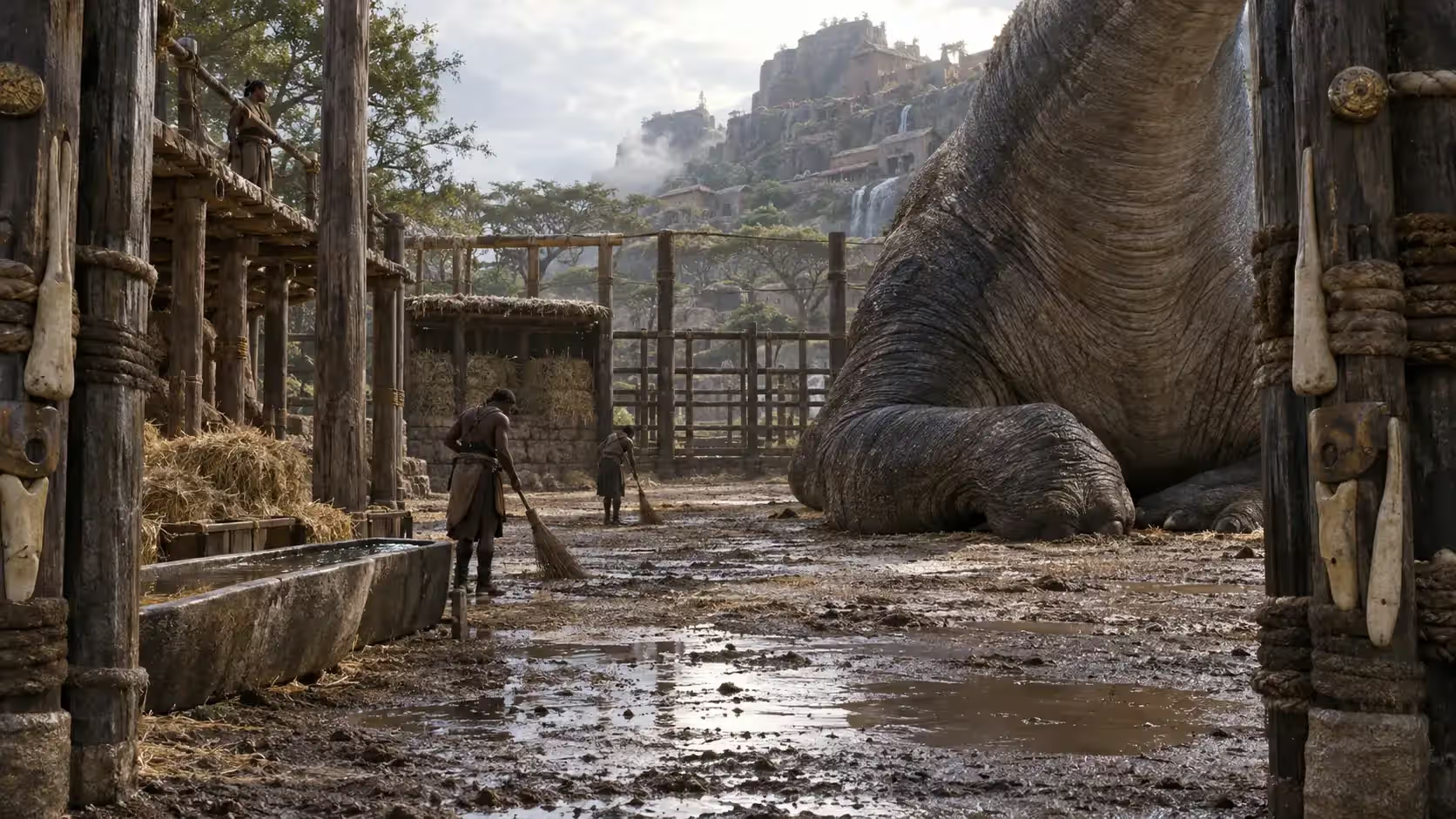
Rest vaults and resting yards
Along the entry roads, in quarantine zones and river stations, immense low naves let animals rest in the shade beside side basins. With roof courts and resting yards, they make the pause part of the architecture.
Naves for the convoys
Some parts of Urnok look like an aqueduct city: long low vaults beside canals. They are shelters for convoys, immense naves where animals rest in the shade, with side basins for drinking. Oculi aligned in the vault regulate light and let steam rise. The gutter is not hidden there: monumental and carved, it is part of the style.
They are found in quarantine zones, on entry roads and in river stations, wherever living traffic passes. Damp dark stone sits beside dry pale stone marked with calcified water stains, and health steles recall protocols, prohibitions and sanitary rites.
The pause is part of the journey
In the terraced administrative districts, roofs become waiting yards, with shade, water and care. These works express a rule of any city that receives animals: water and care are part of the plan, just like escape corridors and buffer pens. A tired or poorly watered animal is not a mere delay but a risk.
A halt, step by step
A convoy arriving at a halting vault follows a fixed order. It stops first in front of the health stele, where a keeper inspects the animals: gait, eyes, wounds, droppings. The animals then go to the side basins to drink, and are washed in the washing yards, whose water drains away through the carved gutters. Fodder is served to them in the shade of the nave, and the convoy master writes in the halt’s register the hour of arrival, the number of animals and what they consumed.
Departure does not happen on a mere order: the halt keeper must have established that the animals have drunk, eaten and recovered. A vault that lets an exhausted convoy leave answers, before the Chancellery, for what then happens on the road.
The quarantine pockets
Every vault has quarantine pockets along its sides: side pens that can be closed and isolated from the rest of the nave. An animal that coughs, limps for no visible reason or whose droppings are worrying is taken there at once, and the whole convoy waits for a handler’s verdict. The doors of these pens are painted resin green, the colour of care and quarantine in the imperial cities.
Fumigation towers burn resin to cleanse the air of the pockets, and their smell can be recognised from afar. The health stelae carry the vault’s protocols, prohibitions and sanitary rites; the oldest are so polished by the keepers’ hands that they can now be read only by touch.
The people of the vault
A large vault employs halt keepers, washers, fodder-men, handlers and scribes, who often live in lodgings built into the very thickness of the walls. The animals’ warmth heats these lodgings in winter; the smell and the noise never leave them. The vault’s children can be recognised by their ease among the colossi, whose moods they know better than many drivers.
At night the vault only half sleeps. Some convoys arrive late, others leave before dawn, and a keeper always watches beneath the central oculus, from which he can see the whole nave. Passing merchants pay a halting fee that funds the water, the fodder and the upkeep.
On the colossus corridors
Outside the cities, the vault has humbler relatives. On the corridors reserved for colossi, a station stands roughly every twelve leagues, with its fodder hoppers, its basins and its heaps of gizzard stones, the pebbles sauropods swallow to grind their food. Convoys using these corridors pay a lead-sealed right of passage, valid for a month, checked at every station.
These stations are rougher than the city vaults: a wooden roof on stone pillars, a muddy yard, a keeper and his family. Yet they follow the same rules, inspection, water, fodder, rest, and a convoy that respects them reaches its destination with all its animals.
The halting districts
A district always grows up around the great vaults. Harness repairers, fodder merchants, inns for drivers and public letter-writers settle at their gates, because every convoy that stops needs something. On the capital’s entry roads, these halting districts form a ring of small trades that lives by the rhythm of arrivals and empties on days when the roads are closed.
The vaults of the river stations have their own clientele: mariners, towmen, customs officers. There, barge hadrosaurs drying off after work stand side by side with road animals waiting for their load, and people talk more about floods than about roads.