

Religion and rites
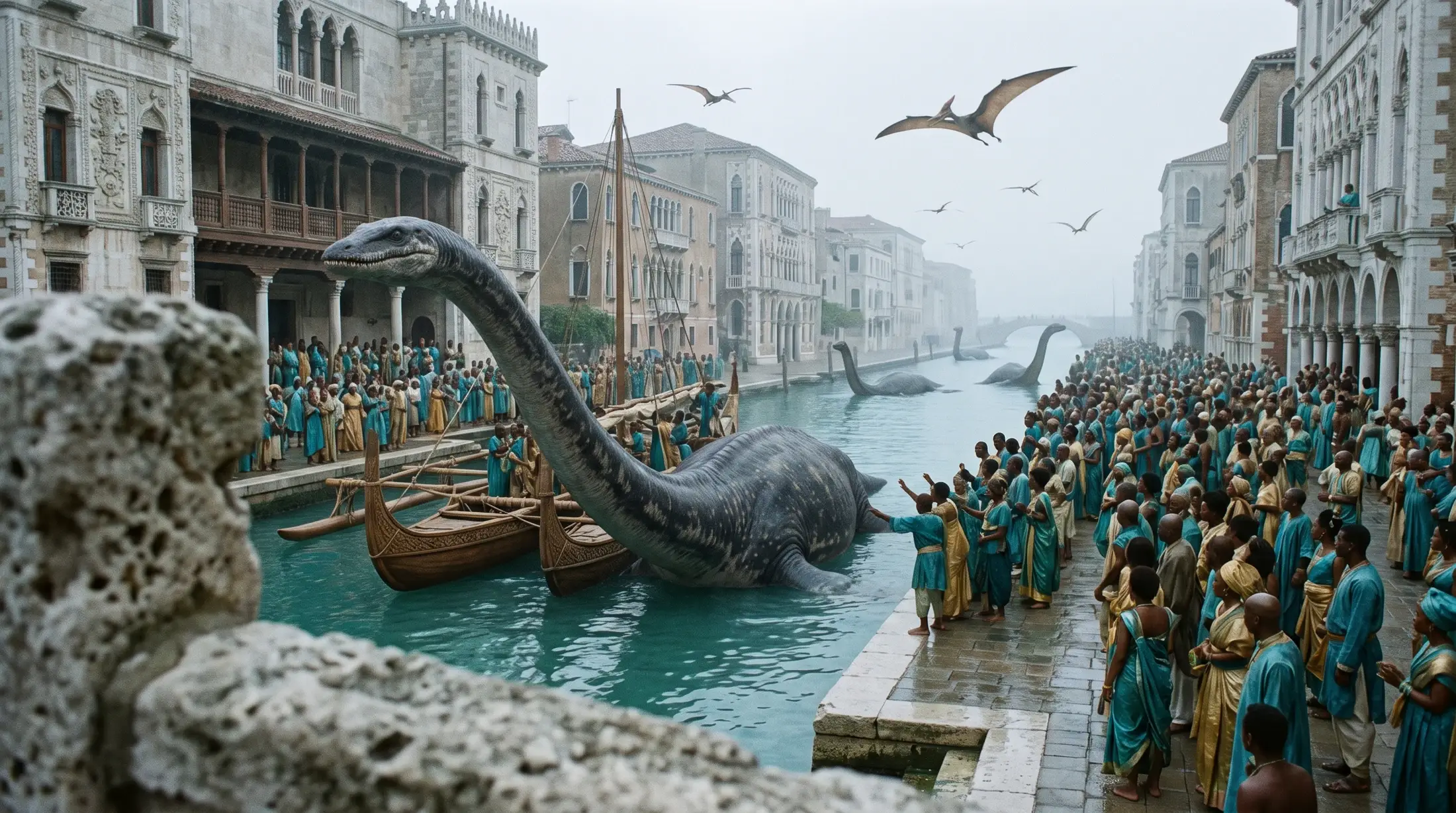
The Two Tides
A ceremony of the League of Seas and Counting-Houses: at the Grand Comptoir of Port Volon, oaths of exchange and of route are sworn in public before the dressed cage-ships.
Oaths of exchange and of route
The Two Tides are a ceremony of the League of Seas and Counting-Houses. At the Grand Comptoir of Port Volon, before the parade basin, oaths of exchange and of route are spoken aloud in the Sealed mode; simpler agreements are concluded with a handshake, in the Hand mode. At the moment of the oath, the flags rise up the masts of the dressed cage-ships.
The whole League
The League appears in full, with its brokers and foreign captains; rival houses greet one another without touching. Like Volonia’s other festivals, this one is a legal act under the appearance of a ceremony.
Two tides, two oaths
The ceremony takes its name from its course. It begins with the rising tide of the morning and ends with the falling tide of the evening, and each tide has its oaths. With the flood come the oaths of exchange: commitments of credit, clearing and payment between houses, banks and money-changers. With the ebb come the oaths of route: agreements on ports of call, pilotage, escort and convoys for the season that is opening.
The order has a meaning Volonians like to sum up: money rises with the sea, ships leave with it. Between the two tides the Great Counting House stays open, brokers move from group to group, and the evening’s commitments are prepared during those of the morning.
The course of the day
At dawn, the bells of the Great Counting House call the League to the quay along the parade basin. Criers first read the list of registered commitments, house by house, so that everyone knows what is about to be sworn. Then the representatives step forward one by one onto a wooden platform open to the water. Solemn oaths are pronounced in the Sealed mode, a hand on the house’s seal; simpler agreements are concluded with a handshake in the Hand mode, before two witnesses.
At each oath a flag rises up the mast of a cage ship, in the colours of the parties who have just bound themselves. As the day goes on, the basin fills with flags, and the crowd can read at a glance the map of the season’s alliances. Clerks note each commitment in Quay Notation, with the hour and the tide, and the copies are posted at the Great Counting House that same evening.
Foreigners and perjurers
Foreign captains also pronounce their oaths at the Two Tides. Urnok merchants, Korathi shipowners, brokers from Port de Sable commit themselves there to the League’s routes, assisted by Route-Cant interpreters; their oaths are drawn up in two columns, in their own language and in Quay Notation. For many of them it is the only way to obtain pilots, ports of call and escorts for the season.
An oath of the Two Tides is not forgotten. A house or captain who breaks it is not only prosecuted before the Merchants’ Court: his name is read the following year at the opening of the ceremony, before all the others, and his flag rises on no mast. He is said to have “lost his tide”. Few shipowners recover, for no partner will bind his flag to theirs again.
The evening of the Two Tides
When the last oath has been pronounced and the tide has drained from the basin, the ceremony dissolves into celebration. Houses that bound themselves during the day dine together on their barges, brokers stand drinks in the quayside taverns, and the cage ships stay dressed with flags until morning. It is also the evening when the season’s prices start to circulate: it is now known who will carry what, with whom and under what escort, and merchants who swore nothing that day are already reckoning what it will cost them.