

Institutions
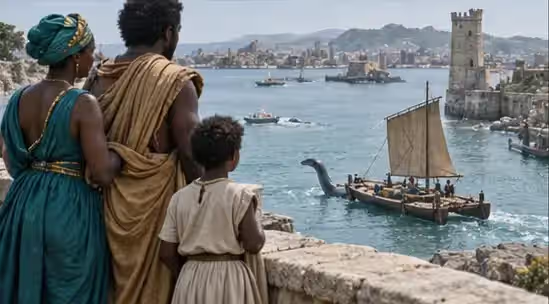
The Insurance Chambers
Volonian bodies of maritime risk: by declaring a route insurable or dead, they can trigger a crisis without any war being declared.
Insurable or dead
The Insurance Chambers hold maritime risk: that of cargoes, ransoms and war. Their power lies in one declaration: a route is insurable, or it is dead. Without cover a route stops being profitable, and the Chambers can thus trigger a crisis without any war being declared.
Experts, seals and loss lists
Their daily work runs through experts, seals and loss lists. Bellcor and its allies hold first place there. They also cover people: a house may insure its captains against capture, and the price of a ransom is reckoned like that of a cargo.
Declaring a route dead
A route does not die all at once. The Chambers of Insurance first follow it through their lists of losses: vanished hulls, seized cargoes, pirate attacks, reported predators, seasonal storms. When losses pile up, a session is called. Experts present the wreckage, the testimonies and the series of premiums; the sealed members deliberate, then vote. The declaration is posted at Marévant, in the chambers of risk, and copied onto the boards of the great ports.
Its effects are immediate. Premiums on the route are suspended, houses stop advancing money to expeditions that use it, and pilots refuse to sign on without a special contract. A ship can still sail, but entirely at its own risk, with a crew demanding double pay. Within a few tides a dead route empties, and the ports it served feel the crisis before seeing a single enemy ship.
A route comes back to life by the reverse path, and more slowly. An escort, a campaign against pirates or a calm season is rarely enough: losses must stop on several successive lists before the Chambers declare it insurable again.
Who sits in the Chambers
The Chambers of Insurance are both private and public bodies. The houses that underwrite the great risks sit in them: Bellcor and its allies hold the first rank, Calystrëa keeps the old voice of route insurance, and the Voile-Rachat, the league of caravan insurers, defends its own rates. Public assessors check that the lists of losses are complete, and that no one declares a route dead in order to buy up its traffic cheaply afterwards.
Their main seat is at Marévant, the city of insurance, where the observatories and the chambers of risk bring together navigation intelligence, ship characteristics and the history of claims. The Register of Hulls and Routes supplies them with the condition of each vessel; the College of Pilots, its opinion on the passages. A declaration is therefore prepared in several houses of knowledge before it becomes a seal.
The price of a captain
The Chambers also cover people. A house can insure its captains, pilots and officers against capture; the price of a ransom is then calculated like that of a cargo, according to rank, skill and route. Because ransoms are standardised, a captured captain knows roughly what he is worth, and so does his captor. In the archipelagos, some pirate flags live almost entirely on this trade.
The system has moral effects Volonians know well. A well-insured captain surrenders more easily; a sailor without cover fights because he has no price. The dockers’ unions have long demanded minimum cover for whole crews, and some houses grant it to attract the best sailors. A capture policy is now part of what is negotiated on signing on, along with pay and a share of prizes.
Crisis without war
The Chambers’ power reaches beyond Volonian waters. Declaring dead a route that serves a rival amounts to strangling it without declaring war: its ships sail uninsured, its merchants find no more credit, its ports empty. Volonian annals remember conflicts fought almost entirely by this means, which sailors call insurance wars.
For Volonia this is the purest form of its doctrine: make war pay before waging it, and sometimes to the point of no longer needing to wage it. The continental powers have learned this to their cost, which is why their envoys watch the Chambers’ sessions as closely as fleet movements.