

Institutions
Egg Law
In Urnok an egg is a legal asset before it is food: its status decides whether it may be eaten, sold, hatched or broken, and its protection involves religion, property and war.
A legal asset before it is food
Egg Law is a backbone of Urnok’s civilisation. It reaches into food, property, lineages, inheritance, breeding, labour, taxation, licences, civic religion, justice, diplomacy and war. Every egg carries a status independent of the animal’s species and size: that status decides whether it may be eaten, sold, hatched or broken. Everything is kept in registers.
Urnok’s people instinctively think about the world through this law. Nobody needs it explained: from the town crier to the judge, everyone knows the statuses.
Four statuses
The seed egg is fertilised and viable: it goes to breeding, the army or public works, and carries lineages, contracts and inheritances. The table egg, unfertilised or from the surplus laying of small livestock, is the people’s egg, the basis of their diet. The technical egg, cracked and non-viable, gives industry crushed shell for binders and mortars, and membranes. The ritual egg is consecrated: it serves the temple, diplomacy and festivals, and remains rare.
The heavier the animal, the more seed dominates
Status follows the weight an animal carries in the civilisation. For small laying livestock, omelettes are lawful and everyday. For working and cavalry animals, the egg is first of all seed; the table receives some only under control, when they are unfertilised, failed or certified surplus eggs. For very-large animals, seed status is almost exclusive: eating one of their eggs is a crime, and these eggs are handled like securities — shares, bonds, dynastic inheritance.
The hierarchy of the taboo
The ritual egg falls under the hardest prohibition. The seed egg is protected and given priority: defrauding seed is a sacrilege that can be priced. The table egg is lawful and eaten daily — children are served table eggs hardened in brine — yet an ancestral shame hangs over every egg.
That shame comes from the famine that gave birth to the Empire. During the famine people ate the eggs, the seed of living things. To eat a lineage egg is to repeat the famine’s gesture: it is to eat the future.
Egg crimes
Ovoclasm, the deliberate destruction of a seed or ritual egg, is the supreme crime of Urnok law. It is at once religious, financial, productive and political, even in peacetime. Its gravity comes from the future it destroys as much as from the egg’s present value.
Other crimes surround it. The “brachiosaur omelette” — eating the seed egg of a very-large animal — exists only as a scandal: black market, aristocratic decadence or extreme religious act; the phrase has become proverbial for criminal luxury. False status disguises seed as a table egg to sell it to kitchens, or the reverse to sell thin air: in Urnok, lying to the register is lying to the Empire. Clutch theft, from the small laying pen to the imperial nest, is judged by the lineage’s legal status, from a fine in Draco to a capital crime.
The black market
Where the law creates scarcity, it creates a trade. The tyrannosaur egg, worth a kingdom’s fortune, is banned from trade by the Empire and circulates only on the black market; a brachiosaur egg is worth a farming estate. A typical chain begins with a theft or a fraudulent downgrade, passes through a broker who launders the status in the register, and ends with a buyer: a rival house, a collector, a dissident temple, or a foreign power wishing to found a lineage without paying for the imperial licence. Prices are whispered in Draco, never written down. The hatching futures market, legal and listed, serves as cover: whoever can read the futures knows where the eggs sleep.
The register and its marks
Registers add two marks to every lineage: a grade of domestication, from the wild animal to the most stable lineage, and a legal status, from free to imperial monopoly. The same animal therefore never has the same value across lineages and jurisdictions, and an egg inherits its lineage’s marks: stealing an egg under imperial monopoly is stealing from the State.
In everyday use the statuses are named in full: people speak of “two hundred and forty table eggs”. The code letters appear only engraved, on a tablet or in a margin, and nobody explains them.
Breeding a very-large animal
The right to breed a very-large animal belongs to great houses holding a State licence; any birth outside such a licence is a major crime. Exported animals are bound by strict clauses: sterilisation, eggs forbidden, keepers who travel with the animals, remains returned. Any birth abroad is a casus belli. The claw of a sold Vur-vaa likewise carries a return clause.
The keepers of the egg
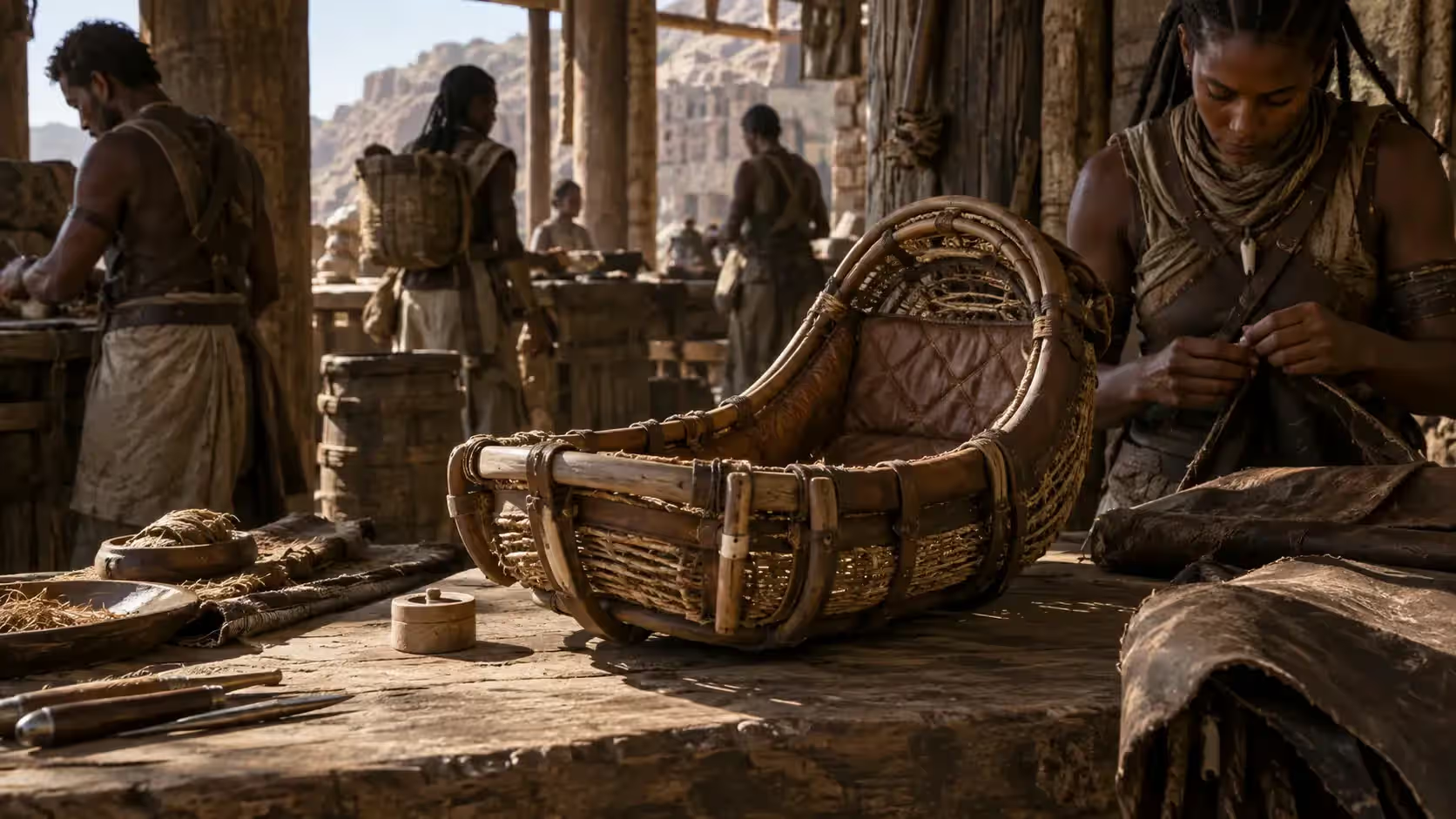
In the capital the temple of the Egg houses a consecrated ritual egg, and a conservation crypt keeps seed eggs under seal on beds of sand. Ritual status has its institutional guardians, the Order of Sacred Eggs. Keepers of sacred eggs, lineage experts and register officials each deal with part of the same asset; crates, seals and cradles accompany eggs in transit.
An Urnok law
Egg Law is autonomous and specific to Urnok; it depends on no treaty. The other powers have their own taboos, contracts or clan customs, and may judge the same acts monstrous for their own reasons without sharing these statuses. In Arkhan the egg is ordinary food, which scandalises Urnok.
Part of this article covers events of season 1. Turn spoilers on in the menu to read it.