

Institutions
Arkhan : restituer une cité pendant la Grande Mue
La Grande Mue organise un passage de ville : biens, équipements et mémoire locale ne suivent pas tous les mêmes règles de restitution.
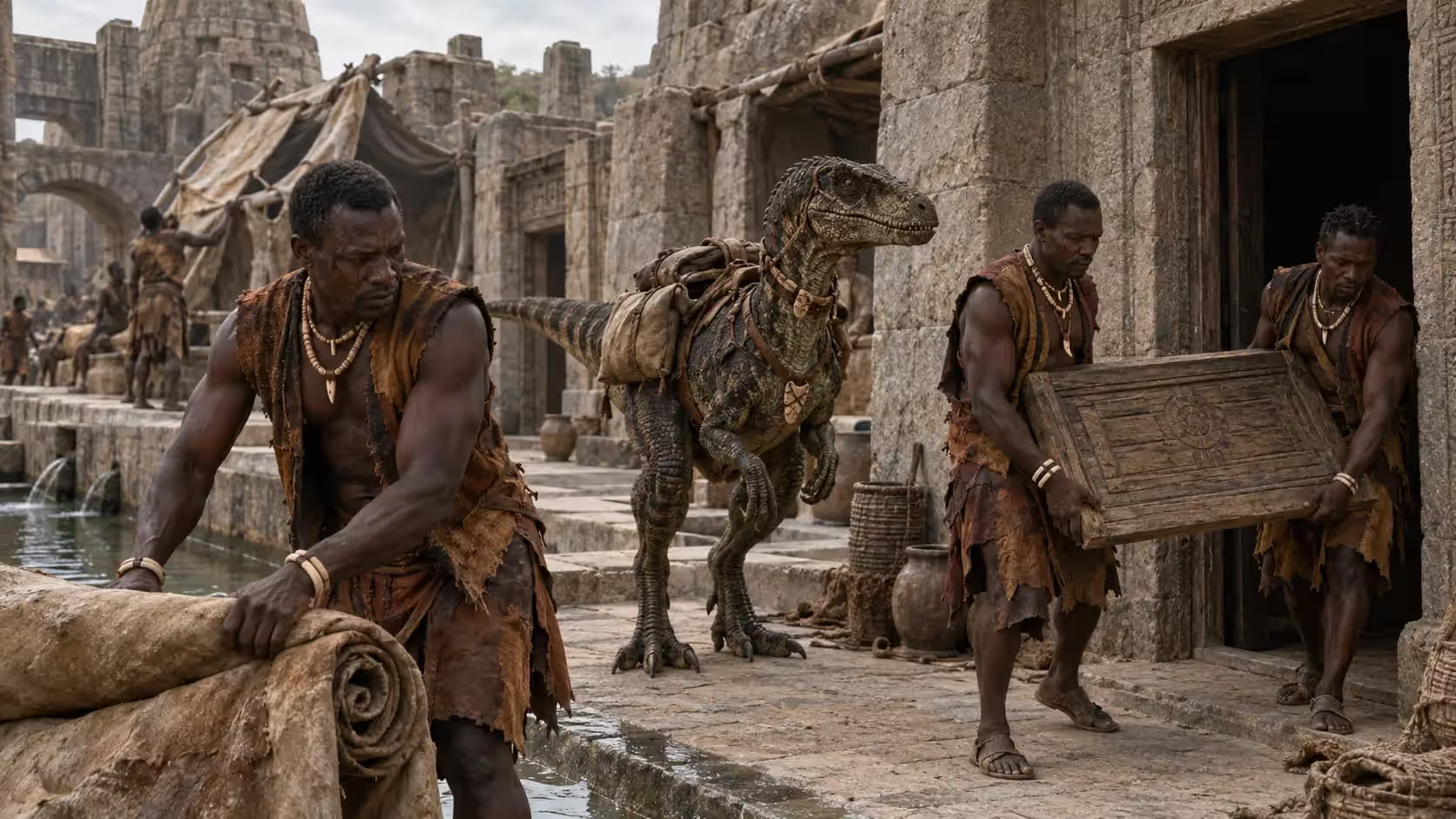
Classer les biens avant le départ
La Mue distingue ce qui marche avec le peuple, ce qui peut être démonté et ce qui demeure à la cité. Cette classification réduit le conflit de départ à une question concrète : l’objet est-il encore une charge mobile, une installation récupérable ou une partie du lieu commun ?
Les Ancrés transmettent l’état du lieu
Archivistes, gardiens des bassins et artisans de mur restent pour connaître les installations, les stocks et les obligations que la cité peut encore soutenir. Leur rôle rend possible la remise à un nouveau groupe sans prétendre qu’ils possèdent la ville ou qu’ils tranchent seuls tous les conflits. La mémoire est ici une fonction d’entretien.
Le lieu est préparé pour les arrivants
Le Grand Curage intervient entre deux occupations pour traiter bassins, enclos, membranes et résidus. La restitution ne se limite donc pas aux objets : elle doit aussi laisser des conditions sanitaires que les arrivants peuvent reprendre.
The handover hearing
The handover of a city takes the form of a public hearing, held at the main gate or in a bone courtyard before the last horn. The outgoing khan or his stewards declare the state of what they are returning: basins, cisterns, canals, walls, quarters, the city’s stocks and the debts left behind. The Anchored answer, confirm or contest; witnesses from neighbouring trails listen, and the whole is knotted on cords kept by both parties.
The Supreme Khan attends these handovers during the Tour of the Seven Trails, or has himself represented when several cities shed at once. His presence does not turn the hearing into a trial: it guarantees that what was declared will be held true by the whole Confederation. The accounts and archives of an outgoing government are part of what is handed back, just like the keys.
Faults of handover and repairs
A handover can be contested. The commonest faults are well known: a basin returned fouled, a canal collapsed for want of upkeep, infested pens, city stocks consumed as if they belonged to the outgoing people, debts contracted in the city’s name and left without a guarantor. The Anchored note these faults, and the Bone-Bearer recalls the precedents that allow their price to be set.
Reparation is usually paid in labour, beasts or materials. A people that damaged a city’s basins must supply hands for the Great Cleaning or pay for them; one that emptied the reserves repays them in dried meat, leather or graded bone. The gravest cases go up to the Supreme Khan, who can delay the guilty people’s settlement in its new city until the debt is paid: a dreaded sanction, since it leaves a whole column camped at the gates.
Ordinary disputes
Most disputes are small and concrete. Does a door half-detached when the last horn sounds belong to the family or to the city? The judges of the Night of Doors inspect the hinges and decide according to what is really fixed. Is a workshop entitled to take away a lime kiln it built itself? Does a pen repaired by the outgoing people count as a debt the city owes it?
The rule of the three categories reduces these conflicts to one question: is the object a mobile load, a recoverable installation or part of the common place? It does not settle everything, and the decisions pile up into precedents the Bone-Bearers recite. A people that wins these disputes too often ends up with a bad name in the cities it leaves, and the Anchored remember it when it returns, one or more Sheddings later.
Influence is not ownership
The law of handover rests on a simple idea that the War of the Seven Thrones carved into the institutions: a khan who governs a city does not own it. Before the Shedding the great khans made their palaces hereditary, minted their own coin and refused to obey; since then, every seven years, each hands back what he held. The handover is the moment when that idea becomes an act, before witnesses.
It also protects those who arrive. A people must not inherit another’s faults without recourse, nor receive a city whose debts were hidden from it. That is why the memory of the Anchored, the word of the witnesses and the knots of the hearing weigh as much as the khans’ authority: they are what says what the city was, and therefore what is owed to it.