

Places and landscapes
Housing, access and worksites in Arkhan
In Arkhan, built forms answer to terrain, tracks and the difference between fast traffic and human travel.
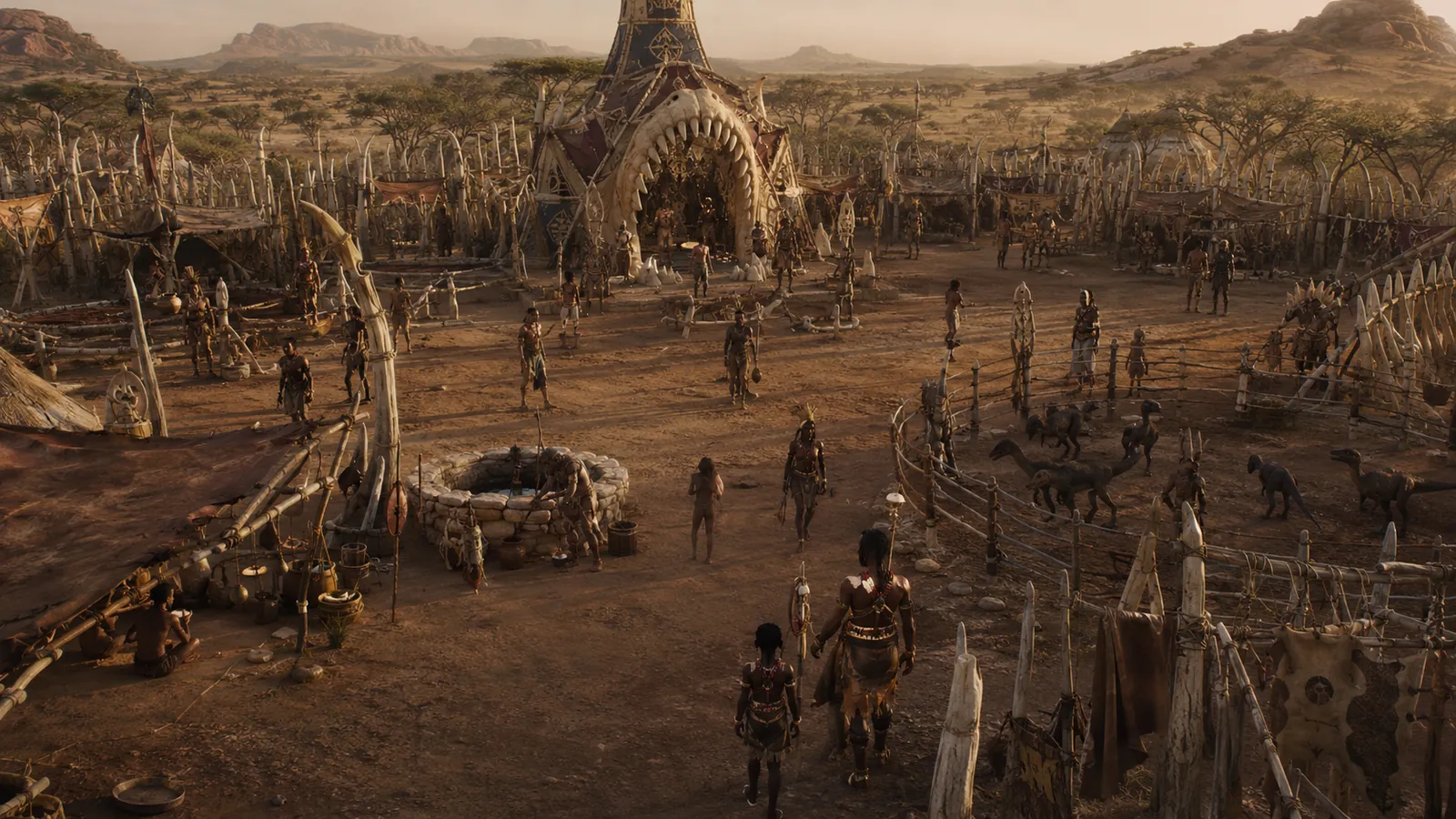
Fast access and human routes
In raptor-linked districts, two networks coexist: a fast track for animal and rider, and a slower human route. Turning landings, one-way routes and fall zones make movement legible. Speed thus becomes a condition of access, not the uniform decor of an entire city.
Repairable facades and track shelters
Markets, relays, workshops and homes can use oiled-hide shutters, bone or timber slats and tendon-sewn awnings. Parts must be hand-opened and replaceable. This repair logic accompanies mobile tracks: shutters and awnings remain removable, hand-operated and replaceable.
Entries, water and evacuation
A defensive entrance or terrain district can use removable partitions and narrow human passages, but a logistics artery, a route to water and fire evacuation remain legible to residents. The district therefore keeps legible routes: protecting a place must not make it unworkable for its inhabitants.
Three ways of dwelling
Arkhan dwelling comes in three scales. First the camp, the oldest: tents of tanned hides stretched over frames of bone and wood, pens of ropes and stakes, low cages for the small beasts. Everything there is taken down in a morning and loaded onto the pack beasts. The camp has no monument; it rests on repair.
Next the village, in the marches and around reliable wells: round houses of bone plates jointed with clay, roofed with thatch, a wall of femurs, a chief’s house on stilts. Koraa-Vrii is the best-known example.
Finally the city: works of structural bone, Ancestor Cement and local stone that remain, dressed in membranes, shutters and blinds that leave with their owners at every Great Shedding.
Houses made to be shaken
The inside of an Arkhan house is designed for a world in which a raptor may strike a wall. Chests are lashed to their rings, jars are sunk into the floor up to the neck, tools hang on high hooks out of reach of the small beasts. Tables fold against the wall, bedding rolls up, and people walk on mats rather than on rugs that would slide.
Nothing must roll or fall when the house shakes. Oil lamps have weighted bases; stores of dried meat hang in closed nets; earthenware is kept in niches cut into the thickness of the walls. A visitor from Urnok finds these houses bare; an Arkhan finds Urnok’s houses cluttered with things that are only waiting for a jolt to break.
Hides, seams and shutters
Hide façades call for the same skills as saddles and clothing. Sewers use the so-called living seam, an oblique overlap that lets the hide stretch without tearing when the wind pulls on it, and the reversed darn, in which the thread runs back over several stitches so that a tear has to climb against its own tension. Shutters on houses near the sea are treated as cold hide: oils, waxes and salt protect them from spray and mould, at the cost of a strong smell in the hot hours.
Finally, the tide stitch divides a membrane into opening sections that can be detached to dry, desalt or replace them without dismantling the whole panel. A well-sewn façade is mended piece by piece for years; a badly sewn one is replaced entire at the first rainy season.
An Arkhan building site
On a city building site two worlds meet. The wall artisans, who stay with the shell, answer for the lasting works: they cut the local stone, pour the cement, lay the calibrated bones delivered by the Long-Bones’ kilns. The sewers and carpenters of the resident people answer for what will leave with it: membranes, shutters, partitions, walkways.
The hides come largely from the leather camps that follow the Horde, where urban skin is sewn by the length; wood, scarce, comes from the oases or is bought from Orlantis merchants. A site is paid in meat, in Dracos and in shares, and it always stops a day before the Night of Doors: nobody wants to have fitted the day before what the city will keep the day after.