

Armies
Arkhan tracks, scouting and mobility
Speed matters only if terrain, equipment and exits remain legible.
A fast route does not replace the slow route
In fast-moving places, slow human routes and animal tracks serve different functions. Landings, turning zones, grips and circulation directions reduce conflicts of use. This separation makes clear who can move, wait or be protected.
Terrain sets the doctrine
A narrow passage, slope, unstable ground or ridgeline changes load, visibility, noise and the ability to return. Crossing equipment requires inspection and judgement; it does not turn every cliff into a safe route.
Mobility leaves residues
Leather, sinew, wood, resin and fastenings require inspection, cleaning and replacement. Preparing a track therefore includes people who repair, carry water and report failures. Speed is the result of continuous work.
The Devouring Trail
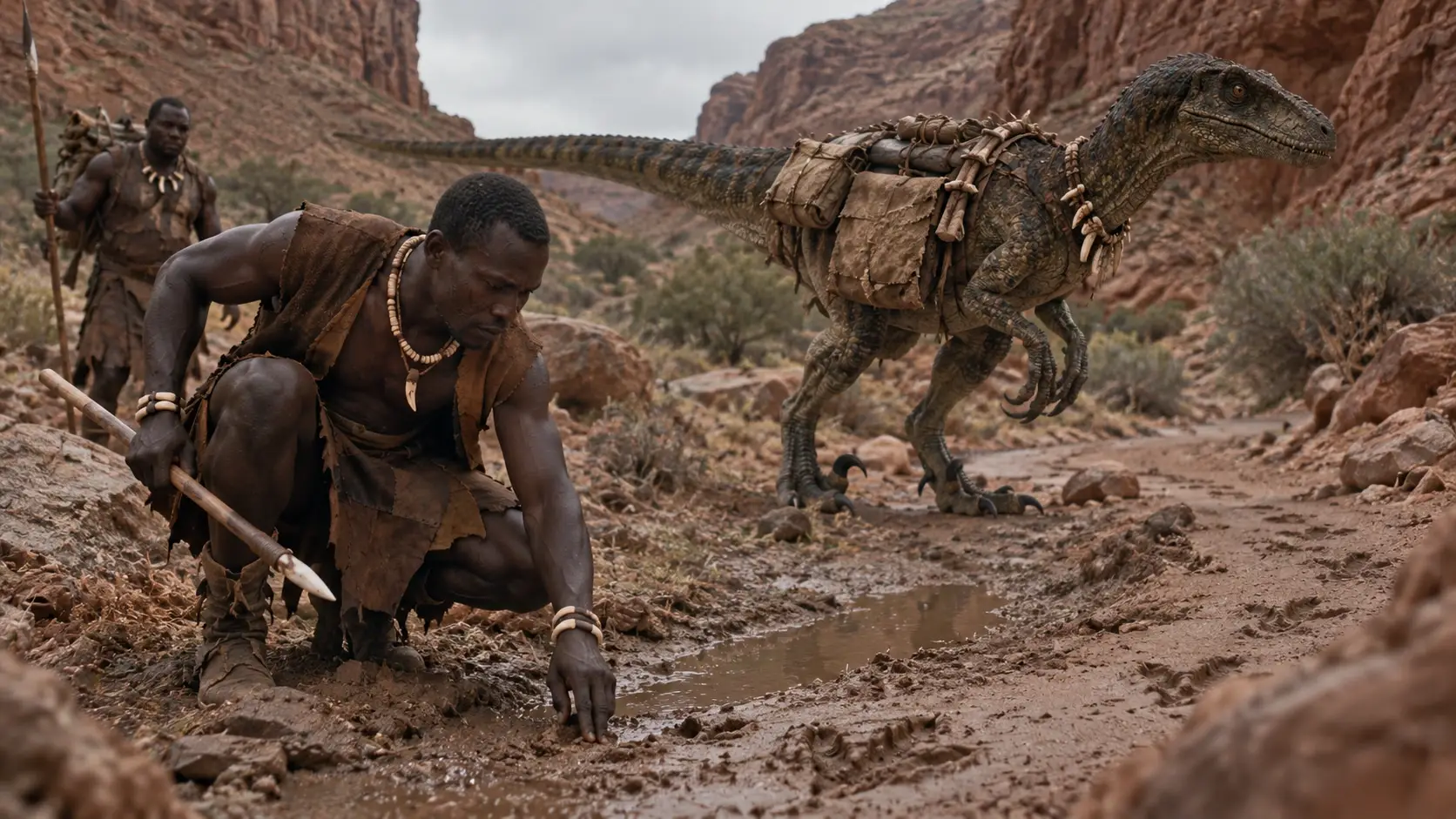
The Arkhans call their way of making war the Devouring Trail: the terrain becomes a trap. An Arkhan army does not try to hold a position; it makes the country fight in its place. It holds the water and denies it to the enemy, takes the relays, diverts the herds, sows the paths with broken sorting teeth, points upward, that cripple men and beasts, and drives fugitives with fire lit against the wind towards the place where it waits for them.
An enemy who pursues an Arkhan troop into the steppe soon discovers the trap. The tracks he follows are sometimes false, the wells he reaches are closed, and the troop he thought was fleeing comes back on his flanks just when his beasts are thirsty. “Every relief becomes a trail,” say the Arkhans; for their enemies, every trail can become a maw.
Seeing, reading, reporting
Everything begins with reconnaissance. The scouts on foot, whom the bands call snouts, go in first, without mounts, count the exits of a village or a camp, mark the walls with bone chalk and come out again without being seen. The Wind Walkers read an army’s march from afar by the dust it raises, and their small scouting pterosaurs see over the ridges.
The language itself sorts this information. Arḫán requires one to say whether one knows a thing for having seen it, for having read it in a trace or for having learned it through the chant. In the war council only what has been seen with one’s own eyes counts as proof; a scout reporting a trace must say so, and a chief who confuses the two pays for it sooner or later, often at the cost of a column sent towards a well that no longer exists.
What speed allows
Arkhan mobility changes the nature of war. A Horde on a dry trail covers twenty-five to forty leagues a day, when an army of Urnok accompanied by its colossi manages three or four; relay couriers carry a message forty to sixty leagues in a day. Arkhan therefore almost always chooses the place and hour of battle, and its chiefs learn before the fight what the enemy still believes to be secret.
This speed dictates choices. Rather than besiege a stronghold, the Horde goes round it and strikes what feeds it: roads, convoys, granaries, relays. Rather than wait for the enemy, it forces him to pursue until his water runs out. Its defeats almost always come from the same place: a relief that hems it in, water that fails, or an enemy patient enough to refuse the pursuit.
Crossing the uncrossable
For an Arkhan an obstacle is a trail that has not yet opened. Before a rampart, Vur-vaa fitted with cliff claws climb where a man would find no hold, and the Wall-Trail carpenters set ramps behind them for the beasts that follow. Before a river, the Tide Skins’ workshops bring out their sewn floats, their inflated bladders and their rafts of wood and bone, and a mounted troop crosses in a night what a heavy army would take a week to cross.
Canyons and cliffs are crossed in the same way. Climbers set tendon ropes and bone crampons where the beasts will need a foothold, and a whole column can come down a rock face the enemy thought closed. The doctrine fits in a sentence the riders repeat: a wall is only an animal lying down.