
People
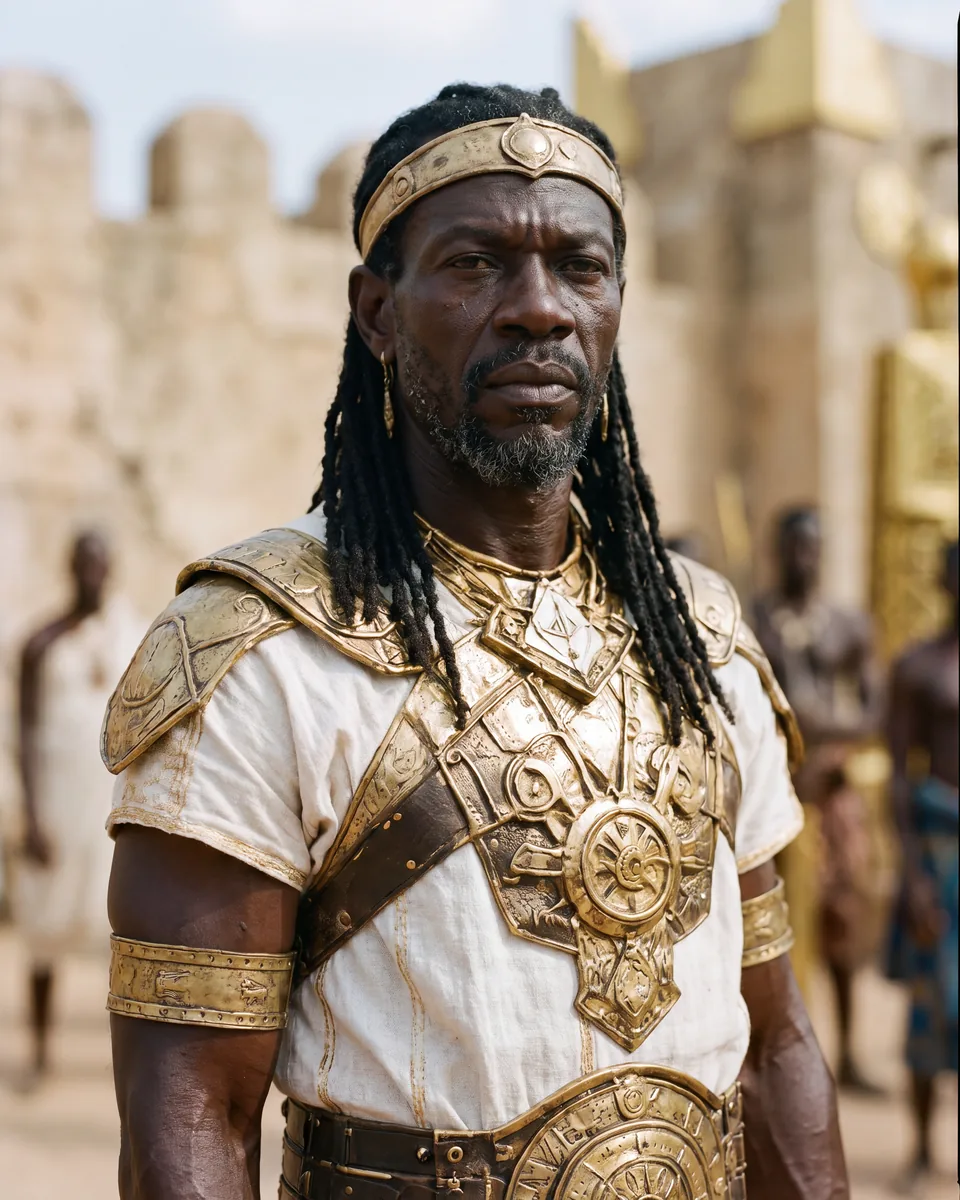
Namar
Marshal of the Zenith: the summit of Ishtir’s military command.
The military summit
Namar is the Marshal of the Zenith, the highest Ishtirian military authority in office. The supreme leader, Kheli Anor, and the Ten Golden Wings carry national government; the marshal embodies the military summit. The two offices are not merged: leading the country and commanding the army belong to two different people.
A command that distributes
Under him, field commanders and specialists take charge of different areas: field lines, ceratopsian generals, air relays. Ishtirian forces combine infantry, ceratopsians, pterosaurs, signals and troop transport; the Silver Horns and the Silver Winds answer complementary needs within them. Office and certifications explain each person’s responsibilities: no house owns its units.
A vow-name
The command registers write his name in full: Namar Sol-Horizon. The second term is not a family name, which Ishtir does not have; it is a vow-name, like “Sol-Vœu” for Kheli Anor. A vow of this kind is spoken in adulthood, before a priest, and can fall out of use if the person’s life changes its meaning. His speaks of the horizon, which raises smiles in an army that prays to the sun at its highest: the horizon is the line where you see the enemy coming.
In everyday use nobody says “Sol-Horizon”. Soldiers say “the Marshal”, Silver officers say “the Zenith” when they mean his staff, and children playing at war in the cohort courtyards fight over who gets to be Namar. The title of Marshal of the Zenith names the highest military office currently held: it is not inherited, it is never combined with governing the country, and its holder hands back its insignia on the day he leaves it.
Between Silver and Gold
Namar’s office sits where the two levels that make war in Ishtir meet. Silver runs ordinary campaigns, answers border attacks and administers the intermediate territories; Gold interprets solar law and alone authorises the commitment of the sacred reserves. The Marshal of the Zenith commands the first chain and submits his requests to the second. He does not dispose of the hundred and twenty great living ones: they belong to the Ordre d’Or and the Couronne de Venthir, and it falls to the supreme leader and the Ten Wings to open them.
His staff mirrors that division. It includes commanders all of Ishtir knows by name: Ishara, who commands field lines in the Marche de Keryth; Orûn, a ceratopsian general; Nahel de Venthir, who holds the air relays; Senara Veil, a quartermaster promoted from Bronze, who answers for rations, fodder and rolls. Officers of the Silver Mirrors bring maps and cross-checks. Namar replaces none of them: his work is to hold together what they know, to set the tempo and to decide when everything stops.
The man behind the office
The portraits that circulate in the army sketch a simpler man than his title. Namar prepares everything far too early: his marching orders are drafted before the question has been asked, and his officers have learned to ask him which version he kept. He always carries a ration in his pocket, a flatbread of solar grain and dates wrapped in a cloth, which he often ends up handing to the first ceratops driver who has not eaten. He is excellent with the great beasts and talks to them when he thinks he is alone.
In public, before a review or a column, he has the ease of a man made for parade grounds. In a small room he turns awkward, whistles through his teeth when a silence settles and corrects people’s pronunciation, which his aides fear more than his tempers. He finds processions endless and copes badly with heat, two odd failings for the first soldier of a solar faith; the barracks tease him gently for it, saying he commands the Zenith as long as he can stay in the shade.
War according to the Zenith
The doctrine Namar applies is not his own: it belongs to the Ordre d’Or, which sets it, and to the Silver orders, which practise it. But he is the one who turns it into movement. An Ishtiri army seeks the right tempo rather than speed: horn on the ground, wing above, both striking at the same moment. It fights face to face and by day; Ishtir’s religious prohibitions forbid poison and night combat, going further than the shared customs of war known as the Pact of Scales. It stops on command, even in the middle of a charge that is succeeding.
That last point is said to be the Marshal’s obsession. The drills he has repeated on the Plains of the Brontes nearly always end the same way: a formation launched at full pace, a signal, then a complete halt within a few strides. Bronze recruits call it “the Marshal’s prayer”. Foreign officers who watch rarely remember the charge; they remember the silence that follows.
Gallery1 image
Namar in white-and-gold linen armour.