

Armies
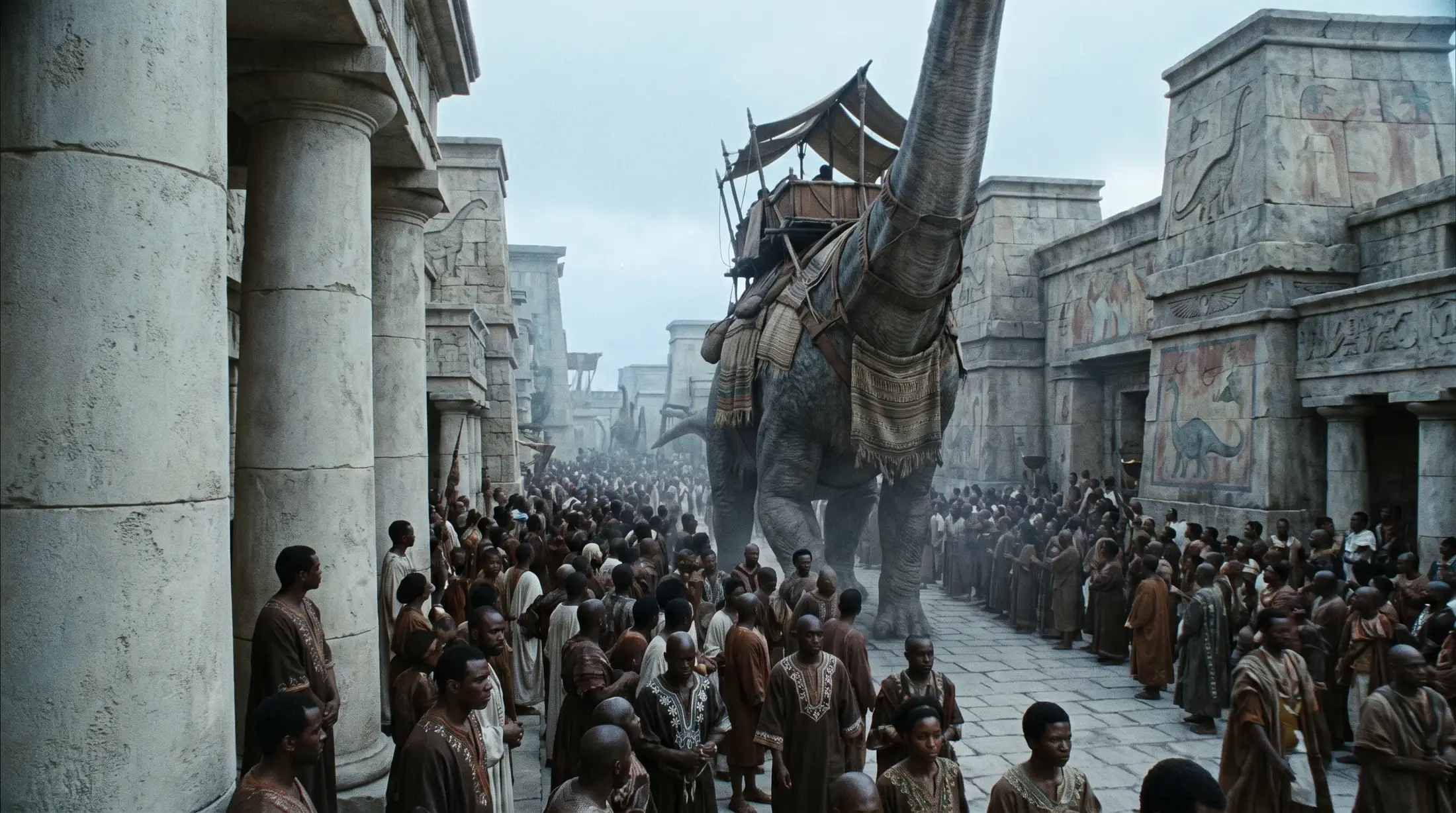
The Marche de Veyk
A Pangaean frontier march devoted to counter-raids against Arkhan.
Function and place in war
The Marche de Veyk is a frontier of the Pangaean marches, specialising in counter-raids against Arkhan: it does not merely suffer the steppe’s raids, it answers them.
Between two powers there are usually only weeks of emptiness; a clear limit exists only where two civilisations truly touch, as imperial Qor Zaï and Arkhan do. The law of war makes the march a level in its own right, with its grievances, its debts and its hostages.
Answering the raid
The Marche de Veyk is not content to shut its gates when a raid strikes. Its rule is to make every raid pay, and pay quickly. When an Arkhan band has plundered a town or a convoy, Veyk does not chase it blindly into the steppe, where it would lose itself: it sends fast columns to strike where the band must pass on its way home, at the wells, the fords and the camps where it left its reserves.
This work begins with reading tracks. Veyk’s trackers can tell from footprints how many beasts a band has, how tired they are and what they are carrying; they know the water points of the nearby steppe and the habits of the neighbouring clans. A well-run counter-raid falls on a band just when it believes itself safe, at the edge of a well, with its spoils.
The columns of Veyk
A counter-raid column travels light. It brings together scouts on iguanodons, archers mounted on fast hadrosaurs, a few bearers of nets and hooks against raptors, and a handful of march amargasaurs carrying water and food for ten days or so. It moves mostly by night and hides by day, and its men know how to live on little: hard flatbread, measured water, a fire hidden in a hole.
These columns are not made to hold ground. They strike, take back what they can, captives and beasts included, and return before the steppe closes over them. Veyk’s officers measure a successful counter-raid by the number of men who came back rather than by the losses inflicted: a column lost in the steppe is a victory for the enemy, whatever it did before.
Grievances, debts and hostages
The march’s war is also a matter of accounts. Every raid suffered is entered in Veyk’s register with the losses in men, beasts and grain; every counter-raid too, with what it took back. Between raiding seasons these accounts serve for bargaining: with some steppe clans, Veyk exchanges captives, returns beasts, claims reparations and accepts hostages as surety for a truce.
These truces are fragile but real. An Arkhan hostage may live for years in a march fort, learning the language and customs of the Empire, before being returned to his clan; some later become valuable go-betweens. The people of Veyk say one does not make peace with the steppe, but one can keep accounts with it, and well-kept accounts are sometimes worth a peace.
The people of Veyk
Veyk neighbours the forts of imperial Qor Zaï, and its people share with those of the ducal march a taste for the frontier and a certain hardness. They know the names of the clans across the way, their marks, their songs and their feuds, and the oldest speak a few words of their language. They respect the steppe’s raptor riders as one respects an adversary seen up close, without loving them.
The march’s families keep the memory of raids and counter-raids as others keep that of harvests. Children are shown the well where a column surprised a band, the tower that held for three days, a tracker’s grave. In the Empire, Veyk is called the march that hits back, and its people ask for nothing more.
The raiding season
Raids have their calendar. They strike mostly after the harvests, when the granaries are full and the steppe bands need provisions for the lean season, and they grow rare when the rains make the trails heavy. Veyk orders its life by this rhythm: harvests are brought in under escort, the tower watches are doubled, the columns and water reserves are made ready before the first alarm fire is even lit.
The rest of the year the march repairs its palisades, counts its losses, renegotiates its truces and trains its trackers. Young people who want to join the columns make their first outings during these quiet months, behind veterans who teach them to read a trail and to keep silent.