

Armies
Haut-Grenier
A logistics citadel of the Pangaean marches, guarding an imperial reserve.
Function and place in war
Haut-Grenier is a logistics citadel guarding an imperial reserve. It belongs to an empire born of a famine, whose money, the Écaille d’or, is backed by stocks.
For anyone waging war, such a reserve is a target: among the minor factions, a silo is taken or burned. Haut-Grenier counts, with the granary city of Kavrel, the warehouses of Côte-Ration and the fodder market of Croisée-Silos, among the granaries of the Pangaean marches.
A citadel around a granary
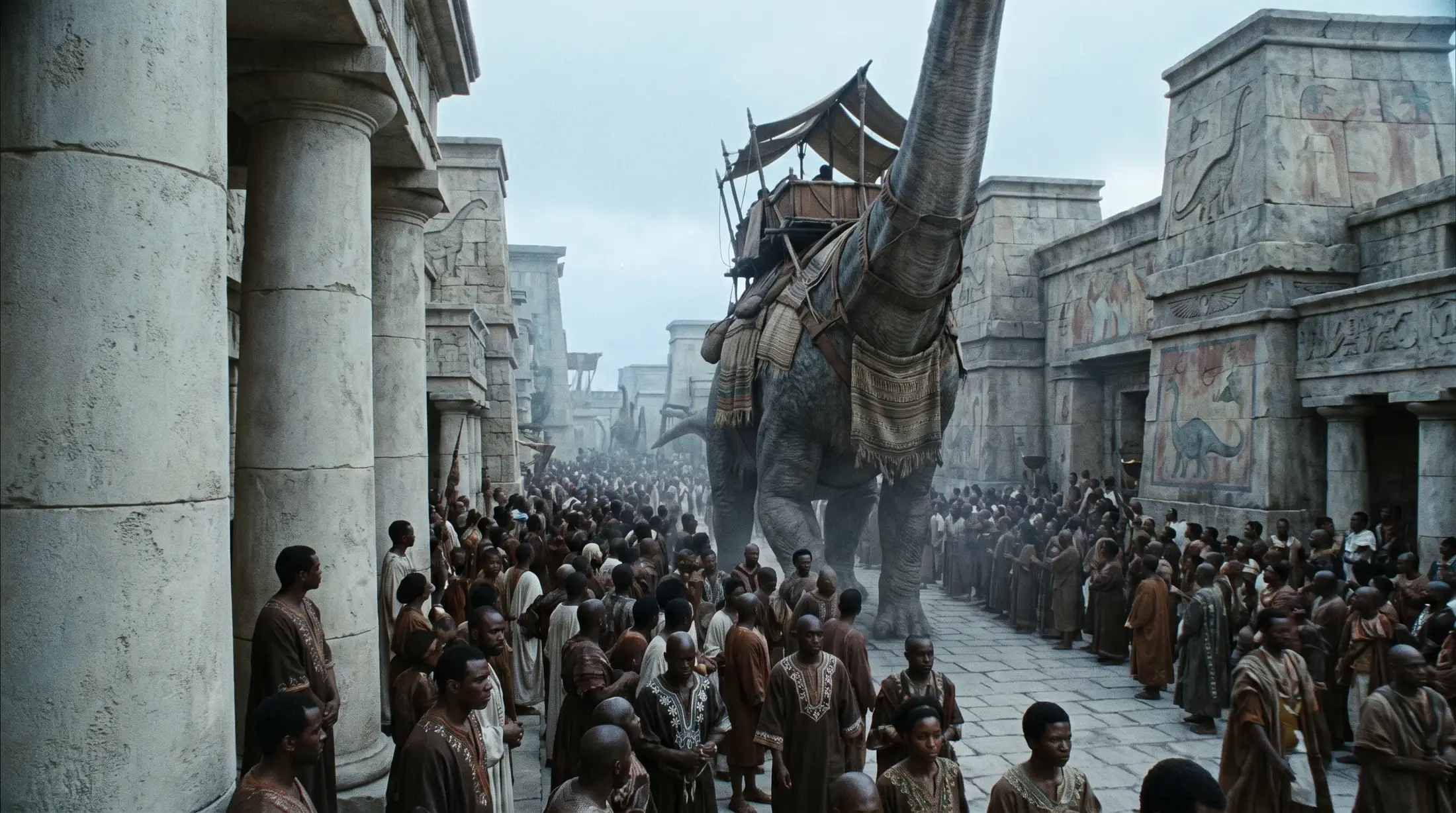
Haut-Grenier is a citadel built for one thing only: keeping grain and fodder where armies will need them. On a height overlooking the march roads, a double wall encloses a group of ventilated silos, stores of pressed fodder, cisterns cut into the rock and barracks. It is reached by a single ramp, wide enough for two hadrosaur teams, which passes beneath the gate towers.
The citadel is designed for a long siege. Its roofs are covered with tiles and earth rather than timber, its inner walls are rendered with lime against fire, and its cisterns can water the garrison and its beasts for months. Its reserve, one of the imperial reserves of the marches, is counted and certified like those of the Empire’s great silos.
Who guards the reserve
Haut-Grenier’s guard is entrusted to the Silo Pikemen, the troop trained to defend the Empire’s granaries. Beside their commander, two authorities share the reserve: the silo chief, who answers for the state of the grain and its upkeep, and the military quartermaster, who answers for its use. The two keys to the stores are held one by each, and no door opens without both.
The Fodder Counters come every season to read the gauges and weigh the bales, and their readings go to the capital. A gap between the declared and the counted reserve is a serious matter: it may point to theft, negligence or illegal sales to frontier merchants, and it always leads to an inquiry and an entry in the register of responsibility.
Opening the reserve
The reserve opens only on orders. In ordinary times Haut-Grenier supplies the march garrisons according to quotas fixed in advance; it touches its deep reserve only from the level of a ducal campaign, or when an imperial Great Host passes through the region and must be fed. The order arrives in writing, with the required seals, and the citadel then sends daily convoys of grain and fodder to the army’s depots.
The reserve also serves in times of misfortune. When a raid has burned a town’s granaries or a bad year strikes the march, the citadel may lend seed grain and rations, by decision of the Crown, which the villages repay from later harvests. The people of the marches therefore see the citadel in two ways: as the army’s reserve, and as their villages’ last resort.
The raiders’ target
A reserve of this size draws all who are hungry or who want to starve others. Steppe bands and raiders from the wild lands know that a burned granary costs the Empire more than a slain garrison; they prowl around the citadel at harvest time, attack the convoys climbing to it and sometimes try to throw fire over the walls.
The defence is prepared from afar. Watchtowers line the roads leading to Haut-Grenier, with their smoke by day and fires by night; convoys go up under escort and at irregular hours; the approaches are cleared so that no raider can come near under cover. And the citadel obeys the rule of every granary in the Empire: should it fall, its guardians are ordered to burn the reserve rather than leave it to the enemy.
Life in the citadel
Haut-Grenier shelters more people than one would think. Besides the garrison, the citadel houses its probers, ventilators, porters and scribes, their families, a few keepers for the convoy hadrosaurs and a small silo sanctuary where the grain is blessed at every filling. The citadel’s children grow up between the bins and the ramparts, and many take up a granary trade in their turn.
The granary bell rings the working hours, the arrival of convoys and the alarms. It can be heard throughout the valley, and the people of the march say that as long as they hear it ring the hours, the country will eat.