

Armies
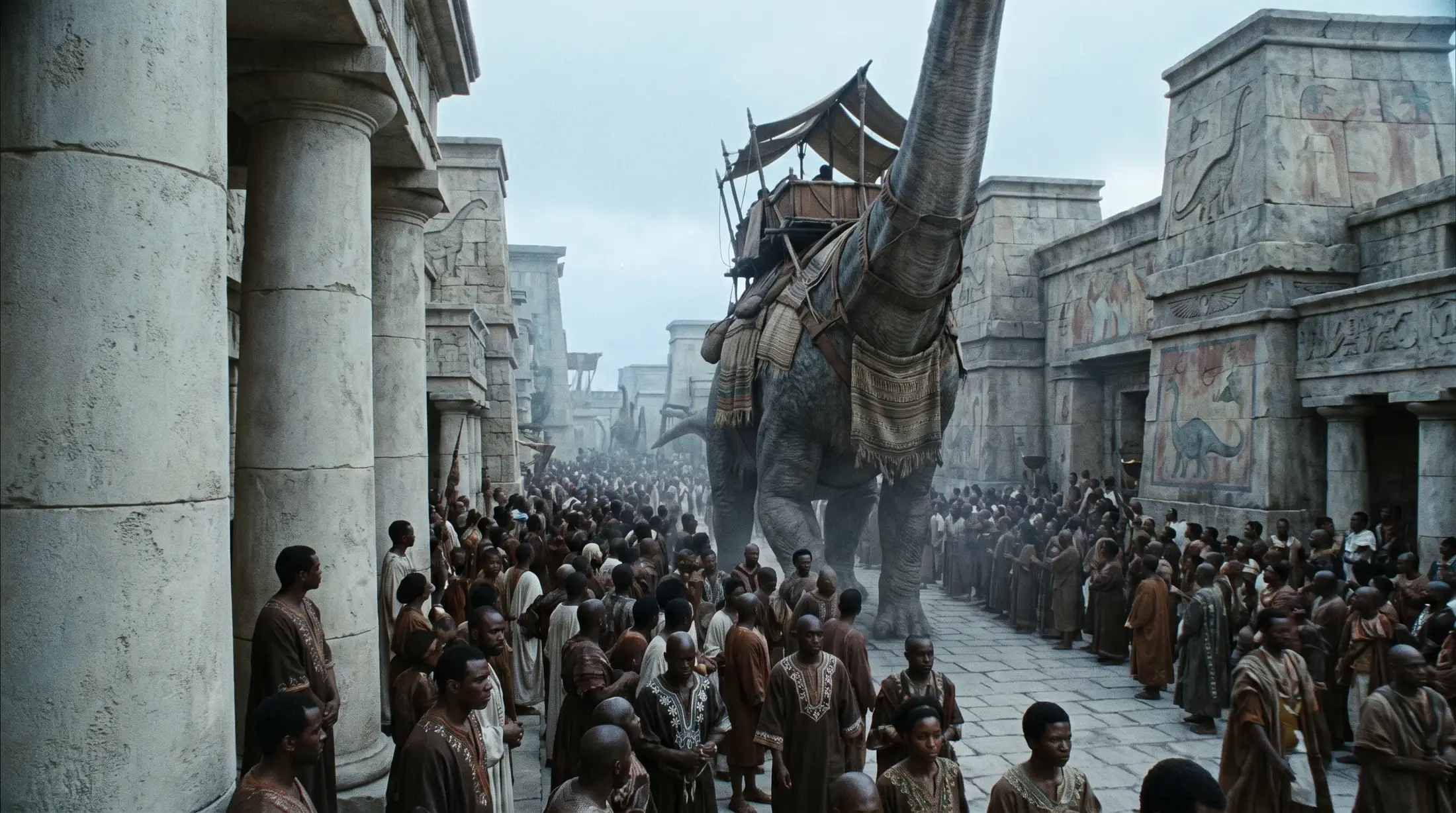
The Bastion des Harnais
A fort-workshop of the Pangaean marches, specialising in ceratopsian armour.
Function and place in war
The Bastion des Harnais is both a fort and a workshop. Its speciality is ceratopsian armour.
It belongs to the war workshops of the Pangaean marches, with Brise-Char, which builds ceratopsian chariots, Masse-Ronde, which prepares ankylosaurs as living battering rams, and Courbe-Silex, which makes weapons of teeth and bone. Within the Empire, arming living animals is also the trade of the Armureries Vivantes.
A fort that sews
The Bastion des Harnais is a fort because what it keeps is costly. Behind a stone enclosure with square towers lie a large fitting yard, broad enough to turn a harnessed ceratopsian, workshops for sewing and moulding leather, a bronze forge and stores where hides dry. The tanneries are outside the walls, downwind, as everywhere in the Empire. A garrison holds the gates, and clients who bring their beasts lodge them in fortified stables while they are fitted.
For a ceratopsian’s armour is not bought ready-made: it is measured on the animal. Each beast comes to the Bastion for several weeks, and the fort sometimes shelters ceratopsians belonging to several owners at once, which makes it a tempting target for raiders and a matter of trust for its clients.
Armouring a ceratopsian
Ceratopsians already carry a shield: their frill protects the neck and shoulders. The harness-makers’ work is to cover what nature has left bare. A flank barding of thick leather, moulded hot and wet onto the animal, protects the ribs; a belly band of sewn layers, hard-faced with a supple core, cushions blows from below; articulated leg guards of grooved leather, made to bend in the right places, protect the knees. The horns receive bronze or bone sheaths that strengthen them without weighing them down.
The stitching makes the difference. The Bastion’s harness-makers sew with reversed back-stitch, so that a tear has to climb against the thread’s tension, and fit sacrificial threads at the saddle fastenings: if the beast falls or rears, the piece comes away before it can break its rider. Every piece carries inside it the workshop’s mark and the name of the beast it was cut for.
Clients and suspicions
Ceratopsians come from Ishtir, and the Empire owns few of them: a handful of beasts imported with their trainers for prestige units, anti-raptor ceratopsians in the forts of the march of Qor Zaï, a few defensive beasts in Velmor. These are the clients the Bastion serves, along with march lords who want a parade mount and, now and then, foreign merchants. The Ishtiri trainers who come with their beasts watch the fittings closely and refuse any piece that would hamper the movement of the head.
This clientele makes the Bastion a crossroads for news. It is the first place to learn that a fort is ordering new armour, that a duchy is equipping beasts in haste or that a house is replacing its parade mounts, and the brokers of the marches know that a rushed order at the Bastion often heralds a campaign.
Testing a barding
No armour leaves the Bastion untested. The harnessed beast first goes round the yard at a walk, then at a trot, turns left and right, lies down and gets up; the harness-makers watch the folds, the rubbing and the breathing, and the trial is repeated the next day to make sure no sore has opened under the leather. A test piece mounted on a wooden dummy is then riddled with arrows and struck with a maul in front of the client.
The craft takes long to learn. An apprentice harness-maker spends years cutting and sewing straps before touching a barding, and must know how to work leather, bronze and bone. The Bastion’s best masters are sought after even in the workshops of the Living Armouries, and some end their careers there.
The Bastion’s neighbours
The Bastion rarely works alone. Brise-Char’s ceratopsian chariots often receive their traction harness at the Bastion, and the two workshops exchange apprentices; Courbe-Silex’s weapons of teeth and bone sometimes arm the riders of beasts the Bastion has armoured. In the marches people therefore speak of a “chain of horns” running from the chariot workshop to the fitting yard.
A lord who wants to equip a complete war mount often goes round it in one season, with his beast, his trainers and his treasurer. The three workshops recommend one another, fight over the best hides and readily accuse each other of delaying orders, but none works against the others: a badly equipped mount coming out of the chain would harm them all.