

Armies
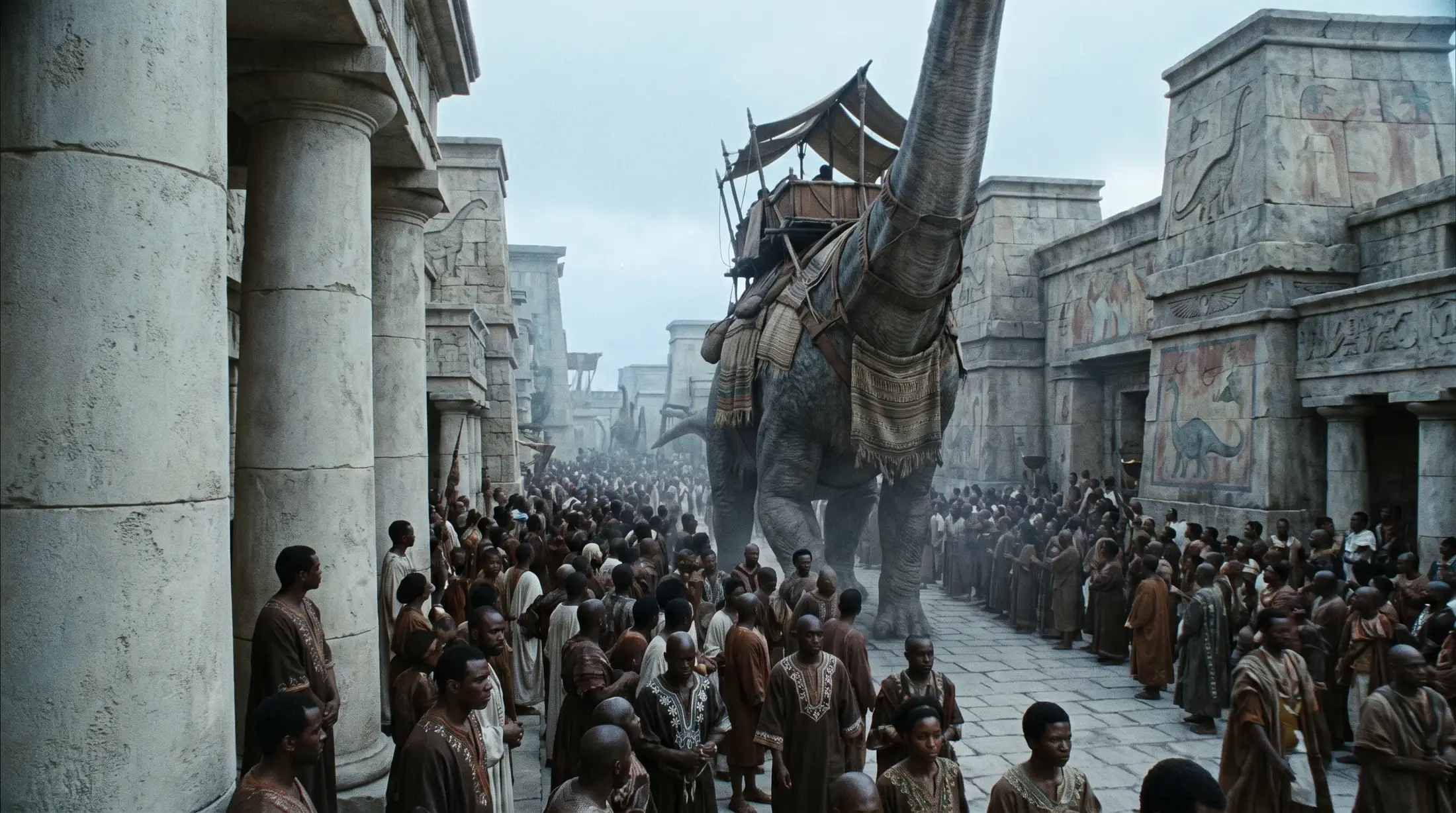
The Marche de Serr’Ur
A frontier march on the Pangaean fringes that keeps garrisons of patrol raptors.
Function and place in war
The Marche de Serr’Ur is a frontier march on the Pangaean fringes. Its speciality is the garrisoning of patrol raptors, kept at their posts to watch the frontier.
It belongs to the fringe of the Empire that lives under the threat of raids. With the Marche de Veyk, which is turned towards counter-raids against Arkhan, it is one of the marches that carry war day to day; within the Empire, such marches remain zones of friction subject to imperial arbitration.
Licensed raptors
The Marche de Serr’Ur does what the Empire dislikes doing: it uses raptors. These scaled, fast and intelligent predators are Arkhan’s beasts of war, and the Empire tolerates only a very small number of them, under licence from the Crown. Serr’Ur holds more than any other march. Every raptor there is entered in a register of its own, recording its origin, age, temperament, wounds and the name of its master, and wears a leather collar with an engraved bronze token.
The beasts come from Arkhan, bought young from frontier traders or taken in counter-raids, and are raised in closed pens at the heart of the march. Their numbers stay low, a few dozen per garrison, and every birth, death and loss must be declared. An escaped raptor is the whole march’s business: it is hunted until it is recaptured or killed.
Patrolling with raptors
A Serr’Ur patrol sets out with two or three raptors and their masters, mounted on iguanodons or light hadrosaurs. The raptors run ahead, fanned out, and return to their master at the call of a bone whistle. Their sense of smell is their great strength: they catch the scent of foreign beasts before men do, above all that of the raptors of Arkhan’s bands, which they signal with a posture the masters learn to read, body low, tail stiff, head turned into the wind.
Patrols go out mostly at dawn and at nightfall, the hours when raids strike. They do not look for a fight: their job is to see and to warn, and a patrol that has spotted a band lights a fire on the first height and falls back towards the forts. The masters say their beasts are worth ten watchmen, provided one never forgets that they remain predators.
The price of a raptor
A raptor is costly to feed and costlier still to keep. It is a carnivore that eats game meat, dried fish and the offal from the forts’ slaughterhouses every day, and its ration weighs heavily in the march’s accounts. It takes years to make a patrol beast of it, and it always remains dangerous: it obeys only its master, distrusts everyone else and can turn on a clumsy keeper. Almost every master in Serr’Ur has scars on his arms and legs, which he shows without shame.
For these reasons the Empire keeps a firm hand on these beasts. Crown inspectors visit the pens, count the animals and check the registers; a master may neither sell nor lend his raptor, and when the master dies the beast is entrusted to another or put down.
Living in Serr’Ur
The march is frontier country, with its forts, its fortified towns and its villages living under the threat of raids. Its people speak the Pangaean of the marches, mixed with words from the trails, and children there learn very early to recognise raptor calls, those of the march’s own beasts as well as those of the bands across the way. The masters’ families form a small society apart, respected and somewhat feared.
In the rest of the Empire, Serr’Ur has a double reputation. Its vigilance is admired, and its reports on the movements of Arkhan’s bands are read closely by the neighbouring forts; but people mistrust folk who live with the enemy’s beasts, and in the inland duchies it is said of them that they “sleep with the claws”.
Raising a patrol raptor
A patrol raptor is raised very young. Its future master feeds it himself, carries it, sleeps near its pen and teaches it its first signals, so that the beast truly recognises only him. Training lasts several years: recall to the whistle, halting at a gesture, returning to the master through a strong scent, refusing any food offered by a stranger.
That last rule is the most important. The steppe bands know that a hungry raptor readily follows whoever throws it meat, and they have already tried to lure the march’s beasts away from their patrols that way. A raptor that accepts a stranger’s meat is taken out of service.