

Armies
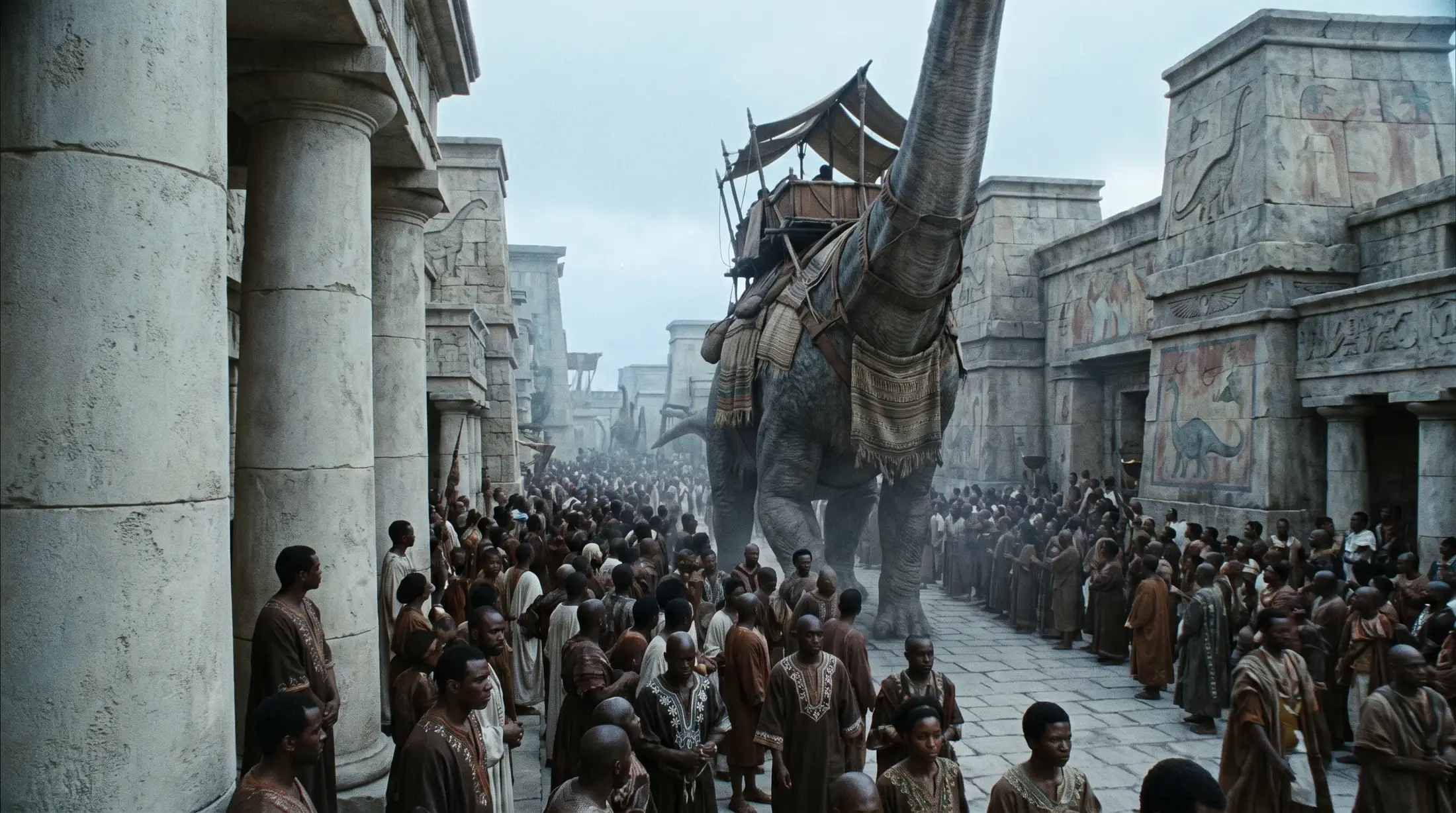
Herse-Croc
A small fort of the Pangaean marches, specialising in anti-charge traps.
Function and place in war
Herse-Croc is a small fort whose speciality is the anti-charge trap, which breaks the momentum of the beasts launched against it.
Other minor factions of the Pangaean marches work against the charge and the panic of animals: Palissade-Mousse makes anti-panic dampers, and Ovale-Mur is a corridor town planned against escapes.
The small fort and its ground
Herse-Croc holds a stretch of open plain on a march road, where flat ground lets charging beasts build up speed and a charge can come from far off. The fort itself is small: a rampart of rammed earth crowned by a hardwood palisade, a watchtower, a well, granaries for a few weeks and quarters for about a hundred men and their families. What defends it is not its wall but the ground around it for several hundred paces.
Its name comes from the two weapons that made its reputation: the harrow, a plank bristling with spikes laid flat in the grass, and the hook, a crook mounted on a shaft that catches a leg or a strap. Both appear on the fort’s seal, crossed above the footprint of a great beast.
Breaking a charge
Herse-Croc’s trappers do not claim to stop a beast of several tonnes: they break its momentum and choose where it will go. The ground is worked in successive layers. Farthest out, lines of bone and bronze caltrops sown in the grass injure feet and slow the front ranks. Closer in, stake pits hidden under hurdles and earth open beneath the heaviest beasts. Oblique trenches and low banks then funnel the charge towards a narrow passage, where harrows raised by ropes at the last moment and the hook-bearers are waiting.
The principle is known throughout the imperial army: a forest of pikes or traps does not stop a colossus, it forces it to choose a path, and that path has been prepared. At Herse-Croc they put it more simply: “the beast chooses, but we drew the choice.”
A garrison of trappers
Life in the fort revolves around the upkeep of the traps. After every rain the trappers must check that the pits have not caved in, that the hurdles hold, that the stakes are not rotting; caltrops sink or vanish into the mud and must be gathered and sown again. A team leaves every morning with poles, sacks and maps, and returns only at nightfall.
Those maps are the fort’s secret. They show the position of every trap and of the safe corridors, and they change after every alert or suspected betrayal. A friendly convoy never crosses the ground without a Herse-Croc guide, who walks ahead of the beasts following marks only the fort’s people can read: an overturned stone, a knot in tall grass, a notch on a stake. A convoy that refuses the guide passes at its own risk, and the fort’s register notes it.
Knowledge for hire
Herse-Croc’s knowledge is worth more than its fort. Its trappers are hired by neighbouring garrisons, by the forts of the frontier duchies and by the legions’ engineers, who entrust them with preparing ground before a defensive battle; some end their careers as instructors. The fort also sells its caltrops, its dismountable harrows and its hooks, recognisable by the mark carved on their shafts.
The traps are adapted to the enemy. Against great war herbivores, pits and harrows are enough; against raptors, lighter and more agile, which leap over a pit, low ropes and weighted nets are stretched just above the grass. Herse-Croc’s veterans say it takes a year to learn to lay a trap and ten to learn to hide it.
A fort born of a charge
The fort’s people say Herse-Croc was born of a defeat. An older garrison, set up on the same spot behind a mere palisade, is said to have been swept away by a charge of great war beasts coming off the plain, and the survivors understood that a wall was useless as long as the ground stayed bare. They then dug the first pits and cut the first hooks.
No one can date the story any more, but at the fort’s entrance a row of old blackened stakes is still shown, said to come from those first pits. They are never replaced, and every new recruit must touch them on the day of arrival.