

Power and institutions
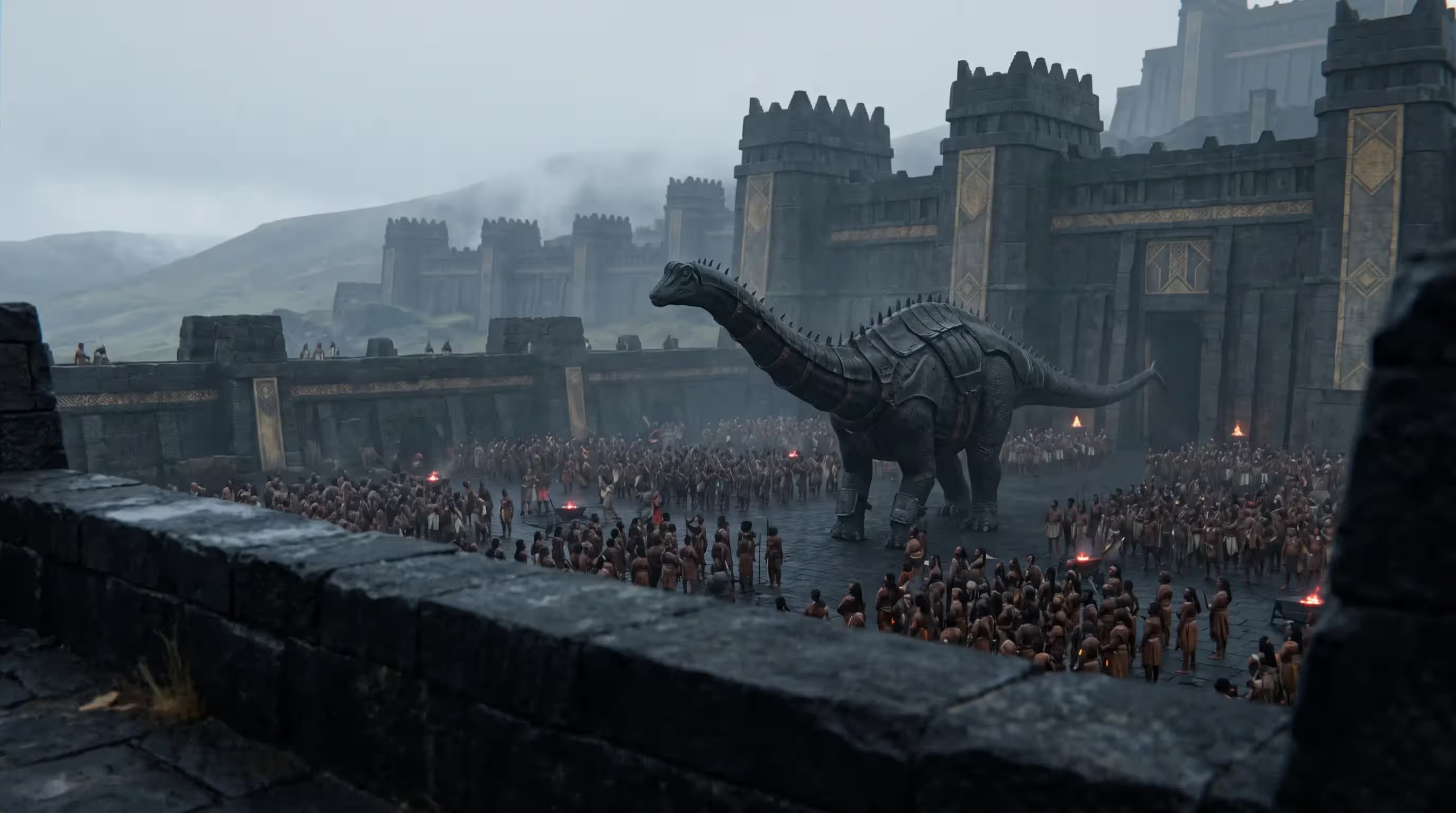
The Oath of Velmor
The agreement that guarantees the archduchy of Velmor perpetual military autonomy: it is the only duchy of the Empire allowed to wage private war.
Black stone for autonomy
Velmor holds the black stone the Crown covets. Rather than take it, the Emperor makes an exchange: the Crown guarantees Velmor perpetual military autonomy, that is, the right to raise and use its own force, in return for privileged access to the black stone. This agreement is the Oath of Velmor.
It makes Velmor the only duchy of the Empire allowed to wage private war. This privilege comes on top of the archducal rank, the military court and the claims Velmor kept when it entered the Empire by negotiation.
A bounded right
The Empire’s register of war rights distinguishes several actors. An ordinary duchy may conduct a border conflict, a limited claim or maritime policing; the Crown can sanction it without being able to cancel it instantly. A border march may lead a defensive raid, a pursuit or the destruction of a camp, but its pursuit becomes an invasion as soon as it crosses the boundaries.
The archduchy of Velmor holds, by privilege, private war, defence and a limited claim. The Oath forbids felony: Velmor becomes a rebel if its action targets the Crown or breaches the major boundaries. Between these two limits, the archduchy can raise and use its force without the Crown’s consent.
The price of a privilege
The Oath does not hand everything to Velmor. The military great living animals assigned to the archduchy remain the legal property of the Crown, like all of Urnok’s titans. A Velmor army also depends on materials, fodder and equipment from other duchies.
The privilege makes Velmor a singular military power within the Empire. It also makes it a fault line: a single duchy can start a war before the Crown has the time or the will to intervene.
What black stone is worth
Velmor’s black stone comes from the quarries opened east of the archduchy’s capital. Hard, dense and dark, it is used to make the anvils and plate moulds on which the cuirasses of great beasts are hammered and fitted, as well as prestige facings. In its veins lies jet, from which mourning jewellery and some seals are made. The walls of Fort-Cendre, the archdukes’ residence, are built of it.
Without black stone, the Living Armouries cannot produce their cuirasses, and the imperial army loses part of what makes it resilient. This dependence explains the Oath: the Crown preferred to buy lasting access to the stone rather than seize the quarries by force from a kingdom it had only just brought in. The stone leaves the archduchy by the black road, which links Velmor to Korath and Calaron.
A right written into the charters
The privilege of private war is a Velmorian right. It is written into the charters of Velmor, kept at Fort-Cendre, rather than resting on a mere imperial favour revocable at will. An act affecting it can be enforced against the houses of the archduchy only if it respects Velmor’s forms: the great act on egg paper, black wax and the archduchy’s counter-seal.
Custom has each new archduke or archduchess renew the Oath before the emperor on accession. The emperor confirms the military autonomy; the archduchy confirms the Crown’s access to black stone and restates the ban on felony. The two copies of the act are kept, one at Fort-Cendre, the other in the imperial chancellery archives, and their texts are compared at every quarrel.
What a private war allows
In practice the privilege lets the archduchy raise its own forces without waiting for an imperial mandate: its regiments of black iguanodons and hadrosaurs, its archers, its ballista batteries and its siege sauropods, as well as the contingents owed to it by the houses of Velmor. It can pay them from its own treasury, feed them from its own reserves, starting with its great eastern silo, and commit them to defend or recover what it claims.
In the archduchy’s history this right has mostly served against the bands of the northern wild borderlands and in boundary quarrels along the marches. It has a price the archduchy pays alone: a private war receives neither the Crown’s fodder, nor the great animals of the imperial orders, nor the Bank’s credit without negotiation. Velmor can go to war by itself; it must also pay for it by itself.
What the other duchies think of it
No other duchy holds this right, and many envy it. The march of Qor Zaï, which faces the Horde itself, may only conduct a defensive raid or a pursuit, and must stop at the boundary stones; Sarnor, Bralnor and Orlantis are entitled only to border conflicts or limited claims, which the Crown can sanction. The dukes readily recall that their ancestors were kings too, and that they gained nothing of the kind by submitting.
At court the Oath is seen as a clever arrangement from the time of Velmor’s integration, which over the centuries has become a flaw in the imperial order. The chancellery’s jurists study it as a textbook case: the one place in the Empire where the decision to make war does not necessarily go all the way up to the throne.
Part of this article covers events of season 1. Turn spoilers on in the menu to read it.